
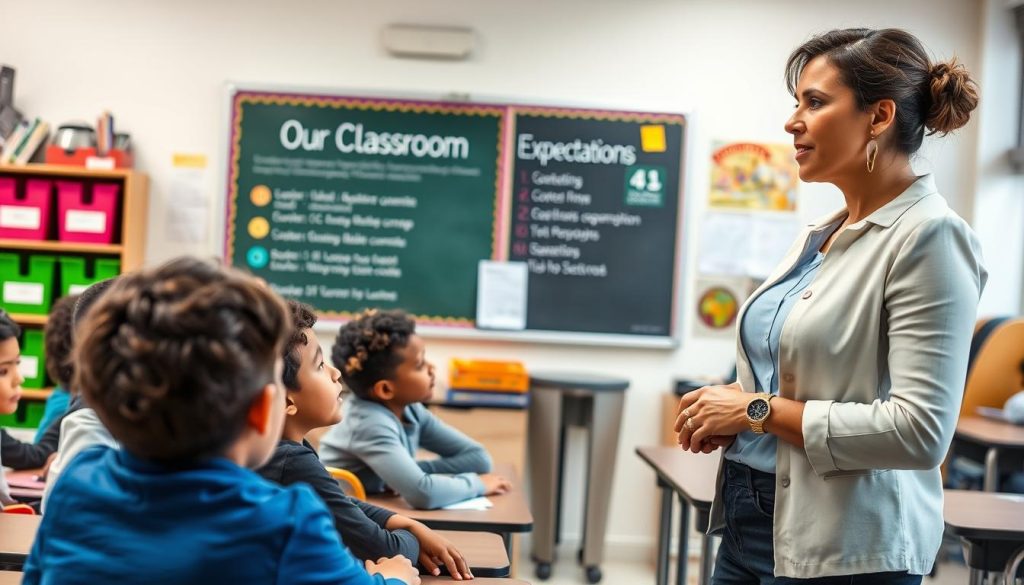
In this article, we’ll explore why setting high expectations matters, how to implement them effectively, and the profound impact they have on student achievement and classroom culture. Whether you’re a new teacher or a veteran educator, mastering the art of expectation-setting is a fundamental teacher skill that pays dividends throughout the school year.
Understanding the Power of Setting High Expectations
Classroom expectations are more than just rules posted on a wall. They represent a shared understanding between teachers and students about how learning will happen, how people will treat each other, and what success looks like in your classroom. Setting high expectations means believing in your students’ potential and communicating that belief consistently.
Research consistently shows that students rise or fall based on what teachers expect of them. The famous Pygmalion effect, demonstrated by Rosenthal and Jacobson in 1968, revealed that when teachers believed certain randomly selected students would show exceptional growth, those students actually achieved at higher levels—simply because teachers expected them to.
Carol Dweck’s groundbreaking work on growth mindset further reinforces this concept. When teachers approach their work with the belief that all students can grow and improve with effort, students internalize this belief and perform better. The question shifts from “Can these students learn?” to “How can I teach these students effectively?”—a fundamental teacher skill that separates highly effective educators from the rest.
Types of Classroom Expectations
Academic Expectations
Standards for quality of work, participation, effort, and achievement goals.
Behavioral Expectations
Guidelines for conduct, interactions, and procedures within the classroom.
Social-Emotional Expectations
Standards for respect, empathy, collaboration, and personal responsibility.
Effective teachers understand that setting high expectations across all three domains creates a comprehensive framework for student success. This balanced approach is a critical teacher skill that supports both academic achievement and whole-child development.
“It is more helpful to ask, ‘How can I teach these students this content?’ rather than ‘Can I teach them?’ and ‘How will they learn best?’ rather than ‘Can they learn?'”
The Transformative Benefits of Setting High Expectations
When implemented effectively, high expectations create a classroom environment where students thrive academically, socially, and emotionally. Professional development in this area is one of the most impactful investments teachers can make in their practice.
Academic Benefits
- Increased student achievement and higher test scores
- Greater student engagement and participation
- Improved quality of work and attention to detail
- Enhanced critical thinking and problem-solving skills
- Stronger student persistence when facing challenges
A 2016 study found that teacher expectations had a significant effect on student achievement, with students performing better when teachers communicated belief in their abilities. This demonstrates how crucial expectation-setting is among essential teacher skills.
Social-Emotional Benefits
- Increased student self-efficacy and confidence
- Development of intrinsic motivation
- Stronger classroom community and peer relationships
- Improved self-regulation and responsibility
- Growth mindset development and resilience
When students understand that their teacher genuinely believes in their potential, they begin to believe in themselves. This shift in self-perception is powerful and lasting. The teacher skills involved in fostering this belief include providing specific feedback, celebrating growth, and maintaining consistent expectations even when students struggle.
Equity Considerations
Setting high expectations for all students is a matter of educational equity. Research shows that teachers sometimes unconsciously hold lower expectations for certain groups of students, particularly those from historically marginalized communities. Developing the teacher skills to recognize and address these biases is essential for creating truly equitable classrooms where all students can thrive.
Key Insight: High expectations must be paired with high support. Students need both challenge and scaffolding to reach their potential. This balance is a critical teacher skill that requires ongoing refinement.
Practical Strategies for Setting High Expectations
Transforming classroom culture through high expectations requires intentional practices and refined teacher skills. Here’s how to implement expectations that motivate rather than intimidate:
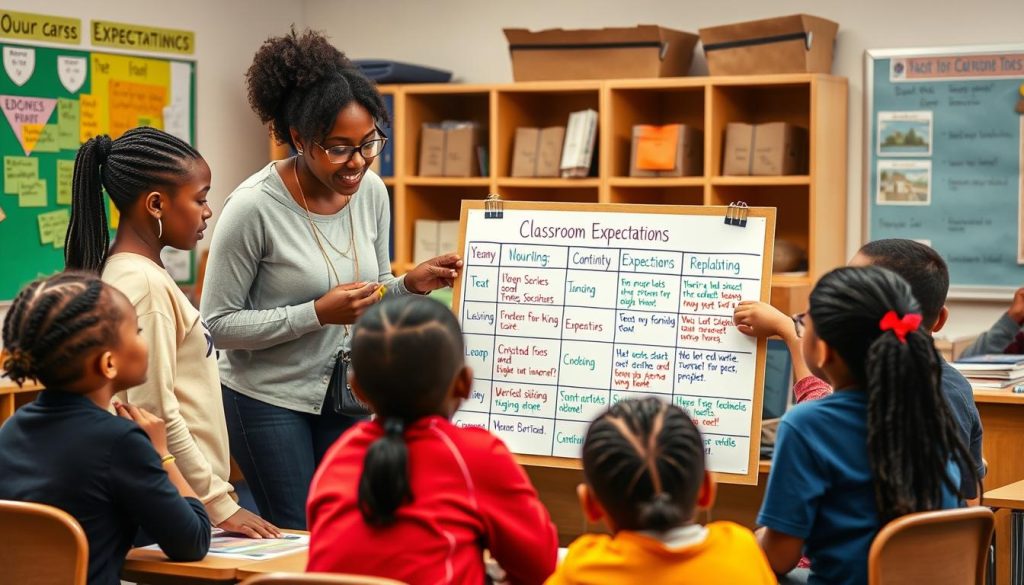
1. Co-Create Expectations with Students
When students help create expectations, they develop ownership and understanding. This collaborative approach is a valuable teacher skill that builds buy-in from day one.
Process:
- Facilitate a discussion about what helps students learn best
- Ask students to reflect on previous positive classroom experiences
- Guide the conversation toward specific, observable behaviors
- Organize ideas into categories (academic, behavioral, social)
- Refine language to be positive, clear, and actionable
Benefits:
- Increases student ownership and commitment
- Builds classroom community from day one
- Provides insight into student values and priorities
- Creates shared language for future discussions
- Demonstrates respect for student voice and agency
2. Communicate Expectations Clearly and Consistently
Clear communication is a fundamental teacher skill that ensures all students understand what success looks like. Vague expectations lead to confusion and inconsistent results.
- Be specific: “Complete all parts of the assignment with detailed explanations” rather than “Do your best work”
- Provide examples: Show models of work that meets or exceeds expectations
- Check for understanding: Ask students to explain expectations in their own words
- Use visual reminders: Post expectations where students can easily reference them
- Maintain consistency: Apply the same standards to all students while providing differentiated support
3. Model What You Expect
Students learn as much from what we do as from what we say. Modeling is a powerful teacher skill that brings expectations to life.
- Demonstrate the quality of work you expect through examples
- Think aloud to show your problem-solving process
- Exhibit the respectful communication you expect from students
- Show how to accept feedback and learn from mistakes
- Display enthusiasm for learning and intellectual curiosity
4. Provide Scaffolding and Support
High expectations must be accompanied by appropriate support. Developing the teacher skills to scaffold effectively ensures all students can reach challenging goals.
- Break complex tasks into manageable steps
- Provide graphic organizers and planning tools
- Offer additional resources for students who need them
- Schedule check-ins during the process, not just at completion
- Adjust support based on individual student needs while maintaining high standards
For more strategies on effectively implementing high expectations in your classroom, explore the Setting High Academic Expectations professional development resource.
Overcoming Challenges in Setting High Expectations
Even with strong teacher skills, educators face challenges when implementing high expectations. Let’s address common concerns and practical solutions:
Challenge: “Is it fair to have the same expectations for all students?”
Fair doesn’t mean identical. High expectations are about believing all students can grow and achieve, while recognizing they may take different paths to success. The teacher skill here involves:
- Maintaining consistent end goals while differentiating the path
- Providing varied levels of support based on individual needs
- Focusing on growth rather than comparing students to each other
- Celebrating progress at all levels
Challenge: “What about students who are significantly behind?”
Students who struggle need high expectations more than anyone. The key teacher skill is finding the right balance between challenge and support:
- Use the “Goldilocks Principle” – tasks that are challenging but achievable
- Implement acceleration rather than remediation approaches
- Provide additional scaffolding while maintaining rigorous goals
- Focus on growth and improvement rather than fixed achievement levels
Challenge: “How do I maintain high expectations when students resist?”
Student resistance often stems from fear of failure or past negative experiences. Addressing this requires specific teacher skills:
- Build strong relationships that communicate genuine care and belief
- Create early success experiences to build confidence
- Explicitly teach growth mindset principles
- Provide specific, growth-oriented feedback
- Celebrate effort and progress, not just achievement
Developing these advanced teacher skills takes time and intentional practice. Professional development resources can provide structured support for addressing these common challenges.
Reinforcing High Expectations Through Feedback and Celebration
Setting high expectations is just the beginning. Sustaining them throughout the school year requires consistent reinforcement, meaningful feedback, and strategic celebration. These teacher skills create a classroom culture where high expectations become the norm rather than the exception.
The Power of Specific Feedback
Generic praise like “good job” does little to reinforce expectations. Research shows that specific, process-oriented feedback has one of the highest effects on student achievement. Effective feedback:
- References the specific expectation being addressed
- Identifies what the student did well or needs to improve
- Focuses on the process rather than the person
- Provides clear next steps for improvement
- Invites student reflection and self-assessment

Celebrating Growth and Effort
When we celebrate students who meet high expectations, we reinforce the value of those expectations. Effective celebration:
- Recognizes effort and process, not just achievement
- Highlights specific examples that exemplify expectations
- Includes private recognition, not just public praise
- Encourages students to recognize their own growth
- Creates a culture where meeting high expectations is the norm
Consistency is Key
Perhaps the most important teacher skill in maintaining high expectations is consistency. When expectations fluctuate, students receive mixed messages about what really matters. Consistent implementation includes:
- Holding firm to expectations even when it would be easier to lower them
- Applying expectations equally to all students while providing differentiated support
- Maintaining expectations throughout the year, not just at the beginning
- Following through on both positive and corrective consequences
- Modeling the expectations in your own work and interactions
For comprehensive strategies on providing effective feedback that reinforces high expectations, explore the professional development resources available at Credits for Teachers.
Conclusion: The Lasting Impact of High Expectations
Setting high expectations is one of the most powerful tools we have as educators. When students know we genuinely believe in their potential and provide the support they need to reach it, transformation happens. The teacher skills involved in creating, communicating, and maintaining high expectations are worth developing because they directly impact student success.
Remember that setting high expectations is not about perfection—it’s about growth. Both teachers and students will make mistakes along the way. What matters is the consistent message that we believe in our students’ capacity to learn, grow, and achieve at high levels.
As you refine your approach to setting high expectations in your classroom, consider how professional development can support your growth in this critical area of practice. The investment you make in developing these teacher skills will pay dividends in student achievement and classroom culture for years to come.
Ready to Transform Your Classroom Through High Expectations?
Discover research-based strategies and practical tools for setting and maintaining high expectations that work for all students. Our professional development resources provide step-by-step guidance for implementing these powerful practices in your classroom.