
Understanding Gifted Learners: The Foundation of Successful Strategies
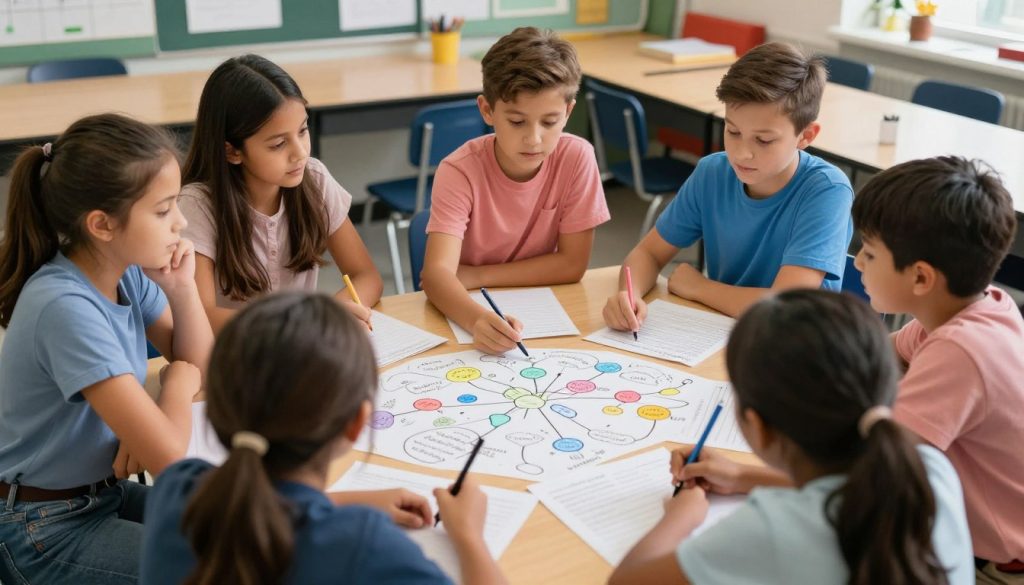
Gifted students thrive when engaged in collaborative, challenging activities that stretch their thinking abilities.
Before diving into specific successful strategies for teaching gifted learners, it’s crucial to understand who these students are. Gifted learners aren’t simply high achievers; they possess exceptional abilities in one or more areas compared to their peers. According to the National Association for Gifted Children, these students demonstrate outstanding levels of aptitude or competence in intellectual, creative, artistic, or leadership domains.
Common Characteristics of Gifted Students
- Advanced vocabulary and language skills
- Exceptional problem-solving abilities
- Intense curiosity and persistent questioning
- Ability to process information quickly
- Strong sense of justice and empathy
- Perfectionism and high personal standards
- Asynchronous development (intellectual ability may outpace emotional or social development)
- Preference for independent work
Recognizing these traits is the first step in developing effective teacher skills for working with gifted learners. It’s important to note that gifted students aren’t a homogeneous group—they vary widely in their strengths, interests, and learning preferences. Some may excel across all academic areas, while others show exceptional ability in specific domains.
“Gifted students need less grade-level work, faster-paced lessons, deeper and more advanced content, and opportunities to work with other gifted students.”
Successful Strategies for Teaching Gifted Learners Through Differentiation
Differentiation is perhaps the most essential teacher skill when working with gifted students. This approach allows you to modify content, process, and products to match students’ readiness levels, interests, and learning profiles. Here are practical differentiation strategies that have proven effective:
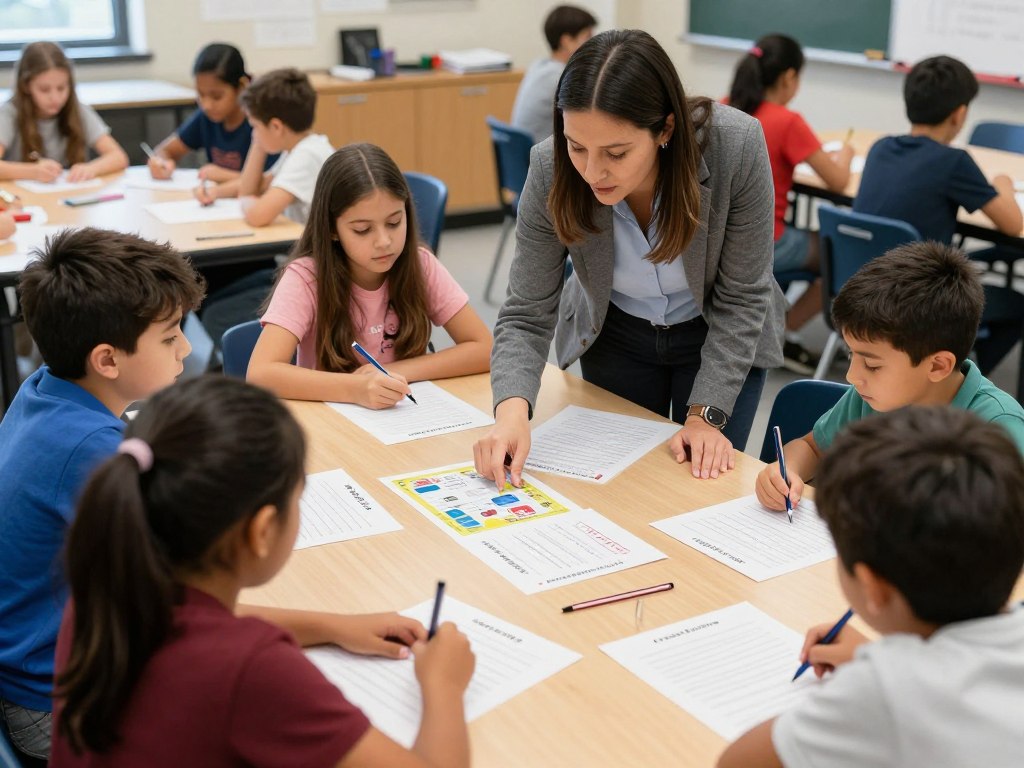
Differentiated instruction allows teachers to meet the unique needs of gifted learners while managing diverse classrooms.
1. Curriculum Compacting
Curriculum compacting eliminates repetition of mastered material, freeing up time for more challenging work. This strategy respects gifted students’ ability to learn quickly and prevents boredom and disengagement.
Implementation Steps:
- Pre-assess students to identify what they already know
- Document mastered content and skills
- Replace repetitive work with enrichment or acceleration activities
Teacher Skills Needed:
- Assessment design and analysis
- Flexible planning
- Resource management
2. Tiered Assignments
Tiered assignments allow students to explore the same concepts but at different levels of complexity, abstractness, and open-endedness. This approach ensures appropriate challenge while maintaining focus on essential learning goals.
Practical Example: In a unit on ecosystems, while most students might create a basic food web, gifted learners could analyze how changes to one species impact the entire ecosystem, or design solutions for maintaining biodiversity in threatened environments.
3. Flexible Grouping
Strategic grouping arrangements allow gifted students to work with intellectual peers when appropriate while also developing social skills with diverse classmates. Developing this teacher skill helps create a balanced learning environment.
Group Types:
- Ability grouping for advanced content
- Interest-based groups for projects
- Mixed-ability groups for collaborative learning
- Individual work for independent study
Benefits:
- Prevents isolation of gifted students
- Provides appropriate academic challenge
- Develops leadership and collaboration skills
- Accommodates different learning preferences
Enrichment: Core Successful Strategies for Teaching Gifted Learners
Enrichment activities extend learning beyond the standard curriculum, adding depth and complexity rather than simply accelerating through content. These approaches help develop critical teacher skills for nurturing gifted minds.
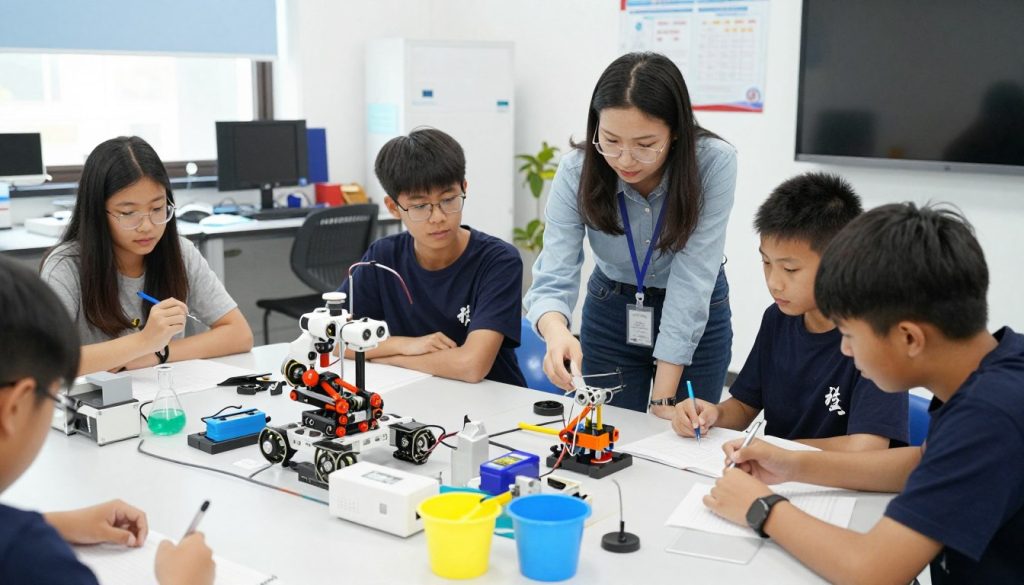
Enrichment activities provide the depth and complexity gifted learners crave.
1. Problem-Based Learning
Problem-based learning (PBL) presents students with authentic, complex problems that require interdisciplinary thinking. This approach naturally differentiates as gifted students can pursue solutions with greater sophistication.
“When gifted students work on real-world problems, they develop both the academic skills and the social-emotional competencies they’ll need for future success.”
2. Independent Study Projects
Independent studies allow gifted learners to pursue topics of personal interest in depth. This strategy develops research skills, time management, and self-directed learning—all valuable teacher skills to model and facilitate.
Project Components:
- Student-selected topic within curriculum parameters
- Research plan with timeline and checkpoints
- Multiple information sources
- Creative presentation of findings
Teacher’s Role:
- Guide topic selection and refinement
- Teach research methodologies
- Provide feedback at checkpoints
- Facilitate presentation opportunities
3. Depth and Complexity Frameworks
The Depth and Complexity Framework, developed by Sandra Kaplan, provides a structured approach to enrichment. This framework helps teachers develop the specific teacher skills needed to add sophistication to curriculum content.
The Depth and Complexity Framework provides structure for enriching curriculum for gifted learners.
Enhance Your Teacher Skills with Professional Development
Looking for more in-depth training on implementing these enrichment strategies? Explore our specialized courses designed specifically for teachers working with gifted learners.
Acceleration: Powerful Successful Strategies for Teaching Gifted Learners
Acceleration strategies allow gifted students to progress through curriculum at a faster pace aligned with their learning capabilities. These approaches require specific teacher skills to implement effectively while maintaining student well-being.

Subject-specific acceleration allows gifted students to progress at their own pace in areas of strength.
Types of Acceleration
Content-Based
- Subject acceleration
- Curriculum compacting
- Advanced placement
- Dual enrollment
Grade-Based
- Grade skipping
- Early entrance
- Early graduation
Grouping-Based
- Cluster grouping
- Pull-out programs
- Special classes
Research consistently shows that acceleration, when implemented thoughtfully, leads to positive outcomes for gifted students. According to A Nation Deceived: How Schools Hold Back America’s Brightest Students, acceleration is “one of the most well-researched and yet most under-utilized strategies” for gifted learners.
Key Teacher Skill: Assessing readiness for acceleration requires looking beyond academic achievement to consider social-emotional factors, motivation, and student interest. Developing this assessment skill is crucial for successful implementation.
Practical Classroom Applications of Successful Strategies for Teaching Gifted Learners
Let’s explore how these strategies can be implemented across different subject areas, with specific examples that demonstrate essential teacher skills in action.
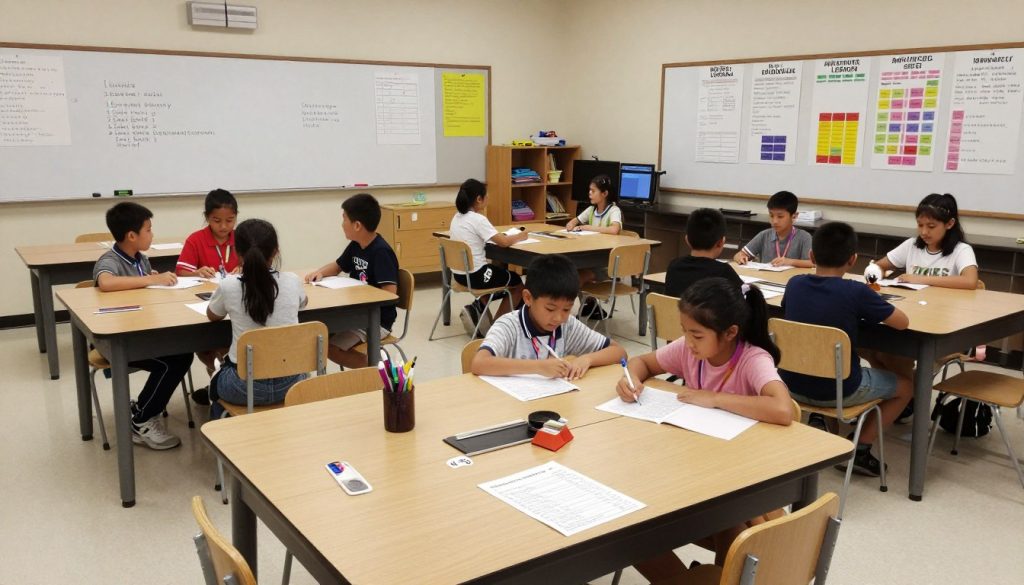
Learning stations with tiered assignments allow for differentiation within a single classroom.
Language Arts
Strategy: Literature Circles with Tiered Texts
Provide reading materials at different complexity levels while maintaining thematic connections. Gifted students can engage with more sophisticated texts while participating in whole-class discussions about common themes.
Teacher Skills: Text selection, questioning strategies, facilitating meaningful discussions across reading levels
Strategy: Socratic Seminars
These student-led discussions encourage deep analysis of texts through questioning and dialogue. Gifted students thrive with the intellectual challenge and opportunity to explore complex ideas.
Teacher Skills: Crafting essential questions, teaching discussion protocols, balancing participation
Mathematics
Strategy: “Most Difficult First”
Allow students who can demonstrate mastery on the most challenging problems to skip repetitive practice and move to extension activities.
Teacher Skills: Problem selection, creating meaningful extensions, managing multiple activities simultaneously
Strategy: Open-Ended Problem Solving
Present problems with multiple solution paths or no single correct answer. This naturally differentiates as gifted students can pursue more sophisticated approaches.
Teacher Skills: Problem design, supporting productive struggle, facilitating mathematical discourse
Science
Strategy: Inquiry-Based Investigations
Allow gifted students to design their own experiments to answer scientific questions, going beyond prescribed lab procedures.
Teacher Skills: Guiding experimental design, teaching research methods, ensuring safety with advanced procedures
Strategy: Concept-Based Instruction
Focus on big ideas and conceptual understanding rather than isolated facts. Gifted students can explore deeper connections between concepts.
Teacher Skills: Identifying core concepts, designing conceptual frameworks, asking higher-order questions
Ready to Transform Your Teaching of Gifted Learners?
Our specialized course on gifted education provides comprehensive training on implementing these strategies in your classroom.
Assessment Strategies for Gifted Learners
Traditional assessment approaches often fail to capture the true capabilities of gifted students. Developing teacher skills in alternative assessment is crucial for accurately measuring growth and providing meaningful feedback.
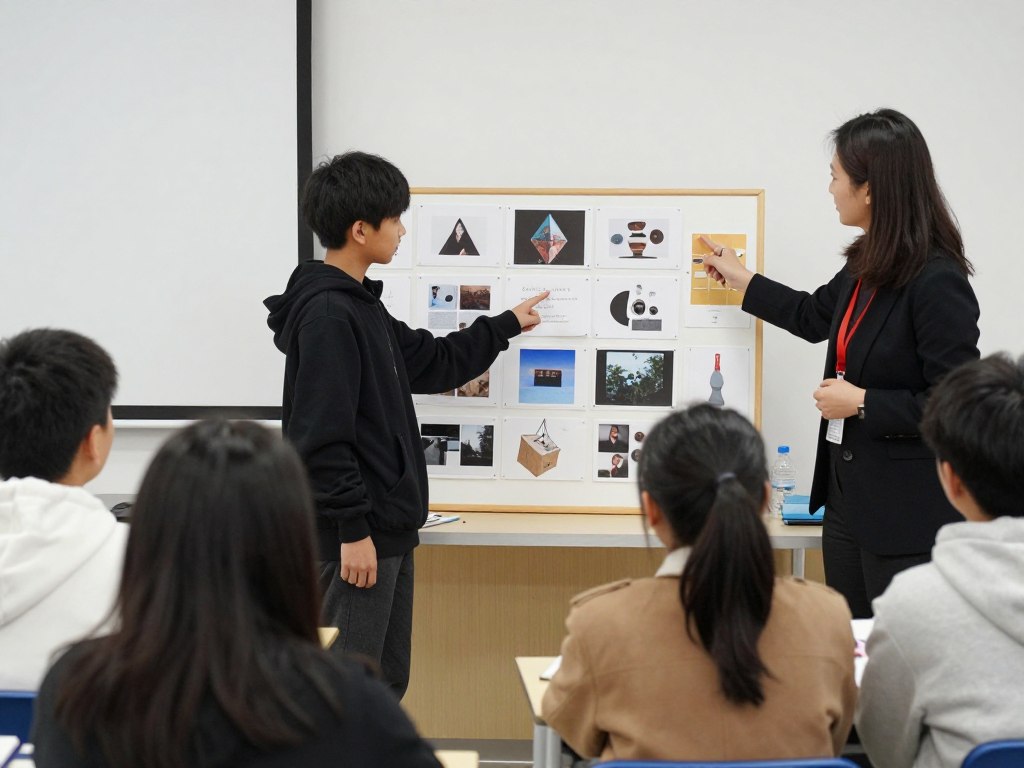
Authentic assessment allows gifted students to demonstrate learning in meaningful ways.
Effective Assessment Approaches
- Pre-assessment: Identify what students already know to avoid repetition and boredom
- Performance-based assessment: Evaluate students’ ability to apply knowledge in authentic contexts
- Portfolio assessment: Document growth over time through collections of work
- Self-assessment: Develop metacognitive skills through reflection on learning
- Above-level testing: Use assessments designed for older students to accurately measure ability
Important Consideration: Avoid using gifted students’ work as exemplars for the rest of the class without their permission. This can create social discomfort and reinforce perfectionism.
Developing these assessment teacher skills helps ensure that gifted students receive appropriate feedback and continue to grow academically, even when they’re already performing above grade level.
Technology Integration in Successful Strategies for Teaching Gifted Learners
Technology offers powerful tools for differentiating instruction and providing enrichment for gifted learners. Developing teacher skills in educational technology integration can significantly enhance your ability to meet gifted students’ needs.

Technology enables personalized learning pathways and access to advanced content for gifted students.
Effective Technology Applications
Personalized Learning
- Adaptive learning platforms
- Self-paced online courses
- Digital content libraries
Creation Tools
- Digital storytelling
- Coding and programming
- Multimedia production
Collaboration Tools
- Virtual connections with experts
- Global classroom partnerships
- Collaborative problem-solving
When integrating technology, focus on how it enables learning experiences that would otherwise be impossible, rather than simply digitizing traditional assignments. This approach helps develop critical teacher skills for the digital age.
“Technology should be used to amplify great teaching, not replace it. The most powerful technology integration happens when teachers design learning experiences that couldn’t exist without the technology.”
Collaborating with Families: A Key Component of Successful Strategies for Teaching Gifted Learners
Parents and caregivers of gifted children are essential partners in supporting these students’ development. Building strong home-school connections requires specific teacher skills and intentional communication strategies.

Regular communication with families helps create consistent support systems for gifted learners.
Effective Family Collaboration Strategies
- Share information about the nature of giftedness and typical characteristics
- Provide specific suggestions for enrichment activities at home
- Discuss both academic progress and social-emotional development
- Involve parents in identifying students’ interests and strengths
- Create opportunities for parent input in educational planning
- Connect families with resources and support networks
How can I help parents understand their child’s gifted identification?
Explain the identification process clearly, focusing on specific strengths rather than labels. Share resources about giftedness and emphasize that gifted students still need support and guidance. Discuss both the benefits and challenges that come with giftedness.
What should I do when parents have different expectations than the school?
Listen actively to parents’ concerns and perspectives. Share your professional observations while acknowledging their expertise about their child. Focus on finding common ground and developing shared goals. When appropriate, involve the student in these conversations to ensure their voice is heard.
Developing strong communication teacher skills helps ensure that gifted students receive consistent support across all environments, maximizing their opportunity for growth.
Professional Development for Teaching Gifted Learners
Implementing successful strategies for teaching gifted learners requires ongoing professional growth. Investing in your teacher skills through specialized training yields benefits for all your students, not just those identified as gifted.
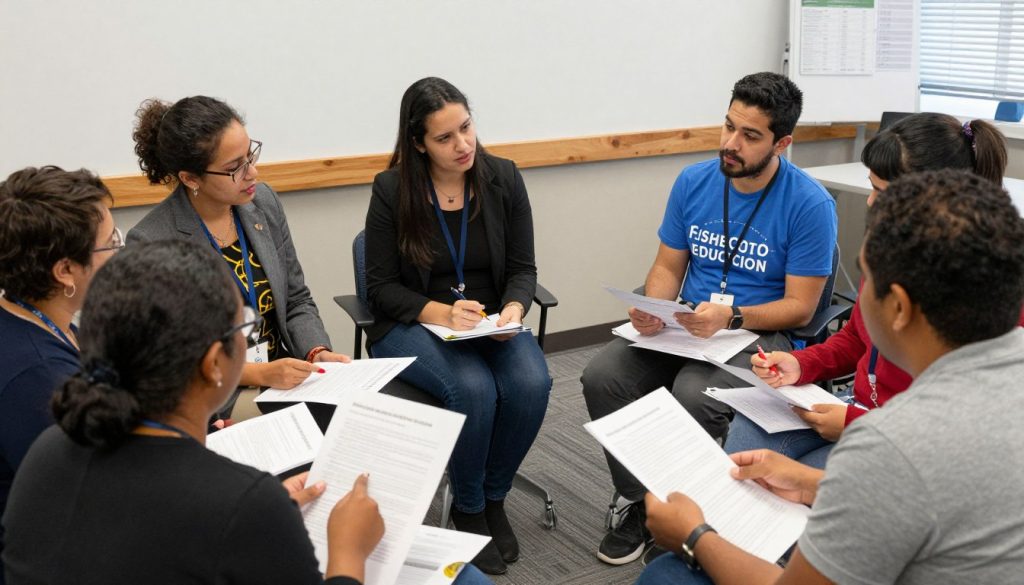
Collaborative professional development helps teachers refine their approaches to gifted education.
Key Areas for Professional Growth
- Understanding the unique characteristics and needs of gifted learners
- Developing differentiation strategies across content areas
- Creating appropriately challenging assessments
- Supporting social-emotional development
- Advocating for gifted education within your school community
Enhance Your Gifted Education Teacher Skills
Our specialized courses provide comprehensive training in gifted education strategies, with flexible options to fit your schedule and professional goals.
Remember that developing your teacher skills in gifted education benefits all students. Many strategies that work well for gifted learners—such as problem-based learning, critical thinking activities, and creative projects—can be adapted to engage and challenge students at all levels.
Conclusion: Implementing Successful Strategies for Teaching Gifted Learners
Teaching gifted students is both challenging and rewarding. By implementing the successful strategies for teaching gifted learners outlined in this guide—differentiation, enrichment, acceleration, and social-emotional support—you can create a learning environment where these exceptional students thrive.
Remember that developing your teacher skills in these areas is an ongoing journey. Start with small, manageable changes, reflect on their effectiveness, and gradually expand your repertoire of strategies. The investment you make in understanding and supporting gifted learners will yield significant benefits for these students and enhance your overall teaching practice.
Take the Next Step in Your Professional Journey
Ready to deepen your understanding of gifted education? Our comprehensive course provides practical strategies you can implement immediately in your classroom.
By committing to developing your teacher skills in gifted education, you’re not only supporting your current gifted students but also preparing to recognize and nurture the potential in all learners you’ll teach throughout your career.



Social-Emotional Support: Essential Successful Strategies for Teaching Gifted Learners
Gifted students often face unique social-emotional challenges, including perfectionism, heightened sensitivity, and asynchronous development. Developing teacher skills to address these needs is just as important as academic differentiation.
Building strong relationships with gifted learners helps address their unique social-emotional needs.
Common Social-Emotional Challenges
Supportive Strategies
Developing teacher skills to address these challenges includes:
“Learning should be joyful or at least satisfying, rather than just hard.”
– Carol Ann Tomlinson