

As educators, we’ve all heard about the importance of setting high expectations for our students. Yet translating this concept into daily classroom practice requires specific teacher skills that go beyond simply raising the bar. Throughout this article, we’ll explore research-backed strategies for effectively implementing high expectations in ways that empower rather than overwhelm your students.
Understanding What Setting High Expectations Really Means
Setting high expectations goes far beyond simply assigning more difficult work or demanding perfection. At its core, it’s a mindset that communicates to students: “I believe in your capacity to grow and achieve at high levels.” This belief system permeates everything from how we design lessons to how we respond when students struggle.
High expectations are characterized by:
- Rigorous, grade-appropriate content for all students
- Clear communication of learning objectives
- Scaffolded support that maintains challenge while providing necessary assistance
- Feedback focused on growth rather than just correctness
- A classroom culture that normalizes productive struggle
What high expectations are not is equally important. They aren’t about creating stress, assigning excessive work, or holding students to unrealistic standards without support. As educational researchers have noted, effective high expectations are always paired with high levels of support.
Developing the teacher skills necessary to balance challenge and support requires ongoing reflection and refinement. The most effective educators continuously calibrate their expectations based on student responses while never lowering the ultimate vision of what students can achieve.
The Research Behind Setting High Expectations
The power of expectations in education has been well-documented since the groundbreaking Pygmalion studies in the 1960s. Psychologists Robert Rosenthal and Lenore Jacobson found that when teachers were told certain randomly selected students would show significant academic growth, those students actually did outperform their peers—simply because teachers unconsciously gave them more attention, feedback, and opportunities to succeed.
This phenomenon, known as the Pygmalion Effect, demonstrates how powerful teacher expectations can be in shaping student outcomes. More recent research continues to support these findings:
Students who have teachers with high expectations are more than three times as likely to graduate from college as students who have teachers with low expectations.
The impact of high expectations extends beyond academic achievement. Students in high-expectation environments also demonstrate:
- Increased self-efficacy and confidence
- Greater persistence when facing challenges
- Stronger growth mindset development
- Better long-term educational outcomes
Importantly, research shows that teacher skills in communicating and supporting high expectations are particularly crucial for historically marginalized students. When teachers consistently communicate high expectations to all students regardless of background, achievement gaps begin to narrow.
Practical Strategies for Setting High Expectations in Your Classroom

Clear Learning Objectives and Success Criteria
One of the foundational teacher skills for setting high expectations is clearly communicating what success looks like. When students understand exactly what they’re aiming for, they’re more likely to hit the target.
- Post and discuss learning objectives in student-friendly language
- Co-create success criteria with students
- Provide exemplars of high-quality work
- Use “I can” statements to build student agency
These practices eliminate the guesswork that often prevents students from meeting high expectations. As one middle school teacher put it, “When my students know exactly what excellence looks like, they stop asking ‘Is this good enough?’ and start asking ‘How can I make this better?'”
Looking to enhance your teacher skills in creating effective learning objectives? This professional development course offers practical templates and strategies.
Questioning Techniques That Promote Deeper Thinking
The questions we ask signal the depth of thinking we expect. Developing advanced teacher skills in questioning is essential for setting high expectations.
- Use a mix of DOK (Depth of Knowledge) levels, emphasizing levels 3 and 4
- Implement wait time of at least 3-5 seconds after asking questions
- Follow up student responses with “Why?” or “How do you know?”
- Encourage students to question each other’s thinking respectfully
When we consistently ask higher-order questions, we communicate that we expect students to engage in complex thinking. This signals our belief in their intellectual capabilities.
Feedback That Propels Growth
The way we respond to student work powerfully communicates our expectations. Effective feedback is:
- Specific and actionable
- Focused on the process rather than the person
- Timely enough to be implemented
- Connected to clear success criteria
One particularly effective strategy is implementing revision cycles. Rather than accepting first attempts as final, build in opportunities for students to receive feedback and improve their work. This communicates that excellence often requires multiple iterations—a valuable real-world lesson.
Develop Your Feedback Skills
Looking to enhance your teacher skills in providing effective feedback? Our professional development courses can help you master this essential aspect of setting high expectations.
Creating a Classroom Culture That Supports Setting High Expectations
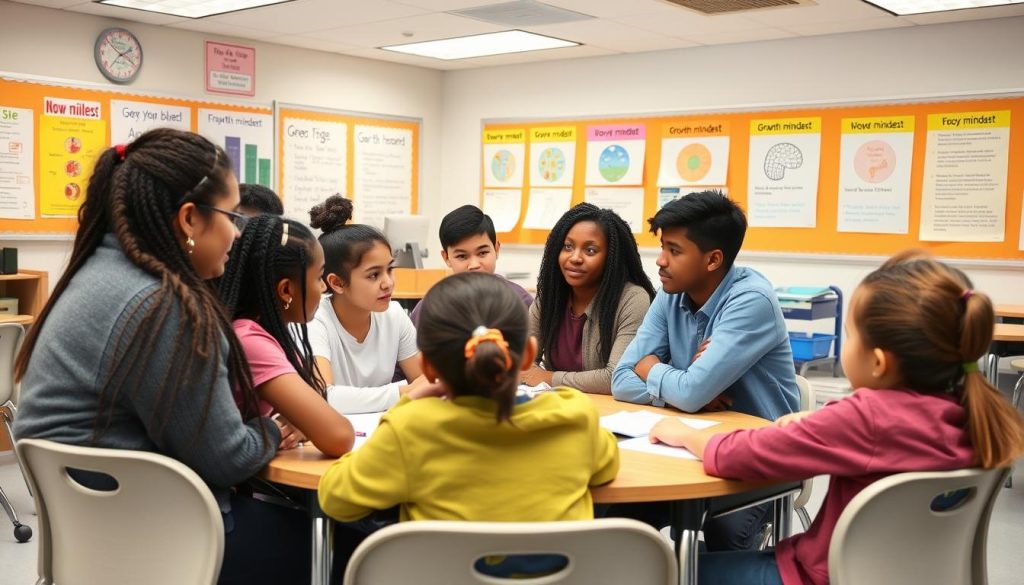
The environment we create either reinforces or undermines our expectations. Building a classroom culture that truly supports high achievement requires specific teacher skills and intentional practices.
Normalizing Productive Struggle
When students believe that struggle indicates lack of ability rather than a natural part of learning, they’re more likely to give up when faced with challenges. Effective teachers explicitly teach students that:
- Confusion and mistakes are valuable parts of the learning process
- Effective effort matters more than innate ability
- The brain grows through challenge, similar to how muscles develop through exercise
Consider sharing examples of your own learning struggles or highlighting famous figures who persisted through multiple failures before achieving success. These stories help students understand that struggle is universal, not a sign of personal deficiency.
Building Student Agency
High expectations should empower students, not control them. Developing teacher skills that foster student ownership is essential:
- Provide meaningful choices within assignments
- Teach self-assessment strategies
- Gradually release responsibility to students
- Create opportunities for student-led discussions and projects
When students see themselves as active participants in their learning rather than passive recipients, they’re more likely to rise to high expectations. As one elementary teacher noted, “The moment I shifted from being the keeper of knowledge to the facilitator of discovery, my students began exceeding the expectations I had previously set for them.”
Want to learn more about fostering student agency? This specialized course offers practical strategies for K-12 classrooms.
Balancing High Expectations with Individual Student Needs

One of the most challenging teacher skills is maintaining high expectations while acknowledging that students have different starting points and learning needs. The key is understanding that differentiation doesn’t mean lowering expectations—it means providing varied pathways to the same high standards.
Scaffolding vs. Simplifying
There’s a crucial distinction between scaffolding (providing temporary supports) and simplifying (reducing the cognitive demand). Effective scaffolding might include:
- Breaking complex tasks into manageable steps
- Providing sentence frames or starter templates
- Using visual organizers to structure thinking
- Pre-teaching vocabulary or concepts
The critical difference is that scaffolds are designed to be gradually removed as students develop independence. They support students in meeting high expectations rather than circumventing them.
Using Formative Assessment to Guide Support
Responsive teaching requires ongoing assessment of where students are in relation to learning goals. Developing teacher skills in formative assessment allows you to:
- Identify specific misconceptions or skill gaps
- Form flexible groups for targeted instruction
- Adjust scaffolding based on student progress
- Celebrate growth toward high expectations
Remember that setting high expectations doesn’t mean expecting all students to reach the same point at the same time. It means believing all students can make significant progress from their current level toward challenging goals.
High expectations without appropriate support is simply setting students up for failure. High support without high expectations is a form of lowering the bar.
Finding this balance challenging? Professional development resources can help you refine these essential teacher skills.
Overcoming Challenges in Setting High Expectations
Even with the best intentions, educators often encounter obstacles when implementing high expectations. Developing resilient teacher skills helps address these common challenges:
“What about students who are significantly behind grade level?”
This concern reflects a genuine care for students who might feel overwhelmed by grade-level expectations. The solution lies in providing intensive scaffolding while maintaining access to grade-appropriate content. Research shows that remediation alone rarely closes gaps—students need exposure to grade-level material alongside targeted support for prerequisite skills.
Effective approaches include:
- Just-in-time skill building rather than extensive review
- Parallel instruction that addresses gaps while maintaining grade-level work
- Strategic use of small groups and individual conferences
“Won’t high expectations increase student anxiety?”
This concern highlights the important distinction between high expectations and high pressure. When implemented effectively, high expectations actually reduce anxiety by:
- Providing clear paths to success rather than vague demands
- Emphasizing growth over perfection
- Building confidence through scaffolded successes
- Creating a supportive community where struggle is normalized
The teacher skills needed here involve creating psychological safety alongside academic challenge—showing students that you believe in them while providing the support they need to succeed.
“How do I manage my time with these approaches?”
Implementing high expectations effectively does require thoughtful planning and efficient use of instructional time. Experienced teachers recommend:
- Focusing on depth over breadth in curriculum coverage
- Using peer feedback and self-assessment to multiply feedback opportunities
- Creating systems for efficient formative assessment
- Developing routines that maximize student independence
Many teachers find that investing time upfront in teaching students how to engage with high expectations actually saves time later in the year as students develop greater independence and ownership.
Enhance Your Teacher Skills
Looking for more strategies to overcome challenges in setting high expectations? Our specialized course provides practical solutions for K-12 classrooms.
Setting High Expectations Through an Equity Lens

Perhaps nowhere are high expectations more crucial than in our work with historically marginalized students. Research consistently shows that teacher expectations can either reinforce or help dismantle achievement gaps.
Developing equitable teacher skills means examining our own biases about who can achieve at high levels. It requires us to ask:
- Do I hold the same high expectations for all student groups?
- Am I providing equitable access to rigorous content?
- Do my feedback patterns differ based on student characteristics?
- Are my supports designed to bring all students to high standards?
Culturally responsive teaching provides a powerful framework for setting high expectations that honor students’ diverse backgrounds. This approach:
- Builds on students’ cultural knowledge as a strength
- Connects academic content to students’ lived experiences
- Creates multiple pathways to demonstrate mastery
- Explicitly teaches the “hidden curriculum” of school success
By combining high expectations with cultural responsiveness, we create classrooms where all students can thrive. As educator Gloria Ladson-Billings notes, “The trick is to teach students to ‘play the game’ while simultaneously working to change the game.”
Your Professional Growth Journey in Setting High Expectations
Setting high expectations is not a destination but a journey of continuous refinement. The most effective educators view developing these teacher skills as an ongoing professional commitment.
Consider these pathways for deepening your practice:
- Collaborative planning with colleagues to align expectations across classrooms
- Video analysis of your instruction to examine questioning patterns and feedback
- Student surveys to understand how they perceive classroom expectations
- Professional learning communities focused on high-expectation practices
Remember that developing these teacher skills takes time and reflection. Be patient with yourself while maintaining high expectations for your own growth—modeling the same mindset we hope to instill in our students.
Continue Your Professional Growth
Ready to take your teacher skills to the next level? Our comprehensive courses on setting high expectations provide research-based strategies you can implement immediately in your classroom.
Embracing the Journey of Setting High Expectations
As we’ve explored throughout this article, setting high expectations is both an art and a science. It requires specific teacher skills, ongoing reflection, and a deep belief in the potential of every student. When we combine rigorous expectations with appropriate support, we create classrooms where students discover capabilities they didn’t know they possessed.
Remember Maria, the seventh-grader I mentioned at the beginning? By the end of that school year, she had not only excelled in mathematics but had also developed a confidence that extended to other subjects. The simple act of communicating high expectations—and providing the support to meet them—transformed her educational trajectory.
Your journey in developing these teacher skills will have challenges and triumphs. There will be days when you question whether your expectations are too high, and days when students surprise you by exceeding even your boldest visions. Through it all, remember that your belief in what students can achieve is one of the most powerful gifts you can offer them.
What step will you take tomorrow to communicate high expectations in your classroom?