

In this article, we’ll explore why vocabulary instruction deserves a central place in your literacy teaching toolkit. We’ll examine research-backed evidence, practical classroom strategies, and ways to enhance your teacher skills in this vital area. Whether you’re a veteran educator or new to the profession, strengthening your approach to vocabulary instruction can dramatically impact your students’ reading comprehension and overall academic success.
Effective vocabulary instruction engages students and builds critical literacy foundations
Understanding the Importance of Vocabulary in the Science of Reading
The science of reading has consistently demonstrated that vocabulary knowledge is one of the strongest predictors of reading comprehension. When students encounter unfamiliar words, their comprehension breaks down, regardless of their decoding abilities. This relationship between vocabulary and comprehension is so strong that research has shown vocabulary knowledge can account for up to 64% of the variance in reading comprehension scores.
Dr. Deslea Konza, a prominent literacy researcher, emphasizes that “the number and variety of words that children know in the preschool and initial years of schooling is a significant predictor of reading comprehension in the middle and secondary years of schooling and of broader academic and vocational success.” This underscores why developing strong teacher skills in vocabulary instruction is essential for long-term student achievement.
The relationship between vocabulary and reading success can be explained through what researchers call the Matthew Effect—where students with larger vocabularies read more, learn more words through reading, and consequently improve their comprehension, creating a positive cycle. Conversely, students with limited vocabularies read less, encounter more frustration, and fall further behind their peers.
“Without grammar, very little can be conveyed; without vocabulary, nothing can be conveyed.” – British linguist David A. Wilkins
As educators, our teacher skills must include the ability to interrupt this negative cycle by implementing effective vocabulary instruction that gives all students access to the words they need for academic success. Professional development resources can help you stay current with the latest research and strategies in vocabulary instruction.
The Importance of Vocabulary for Comprehension and Equity
Vocabulary knowledge doesn’t just affect reading—it creates or removes barriers to educational equity. Students enter our classrooms with vastly different vocabulary foundations based on their home environments, early experiences, and exposure to language. Research by Hart and Risley found that by age three, children from advantaged backgrounds had been exposed to approximately 30 million more words than children from disadvantaged backgrounds.
This “word gap” has profound implications for literacy instruction. Without intentional vocabulary development, these early differences can widen over time, affecting students’ ability to access grade-level texts and content across all subject areas. Developing teacher skills to address vocabulary needs is therefore an equity issue—one that can help level the playing field for all students.
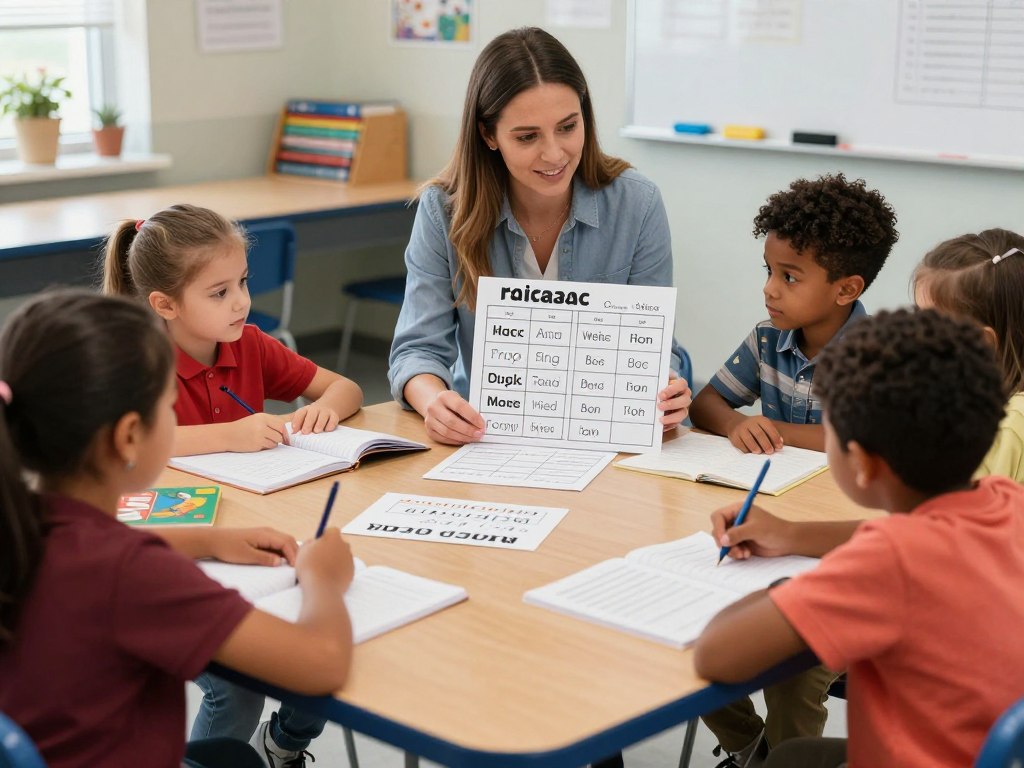
Small group instruction allows for targeted vocabulary development
Vocabulary instruction is particularly crucial for English Language Learners (ELLs), who must simultaneously develop conversational and academic language. Effective teacher skills include distinguishing between these types of vocabulary and providing explicit instruction in academic language that may not be encountered in everyday conversation.
The three-tier model of vocabulary, developed by Isabel Beck, Margaret McKeown, and Linda Kucan, provides a useful framework for thinking about which words to teach:
- Tier 1 words: Basic, everyday words most native speakers know (e.g., clock, baby, happy)
- Tier 2 words: High-utility academic words that appear across content areas (e.g., analyze, compare, elaborate)
- Tier 3 words: Domain-specific words tied to particular subjects (e.g., photosynthesis, democracy, algorithm)
Focusing your teacher skills on Tier 2 words offers the biggest return on investment for most students, as these words appear frequently in academic texts but are less likely to be learned through everyday conversation.
Moving Beyond Word Lists: Practical Strategies that Show the Importance of Vocabulary
Traditional vocabulary instruction often relies on memorizing definitions and completing worksheets—approaches that research has shown to be ineffective for deep word learning. Developing advanced teacher skills means moving beyond these limited methods to more engaging, research-based approaches.
Here are practical strategies that honor the importance of vocabulary while making word learning meaningful and memorable:
1. Build Rich Contexts for Word Learning
Words are best learned in meaningful contexts rather than in isolation. Effective teacher skills include creating authentic opportunities for students to encounter and use new vocabulary.
- Organize instruction around themes that allow for repeated exposure to related vocabulary
- Use read-alouds to introduce sophisticated vocabulary in engaging contexts
- Create word-rich classroom environments with word walls, vocabulary notebooks, and regular word discussions
2. Teach Word-Learning Strategies
Teaching students how to determine word meanings independently is one of the most valuable teacher skills for long-term vocabulary development.
Teaching morphology helps students decode unfamiliar words independently
- Morphology instruction: Teaching prefixes, suffixes, and roots
- Context clues: Identifying surrounding words that hint at meaning
- Word relationships: Understanding synonyms, antonyms, and related concepts
These strategies empower students to tackle unfamiliar words they encounter during independent reading, significantly expanding their vocabulary over time.
3. Provide Multiple Exposures in Various Contexts
Research indicates that students need 6-12 meaningful exposures to a word before they truly own it. Strong teacher skills include creating multiple opportunities for students to interact with target vocabulary.
- Revisit words across different texts and content areas
- Create games and activities that require using target words
- Incorporate vocabulary into writing assignments and discussions
4. Use Visual and Kinesthetic Approaches
Multisensory techniques enhance word learning by creating multiple pathways to memory. Developing these teacher skills can make vocabulary instruction more engaging and effective.
- Vocabulary sketches: Students draw simple representations of words
- Semantic mapping: Creating visual webs showing relationships between words
- Movement and gestures: Associating physical actions with word meanings
Enhance Your Vocabulary Instruction Skills
Looking for comprehensive resources to strengthen your vocabulary teaching? Credits for Teachers offers specialized professional development focused on evidence-based vocabulary instruction strategies.
Assessing Vocabulary Growth and the Importance of Vocabulary Data
Effective assessment is a critical teacher skill that allows you to track vocabulary development and adjust instruction accordingly. When we recognize the importance of vocabulary assessment, we can better target our teaching to meet students’ specific needs.
Consider these approaches to vocabulary assessment:
Formative Assessment Strategies
- Vocabulary Knowledge Scales: Students rate their familiarity with words from “I’ve never heard this word” to “I can use this word in a sentence”
- Exit Tickets: Quick checks for understanding of target vocabulary
- Observation: Monitoring students’ use of vocabulary during discussions and activities
- Word Sorts: Students categorize words based on meanings, relationships, or other criteria

Regular assessment helps track vocabulary growth and inform instruction
Summative Assessment Approaches
- Vocabulary in Context: Assessing students’ ability to use words appropriately in writing
- Word Relationship Tasks: Evaluating understanding of synonyms, antonyms, and analogies
- Application Activities: Projects that require students to apply vocabulary knowledge
Remember that the goal of vocabulary assessment isn’t just to measure word knowledge but to inform your instruction. Using assessment data to identify patterns and gaps is an essential teacher skill that allows you to target vocabulary instruction more effectively.
When analyzing vocabulary assessment data, look for:
- Patterns in the types of words students struggle with
- Effectiveness of different instructional approaches
- Growth over time in both breadth and depth of vocabulary knowledge
This data-informed approach acknowledges the importance of vocabulary as a foundational literacy skill that requires ongoing attention and adjustment.
Building Your Teacher Skills for Robust Vocabulary Instruction
Developing expertise in vocabulary instruction is a continuous journey that requires intentional professional growth. As you refine your teacher skills in this area, consider these approaches:
1. Become a Word-Conscious Educator
Model word consciousness by showing enthusiasm for language and making vocabulary learning a visible priority in your classroom. This teacher skill creates a culture where students value and notice words.
- Share interesting words you encounter in your own reading
- Point out nuances in word meanings during discussions
- Celebrate creative and precise word usage in student writing
2. Integrate Vocabulary Across the Curriculum
Effective teacher skills include recognizing opportunities for vocabulary development throughout the school day, not just during designated literacy blocks.
Vocabulary instruction can be integrated across all subject areas
- Highlight domain-specific vocabulary in science, social studies, and math
- Create cross-curricular connections between related terms
- Use consistent vocabulary instruction methods across subjects
3. Collaborate with Colleagues
Sharing strategies and resources with fellow educators enhances everyone’s teacher skills and creates more consistent vocabulary instruction across grade levels.
- Form professional learning communities focused on vocabulary instruction
- Share effective strategies and resources
- Analyze student vocabulary data together to identify trends
4. Pursue Targeted Professional Development
Staying current with research and best practices is a crucial teacher skill that ensures your vocabulary instruction remains effective and evidence-based.
Consider exploring professional development opportunities specifically focused on vocabulary instruction to deepen your expertise in this critical area.
5. Reflect on Your Practice
Regular reflection on the effectiveness of your vocabulary instruction is a hallmark of advanced teacher skills.
- Document successful vocabulary lessons and activities
- Identify areas where students need additional support
- Adjust your approach based on student outcomes
By continuously refining your teacher skills in vocabulary instruction, you create more powerful learning opportunities for your students and acknowledge the fundamental importance of vocabulary in literacy development.
Practical Implementation: The Importance of Vocabulary in Daily Instruction
Translating research into practice requires thoughtful planning and intentional implementation. Here’s how to incorporate the importance of vocabulary into your daily teaching routine:
Create a Weekly Vocabulary Routine
Establishing consistent structures helps students know what to expect and ensures vocabulary receives regular attention. Effective teacher skills include creating routines that balance explicit instruction with meaningful application.
| Day | Activity | Purpose |
| Monday | Introduce 5-7 target words in context | Establish initial understanding |
| Tuesday | Word analysis (morphology, related words) | Deepen understanding of word structure |
| Wednesday | Semantic mapping and visual representations | Create connections between concepts |
| Thursday | Application in writing and speaking | Practice using words in context |
| Friday | Review games and formative assessment | Reinforce learning and check understanding |
Differentiate Vocabulary Instruction
Recognizing that students have different vocabulary needs is an important teacher skill that allows you to provide appropriate support for all learners.

Differentiated instruction addresses varying vocabulary needs
- For students with limited vocabulary: Provide additional exposures and concrete examples
- For English Language Learners: Connect new words to home language when possible
- For advanced learners: Explore nuances in meaning and more sophisticated related words
Engage Families in Vocabulary Development
Extending vocabulary learning beyond the classroom multiplies opportunities for word learning. Strong teacher skills include finding ways to involve families in vocabulary development.
- Share weekly vocabulary words with families
- Suggest simple activities families can do at home
- Provide multilingual resources when appropriate
By implementing these practical approaches, you demonstrate your understanding of the importance of vocabulary while developing essential teacher skills that benefit all your students.
Ready to Transform Your Vocabulary Instruction?
Access comprehensive resources designed specifically for K-12 teachers looking to enhance their vocabulary instruction. Our research-based approaches will help you develop the teacher skills needed to make vocabulary instruction more effective and engaging.
Conclusion: Embracing the Importance of Vocabulary in Your Teaching Practice
The importance of vocabulary in literacy development cannot be overstated. As we’ve explored throughout this article, vocabulary knowledge serves as a foundation for reading comprehension, academic achievement, and educational equity. By developing your teacher skills in vocabulary instruction, you provide students with tools that will serve them throughout their academic careers and beyond.

Effective vocabulary instruction leads to student success and confidence
Remember that effective vocabulary instruction is:
- Intentional: Carefully selecting words worth teaching
- Contextual: Teaching words in meaningful contexts
- Multifaceted: Providing multiple exposures and experiences
- Strategic: Teaching word-learning strategies alongside specific words
- Ongoing: Making vocabulary development a consistent priority
As you continue to refine your teacher skills in vocabulary instruction, you’ll see the impact not just in students’ reading comprehension, but in their writing, speaking, and overall academic confidence. The investment you make in vocabulary instruction today will yield dividends throughout your students’ educational journeys.
We encourage you to explore additional resources to further enhance your vocabulary instruction and to share your successful strategies with colleagues. Together, we can ensure that all students have access to the rich vocabulary they need to thrive as readers, writers, and thinkers.
Continue Your Professional Growth
Enhance your teacher skills with our comprehensive vocabulary instruction resources. Designed by educators for educators, these tools will help you implement research-based vocabulary strategies in your classroom immediately.