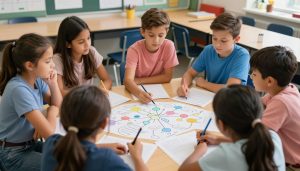

Gifted students bring unique challenges and opportunities to the classroom. As educators, we’re tasked with nurturing these bright minds while ensuring they remain engaged and challenged. Implementing effective strategies for challenging gifted learners requires specialized teacher skills and thoughtful approaches. These exceptional students often grasp concepts quickly, think more abstractly, and crave intellectual stimulation beyond the standard curriculum. Without proper challenge, they may become bored, disengaged, or even disruptive.
In this article, we’ll explore six proven strategies for challenging gifted learners that you can implement in your classroom tomorrow. These approaches help develop critical teacher skills while creating an environment where high-ability students can thrive. Whether you’re new to teaching gifted students or looking to enhance your current practices, these strategies will help you meet the complex needs of your brightest learners without taking the joy out of learning.
Understanding Gifted Students: The Foundation for Strategies for Challenging Gifted Learners
Before diving into specific strategies for challenging gifted learners, it’s important to understand who these students are. Giftedness manifests in various ways, and not all gifted students fit the stereotype of the straight-A achiever who always raises their hand first.
According to the National Association for Gifted Children, gifted individuals are those who demonstrate outstanding levels of aptitude or competence in one or more domains. These domains include mathematics, music, language, painting, dance, sports, and many others.

Gifted students often share certain characteristics:
- Learn rapidly and retain information easily
- Show unusual curiosity and ask complex questions
- Possess advanced vocabulary and communication skills
- Demonstrate strong critical thinking and problem-solving abilities
- Exhibit creativity and original thinking
- Show intense focus on areas of interest
- May be emotionally sensitive or perfectionistic
Developing teacher skills to identify these traits is crucial. Remember that gifted students may not excel in all areas—a student might be mathematically gifted but struggle with writing, or vice versa. Some gifted students may even underperform academically due to boredom, lack of challenge, or learning differences that mask their abilities.
As Dina Brulles, director of gifted education in the Paradise Valley Unified School District, explains, “Gifted students need less grade-level work, faster-paced lessons, deeper and more advanced content, and opportunities to work with other gifted students.” They also require teachers to be less of a “sage on the stage” and more of a “guide on the side.”
With this understanding in mind, let’s explore six effective strategies for challenging gifted learners in your classroom.
Strategy 1: Curriculum Compacting – Essential Strategies for Challenging Gifted Learners
Curriculum compacting is one of the most fundamental strategies for challenging gifted learners. This approach recognizes that gifted students often already know much of the grade-level content before it’s taught. Compacting “condenses, modifies, or streamlines the regular curriculum to reduce repetition of previously mastered material,” according to the National Association for Gifted Children.
How to Implement Curriculum Compacting
The process begins with pre-assessment. Before starting a new unit, assess what students already know. This could be through a quick quiz, a concept map, or even a simple show of hands for younger students. Those who demonstrate mastery can skip the regular instruction and move on to more challenging work.
A simple first step is the “Most Difficult First” approach. As Susan Flores, a 2nd grade teacher, explains: “Gifted students don’t need to do 25 problems in math when they can do the five most difficult first to demonstrate mastery.” Students who successfully complete these challenging problems can be excused from the regular assignment and move on to extension activities.
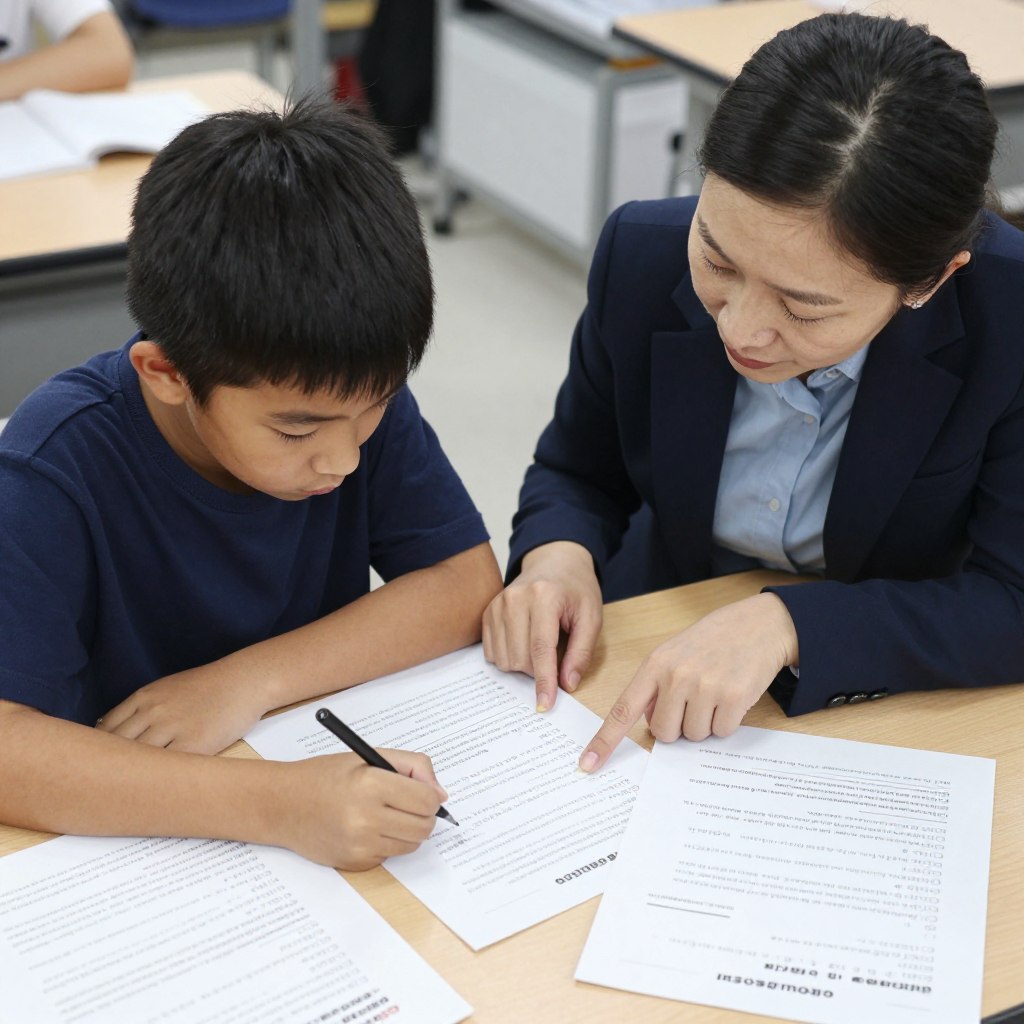
Another approach is to offer pre-tests voluntarily. After a brief introduction to a new topic, offer students the end-of-chapter test, saying, “If you get 90% or higher, you won’t have to do the homework or practice work. You’ll have different work to do instead.” This gives students agency while ensuring they truly understand the material.
Teacher Skills Spotlight: Effective curriculum compacting requires teachers to develop skills in pre-assessment design, identifying true mastery, and creating meaningful extension activities. These teacher skills ensure that students who test out of content aren’t just given busywork but are truly challenged at their level.
Extension Activities for Compacted Curriculum
Once students demonstrate mastery, they need meaningful extension activities. These might include:
- Independent research projects related to the topic
- More complex problems that apply the same concepts
- Mentor-guided explorations
- Cross-curricular applications
- Teaching the concept to peers (which deepens their own understanding)
Remember that extension activities should be different from—not in addition to—the regular assignment. The goal isn’t to give gifted students more work but to provide more challenging and engaging work.
Enhance Your Curriculum Compacting Skills
Looking to master curriculum compacting and other essential teacher skills for gifted education? Our comprehensive course provides practical strategies you can implement immediately in your classroom.
Strategy 2: Tiered Assignments – Differentiated Strategies for Challenging Gifted Learners
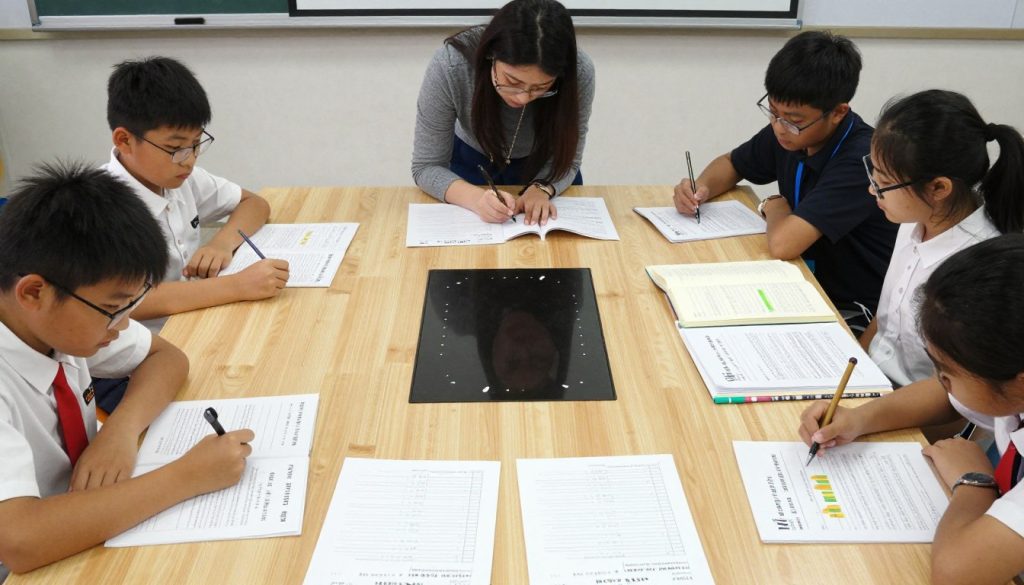
Tiered assignments allow students to work on the same concepts but at different levels of complexity, depth, and abstraction. This strategy acknowledges that while all students need to master the core curriculum, the path to mastery can vary based on readiness, interests, and learning profiles.
Creating Effective Tiered Assignments
Education expert Carol Ann Tomlinson advocates for “teaching up”—first planning a lesson that’s challenging for high-end learners and then differentiating for other learners by providing supports. This approach, she explains, “challenges advanced learners more than trying to pump up a ‘middling’ idea—and serves other students better as well.”
When creating tiered assignments, consider these dimensions:
Complexity
Adjust the number of variables, steps, or abstract concepts involved. Gifted students often thrive with multiple variables and abstract thinking.
Resources
Provide more advanced reading materials, primary sources, or sophisticated tools for gifted learners.
Outcome
Vary the expected product or performance based on student readiness, allowing for more complex demonstrations of learning.
Example of a Tiered Assignment
For a unit on ecosystems, all students might learn about food chains and interdependence. However:
- Tier 1 students might identify and explain a simple food chain
- Tier 2 students might analyze how changes to one part of a food web affect the entire system
- Tier 3 (gifted) students might design an ecosystem that could sustain itself on another planet, considering multiple variables and constraints
Teacher Skills Spotlight: Developing tiered assignments requires advanced teacher skills in curriculum design, assessment, and differentiation. Teachers must identify the core concepts all students need to master, then create multiple pathways that maintain rigor while providing appropriate challenge for each level.
Tiered assignments should be designed thoughtfully to avoid stigmatizing students. Use neutral language like “Option A, B, or C” rather than “basic, intermediate, advanced.” Allow some student choice in which tier they attempt, and occasionally mix groupings so students work at different tiers for different activities.
Remember that the goal is to challenge each student appropriately—not to create more work for gifted students or to water down content for struggling learners. All tiers should maintain the essential concepts and be equally engaging and respectful of students’ intelligence.
Strategy 3: Independent Study Projects – Advanced Strategies for Challenging Gifted Learners
Independent study projects allow gifted students to explore topics of personal interest in depth, developing research skills, time management, and self-directed learning. This strategy is particularly effective for highly motivated gifted learners who crave autonomy and deeper exploration.
Structuring Effective Independent Study
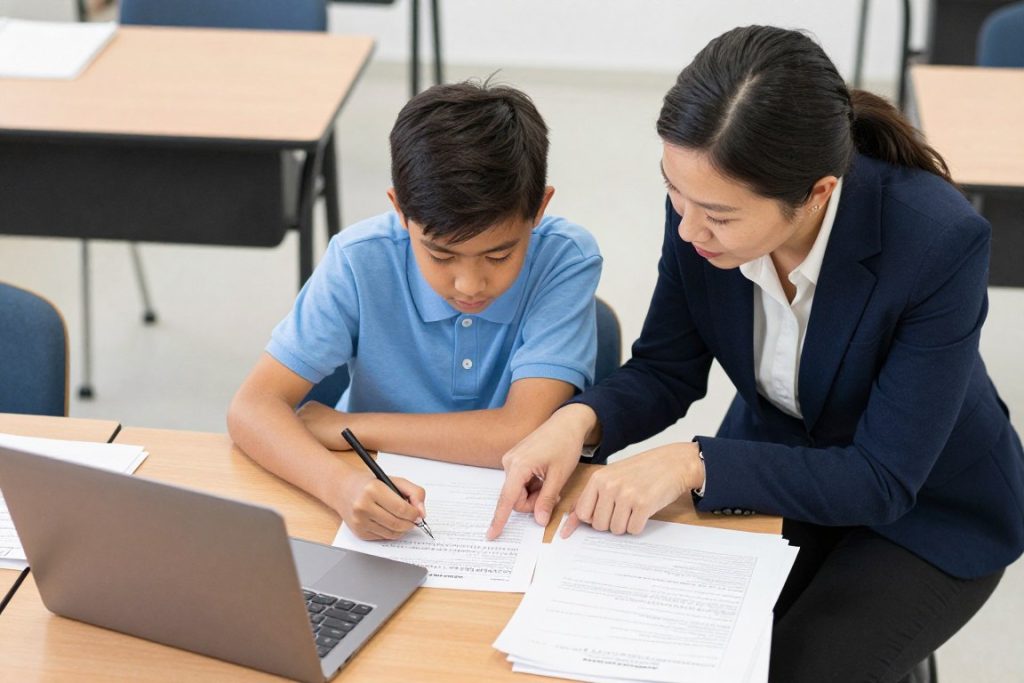
While independent study provides freedom, it still requires structure. Successful independent projects typically include:
- A clear learning contract outlining expectations, deadlines, and assessment criteria
- Regular check-ins with the teacher to monitor progress and provide guidance
- Access to appropriate resources (books, experts, technology)
- A culminating product or presentation to demonstrate learning
- Reflection on both the content learned and the process of independent learning
Janice Mak, a gifted cluster teacher, gives students a menu of options in her computer science class. After students learn the basics of programming, they work in teams to create robots of varying complexity—from dogs that bark to miniature disco rooms with flashing lights and music. This approach allows students to tailor projects to their interests while still meeting learning objectives.
The Ignite Presentation Format
One effective format for independent study culmination is the Ignite presentation. In this format, students have exactly 5 minutes and 20 slides (which auto-advance every 15 seconds) to present their research on a topic related to the unit. This format challenges gifted students to synthesize information concisely while sharing their passion with peers.
Teacher Skills Spotlight: Guiding independent study requires specialized teacher skills in mentoring, asking probing questions, and providing just-in-time instruction. Teachers must balance providing structure with allowing autonomy—knowing when to step in with guidance and when to let students struggle productively.
Topics for Independent Study
Independent study topics should connect to curriculum standards while allowing for deeper exploration. Some approaches include:
- Exploring ethical dimensions of a scientific concept
- Investigating historical events from multiple perspectives
- Applying mathematical concepts to real-world problems
- Creating original literary works inspired by studied authors
- Analyzing cross-disciplinary connections between subjects
- Designing solutions to community or global problems
- Studying advanced concepts that extend beyond grade level
- Conducting original research or experiments
Independent study should be different from—not in addition to—the regular curriculum. When gifted students engage in independent study, they should be excused from the regular classwork that covers concepts they’ve already mastered.
Strategy 4: Flexible Grouping – Collaborative Strategies for Challenging Gifted Learners
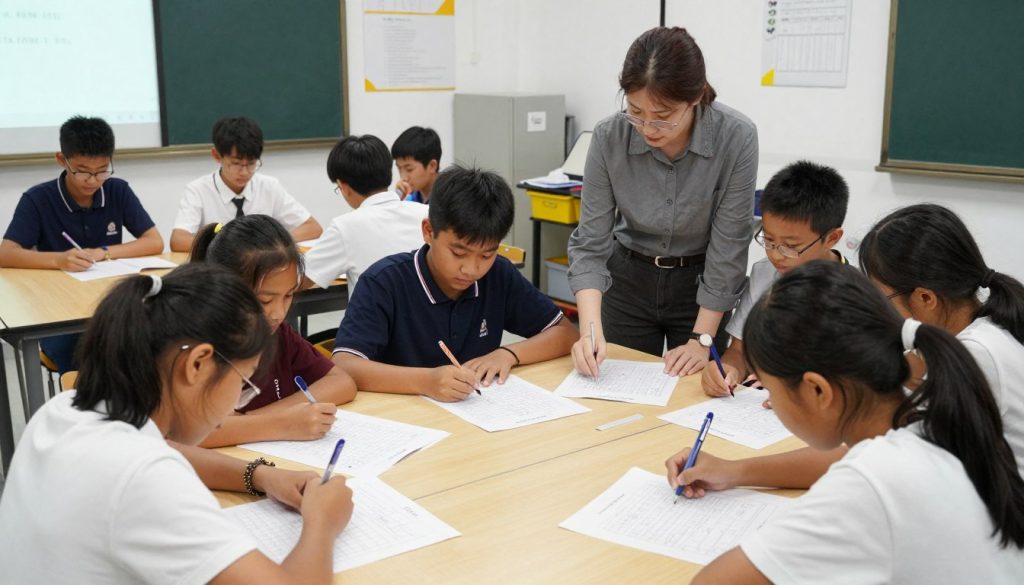
Strategic grouping is a powerful tool in your arsenal of strategies for challenging gifted learners. Research from the National Association for Gifted Children shows that enabling gifted students to work together boosts their academic achievement and benefits other students in the classroom as well.
Types of Grouping Strategies
| Grouping Type | Description | Best Used For |
| Cluster Grouping | Placing 5-8 gifted students together in an otherwise mixed-ability classroom | Core instruction in subjects where students show high ability |
| Flexible Skills Grouping | Temporary groups based on specific skill needs or readiness | Targeted instruction on particular concepts or skills |
| Interest-Based Groups | Groups formed around shared passions or curiosities | Projects, research, and enrichment activities |
| Cross-Grade Grouping | Allowing students to work with peers at different grade levels | Subjects where students are significantly advanced |
| Like-Ability Cooperative Learning | Placing high-ability students together for cooperative tasks | Complex problem-solving and advanced applications |
When gifted students work together, they challenge each other in unexpected ways. They bounce ideas off one another and take peers’ ideas to new places. Importantly, they also learn that as smart as they are, they too must exert effort with challenging content—and that they’ll sometimes fail along the way.
Teacher Skills Spotlight: Effective flexible grouping requires teacher skills in ongoing assessment, group dynamics management, and differentiated instruction. Teachers must continuously monitor student progress to adjust groupings and ensure all students are appropriately challenged.
Balancing Homogeneous and Heterogeneous Grouping
While gifted students benefit from working together, they also need experience working with diverse peers. As teacher Susan Flores notes, “As adults, we have to be able to work with everyone, and gifted students might not learn this if they’re always separated out.”
Balance homogeneous grouping with heterogeneous experiences through:
- Think-Pair-Share activities with random partners
- “Clock Buddies” or other structured partner systems
- Jigsaw activities where each student becomes an expert on one aspect of a topic
- Project teams with roles that leverage different strengths
The key is purposeful grouping—being intentional about when, why, and how you group students rather than defaulting to the same arrangements for all activities.
Master Flexible Grouping Techniques
Want to develop advanced teacher skills in differentiation and flexible grouping? Our professional development courses provide practical strategies for meeting the needs of all learners, including your gifted students.
Strategy 5: Problem-Based Learning – Inquiry-Driven Strategies for Challenging Gifted Learners
Problem-based learning (PBL) is particularly effective for gifted students who thrive on complex challenges and authentic applications. This approach presents students with real-world problems that require critical thinking, creativity, and interdisciplinary knowledge to solve.
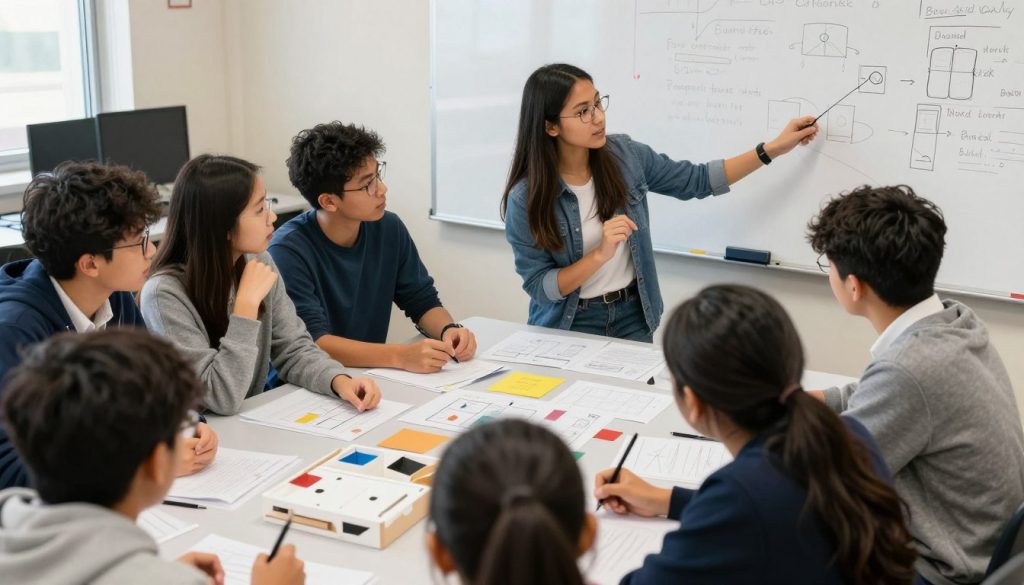
Key Elements of Effective PBL for Gifted Learners
- Ill-structured problems: Problems without a single clear solution path challenge gifted students to consider multiple approaches
- Authentic contexts: Real-world applications make learning meaningful and engaging
- Student autonomy: Learners take ownership of defining the problem and developing solutions
- Interdisciplinary connections: Problems that cross subject boundaries allow for deeper exploration
- Expert resources: Access to advanced materials and expert mentors extends learning
- Public presentations: Sharing solutions with authentic audiences raises the stakes and quality
The Buck Institute for Education defines PBL as “a teaching method in which students learn by actively engaging in real-world and personally meaningful projects.” For gifted students, PBL offers the perfect blend of challenge, relevance, and opportunity for creative problem-solving.
Teacher Skills Spotlight: Facilitating PBL requires sophisticated teacher skills in questioning techniques, formative assessment, and content knowledge across disciplines. Teachers must learn to guide without directing, asking questions that prompt deeper thinking rather than providing answers.
Examples of PBL for Gifted Learners
Instead of simply studying ecosystems, challenge students to design a sustainable habitat for a Mars colony, considering oxygen production, food sources, waste management, and psychological well-being.
Rather than just learning about local government, task students with researching a community issue, developing multiple solution proposals, and presenting them to actual city officials.
PBL works well with tiered assignments—all students can work on the same problem, but with different levels of complexity in their approach and solution. Gifted students can incorporate more variables, consider more stakeholder perspectives, or develop more sophisticated solutions.
Scaffolding for Success
Even gifted students need structure and support in PBL. Provide:
- Clear project timelines with checkpoints
- Protocols for group collaboration
- Guidance on research methods
- Models of high-quality work
- Reflection prompts to deepen thinking
- Feedback from peers and experts
- Mini-lessons on needed skills
- Rubrics that define excellence
Problem-based learning helps gifted students develop not just content knowledge but also the “soft skills” they’ll need for future success: collaboration, communication, critical thinking, and creativity.
Strategy 6: Higher-Order Questioning – Cognitive Strategies for Challenging Gifted Learners
The questions we ask shape the thinking our students do. For gifted learners, higher-order questioning is essential to develop critical thinking, creativity, and metacognitive awareness. By moving beyond recall and comprehension questions to those requiring analysis, evaluation, and creation, we can significantly increase the cognitive demand and engagement for gifted students.
Bloom’s Taxonomy and Beyond
Bloom’s Taxonomy provides a useful framework for developing higher-order questions. While all students benefit from questions at various levels, gifted students particularly thrive when regularly challenged with questions at the upper levels:
| Cognitive Level | Question Stems | Example for Literature Study |
| Remember | Who, what, when, where, list, define, identify | Who is the protagonist in the story? |
| Understand | Explain, summarize, paraphrase, describe, illustrate | Explain the main conflict in your own words. |
| Apply | Use, solve, implement, demonstrate, interpret | How might this character act in a different situation? |
| Analyze | Compare, contrast, differentiate, organize, attribute | How does the author’s use of symbolism affect the theme? |
| Evaluate | Judge, critique, defend, justify, assess | Was the character’s decision ethical? Defend your position. |
| Create | Design, construct, produce, develop, formulate | How might you rewrite the ending to reflect a different worldview? |
Beyond Bloom’s, consider using the Depth of Knowledge (DOK) framework or the Question Typology approach, which categorizes questions as:
- Recalling: Reviewing knowledge and information
- Procedural: Directing the work of the class
- Generative: Exploring the topic with authentic questions
- Constructive: Building new understanding
- Facilitative: Promoting the learner’s own thinking and understanding
Teacher Skills Spotlight: Developing higher-order questioning techniques is among the most valuable teacher skills for gifted education. Teachers must learn to craft questions that stimulate deep thinking, wait patiently for thoughtful responses, and follow up effectively to extend student thinking.
Strategies for Implementing Higher-Order Questioning
Socratic Seminars
Student-led discussions around essential questions promote deep analysis and evaluation. Prepare gifted students to lead these discussions occasionally, developing their questioning skills.
Question Formulation Technique
Teach students to generate their own higher-order questions. This metacognitive approach helps gifted learners develop sophisticated inquiry skills.
Think Time
Provide adequate wait time after asking complex questions. Gifted students often consider multiple angles before responding and need time to formulate thoughtful answers.
Question Journals
Have students keep journals of questions that arise during their learning. Periodically review these to identify areas for deeper exploration.
Remember that questioning is not just about the teacher asking and students answering. Teaching gifted students to ask their own higher-order questions may be the most valuable skill we can impart—fostering lifelong inquiry and intellectual growth.
Implementing Strategies for Challenging Gifted Learners: Practical Considerations
Implementing these strategies for challenging gifted learners requires thoughtful planning and preparation. Here are some practical considerations to help you successfully integrate these approaches into your classroom:
Start Small and Build
Don’t try to implement all six strategies at once. Begin with one approach that aligns well with your teaching style and subject area. As you gain confidence and see results, gradually incorporate additional strategies.
“I don’t see it as doing one more thing; I see it as being more strategic. Teachers have to plan for their lessons, so why not develop deep and complex activities for high-ability students at the same time?”
Communicate Clearly
Explain your differentiation approach to students and parents at the beginning of the year. Help all students understand that “fair” doesn’t mean “same”—it means everyone gets what they need to be appropriately challenged.
Use phrases like “You’ve shown you don’t need more practice” or “You need more practice” instead of words like “qualify” or “eligible” when referring to extension work. This language focuses on learning needs rather than labels.
Teacher Skills Spotlight: Clear communication about differentiation is a crucial teacher skill. Being able to articulate the purpose and benefits of differentiated instruction to students, parents, and colleagues helps create a supportive environment for challenging gifted learners.
Common Pitfalls to Avoid
Don’ts
- Don’t confuse high achievers with high-ability students. High achievers put in the time and effort to succeed in school. This may not be the case with high-ability students.
- Don’t assume that by making gifted students tutors, you’re providing a learning extension.
- Don’t confuse extension activities with additional work. Gifted students need deeper and more complex assignments.
- Don’t refer to alternate work for gifted students as “free time.” Call it “choice time” or “unfinished work time.”
- Don’t give too many directions to students about how they should complete a task. Say, “Here’s the end result I’m grading. How you get there is your choice.”
Do’s
- Do understand that gifted students, just like all students, come to school to learn and be challenged.
- Do pre-assess your students to find their areas of strength and areas needing support.
- Do consider grouping gifted students together for at least part of the school day.
- Do plan for differentiation through pre-assessments, extension activities, and curriculum compacting.
- Do encourage high-ability students to take on challenges. Because they’re often used to getting good grades, gifted students may be risk-averse.
Assessment Considerations
When implementing strategies for challenging gifted learners, assessment must also be differentiated. Consider:
- Using performance assessments that allow for different levels of sophistication
- Providing choice in how students demonstrate mastery
- Assessing process skills (research, critical thinking) as well as content knowledge
- Creating rubrics that define excellence beyond grade-level expectations
- Using pre-assessments to document growth, not just achievement
Remember that the goal is growth for all students. Even highly gifted learners should be demonstrating new learning and progress throughout the year.
Develop Your Gifted Education Teacher Skills
Ready to take your teaching to the next level? Our comprehensive course on gifted education provides practical strategies, ready-to-use resources, and professional development credit.
Conclusion: The Journey of Challenging Gifted Learners
Implementing effective strategies for challenging gifted learners is both an art and a science. It requires specialized teacher skills, thoughtful planning, and a commitment to meeting the unique needs of these exceptional students. The six strategies we’ve explored—curriculum compacting, tiered assignments, independent study, flexible grouping, problem-based learning, and higher-order questioning—provide a comprehensive framework for challenging gifted learners in any classroom setting.

As Carol Ann Tomlinson wisely notes, “Learning should be joyful or at least satisfying, rather than just hard.” The best strategies for challenging gifted learners maintain the joy of discovery while pushing students to new heights of achievement and understanding.
Remember that all students have the right to learn something new every day, whether they are in regular classrooms or in special education, language acquisition, or gifted programs. By implementing these strategies, you’re ensuring that your gifted students remain engaged, challenged, and growing throughout the school year.
Developing your teacher skills in gifted education is a continuous journey. As you implement these strategies, you’ll discover what works best for your unique students and teaching context. Be willing to adapt, reflect, and refine your approach based on student responses and outcomes.
Is this challenging for educators? Absolutely. But as teacher Susan Flores reminds us, “Any good teacher can do these things well. It’s just good teaching.”
Continue Your Professional Growth
Looking to enhance your teacher skills and better serve your gifted students? Explore our comprehensive professional development opportunities designed specifically for educators working with high-ability learners.
Explore Professional Development Enroll in Gifted Education Course