

In classrooms where high expectations are the norm, students rise to meet challenges they once thought impossible. They develop resilience, critical thinking skills, and a growth mindset that serves them well beyond their academic years. But creating this culture requires intentional strategies and refined teacher skills that go beyond simply stating high standards.
This article explores practical, research-backed approaches to setting high expectations in your classroom. We’ll examine how effective teacher skills can transform student performance, and provide actionable strategies you can implement immediately. Whether you’re a new teacher or a veteran educator looking to refine your approach, these techniques will help you create a classroom where excellence is both expected and achieved.
Why Setting High Expectations Matters: The Research Behind Student Achievement
The power of teacher expectations on student performance was first documented in the landmark “Pygmalion in the Classroom” study. Researchers Robert Rosenthal and Lenore Jacobson found that when teachers were told certain students would show dramatic intellectual growth (though these students were randomly selected), those students actually did show greater academic improvement. This phenomenon, known as the “Pygmalion Effect” or “expectancy effect,” demonstrates how teacher beliefs can become self-fulfilling prophecies.
More recent research from the American Educational Research Association confirms that teacher expectations significantly impact student outcomes, particularly for students from disadvantaged backgrounds. When teachers communicate high expectations consistently, students develop stronger academic self-concepts and greater motivation to learn.
When we expect students to perform at high levels and provide the support they need to reach those levels, they rarely disappoint us.
Unfortunately, the opposite is also true. Low expectations can create what researchers call the “Golem effect,” where students perform down to the level expected of them. This is particularly damaging for students who already face systemic barriers to academic success.
Developing the teacher skills necessary to communicate and maintain high expectations is therefore not just beneficial—it’s essential for equitable education. These skills include clear communication, thoughtful lesson design, effective feedback mechanisms, and the ability to build strong relationships with all students.
The most effective teachers understand that setting high expectations isn’t about being rigid or demanding. Rather, it’s about communicating a genuine belief in students’ abilities while providing the scaffolding and support needed for success. This balance of challenge and support is where the most powerful learning happens.
The First Principle of Setting High Expectations: Teacher Mindset and Belief
Before you can effectively communicate high expectations to your students, you must first believe in them yourself. Your internal mindset as an educator forms the foundation upon which all your teaching practices are built. This critical aspect of teacher skills often goes unexamined, yet it profoundly influences how students perceive themselves as learners.
Carol Dweck’s research on growth mindset provides valuable insights here. Teachers who possess a growth mindset—the belief that abilities can be developed through dedication and hard work—tend to set higher expectations for all students. They see challenges not as evidence of student limitations but as opportunities for growth.
Examining Your Own Expectations
Take a moment to reflect on your own beliefs about your students. Do you unconsciously hold different expectations for different groups? Research shows that teachers often unknowingly communicate lower expectations to certain students, particularly those from marginalized backgrounds. Developing the teacher skills to recognize and address these implicit biases is essential for creating an equitable classroom.
Reflection Questions: Ask yourself: Do I call on all students equally? Do I provide the same level of challenging feedback to everyone? Do I unconsciously use different language when discussing different students’ potential? Regular self-reflection is a crucial teacher skill for maintaining high expectations for all.
One powerful way to strengthen your belief in students’ capabilities is to document and celebrate growth over time. Keep evidence of student progress, however small, and use it to reinforce your conviction that all students can learn at high levels with appropriate support.
Communicating Your Belief to Students
Students are remarkably perceptive about teacher expectations. They pick up on subtle cues in your language, tone, and behavior that reveal what you truly believe about their potential. Effective teacher skills include using language that assumes success rather than failure:
Instead of saying: “This might be too difficult for some of you.”
Instead of saying: “Don’t worry if you can’t figure this out.”
Instead of saying: “This is an advanced concept, so try your best.”
Say: “This is challenging, but I know you’re ready for it.”
Say: “When you encounter difficulties, use the strategies we’ve practiced.”
Say: “This concept will take concentration, and I’m excited to see your thinking.”
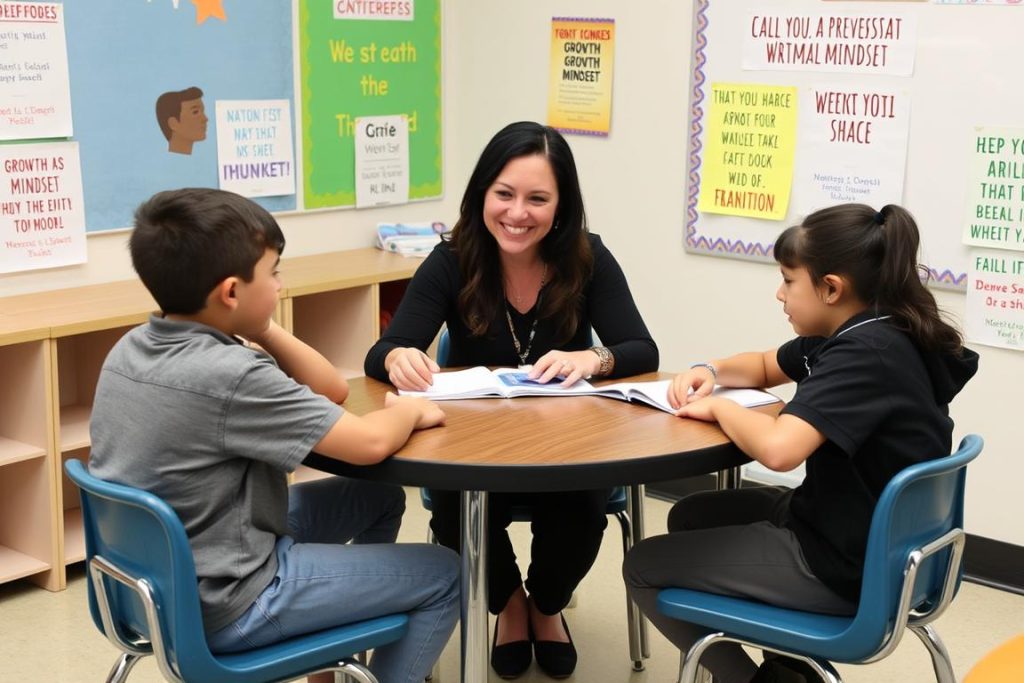
Remember that setting high expectations begins with your own mindset. The teacher skills you develop around self-reflection, bias recognition, and growth-oriented language will significantly impact how students view their own potential.
Setting High Expectations Through Clear Communication
Once you’ve established a strong internal belief in your students’ capabilities, the next crucial step is communicating those expectations clearly and consistently. This aspect of teacher skills focuses on how you articulate what success looks like and how students can achieve it.
Making Learning Objectives Transparent
Students thrive when they understand exactly what they’re aiming for. Begin each lesson or unit by clearly stating learning objectives in student-friendly language. Post these objectives where students can see them, refer to them throughout the lesson, and revisit them during closure activities.
Effective teacher skills in this area include breaking down complex standards into manageable learning targets. For example, rather than simply stating “We will understand fractions,” you might say “Today we will be able to compare fractions with different denominators using visual models.”
When students understand what success looks like, they’re much more likely to achieve it.
Using Exemplars and Models
One of the most powerful ways to communicate high expectations is to show students what excellence looks like. Providing exemplars—examples of high-quality work—gives students a concrete vision of your expectations. This teacher skill helps demystify success and makes it feel attainable.
Consider creating a gallery of exemplars from previous students (with permission) or creating your own models. Walk students through these examples, highlighting specific elements that make them successful. This practice is particularly valuable when introducing new types of assignments or assessments.
Developing Clear Rubrics and Success Criteria
Rubrics are essential tools for setting high expectations because they define what quality work looks like across multiple dimensions. Effective teacher skills include creating rubrics that:
- Use clear, specific language
- Define multiple levels of performance
- Focus on the most important aspects of the task
- Avoid subjective or vague criteria
For younger students or less complex tasks, you might use simpler success criteria checklists. The key teacher skill here is ensuring that expectations are explicit rather than assumed. When students know exactly what’s expected, they’re more likely to rise to the challenge.
Remember that communicating high expectations isn’t a one-time event—it’s an ongoing process that requires consistent reinforcement. The teacher skills you develop around clear communication will help create a classroom where students understand not just what they’re learning, but why it matters and how they can succeed.
Setting High Expectations in Instructional Design
The way you design learning experiences directly communicates your expectations to students. Thoughtful instructional design is among the most important teacher skills for creating a high-expectations classroom. When lessons are rigorous yet accessible, students understand that you believe in their ability to tackle challenging content.
Planning for Appropriate Challenge
Effective teachers operate within what Vygotsky called the “Zone of Proximal Development”—the sweet spot between what students can do independently and what’s currently beyond their reach. This requires the teacher skill of knowing your students well enough to design tasks that stretch but don’t frustrate them.
When planning lessons, consider:
- What prerequisite knowledge do students need?
- What misconceptions might they bring to this topic?
- How can I design tasks with multiple entry points?
- What scaffolds might different students need?
The goal is to maintain high cognitive demand while providing appropriate support. This balance is a sophisticated teacher skill that develops with experience and intentional practice.
Resource Tip: Setting High Academic Expectations provides practical frameworks for designing appropriately challenging instruction for diverse learners.
Scaffolding for Success
Scaffolding—providing temporary supports that are gradually removed as students gain proficiency—is a critical teacher skill for maintaining high expectations. Effective scaffolding doesn’t lower expectations; it provides bridges to help students reach them.
Examples of effective scaffolds:
- Think-alouds that model expert thinking
- Graphic organizers for complex writing tasks
- Sentence frames for academic discussion
- Visual supports for abstract concepts
- Chunking complex tasks into manageable steps
What scaffolding is NOT:
- Doing the thinking for students
- Simplifying the task to make it “easier”
- Lowering standards for certain students
- Providing the same supports indefinitely
- Removing the productive struggle from learning
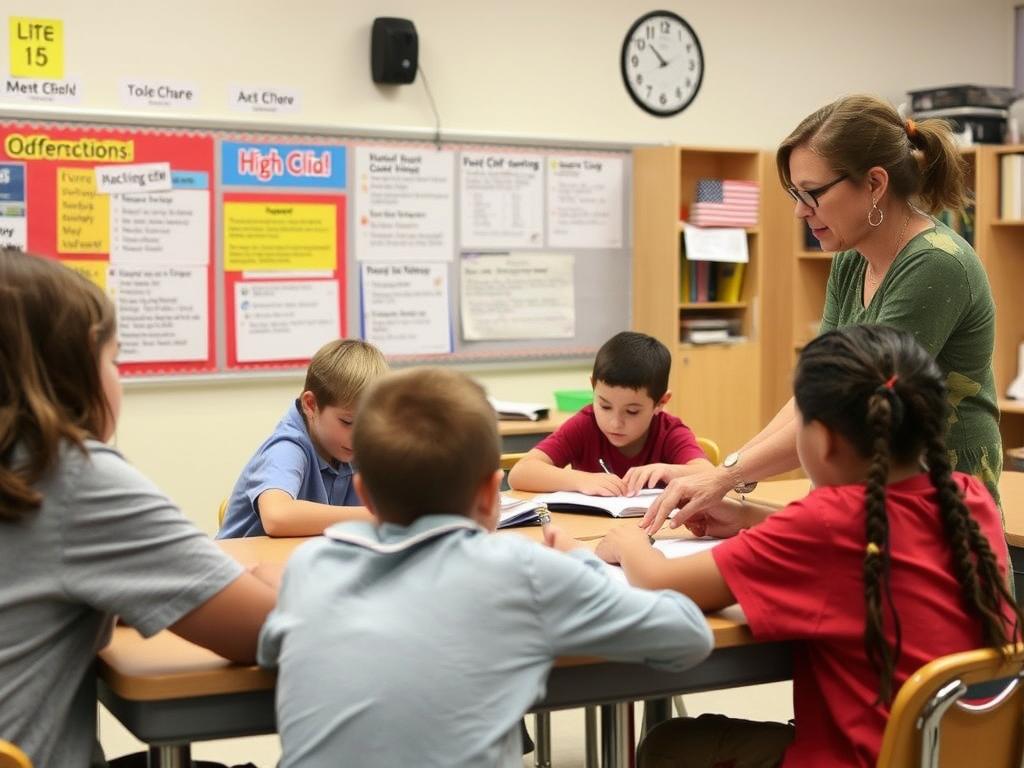
The art of scaffolding is knowing when to provide support and when to gradually remove it—a nuanced teacher skill that requires ongoing assessment of student progress.
Designing for Productive Struggle
Research shows that students learn most deeply when they engage in productive struggle—grappling with challenging concepts that require effort and persistence. Creating opportunities for this kind of learning is an advanced teacher skill that signals high expectations.
To design for productive struggle:
- Present problems before teaching procedures
- Ask open-ended questions with multiple solution paths
- Provide adequate time for thinking and discussion
- Resist the urge to rescue students too quickly
- Normalize struggle as an essential part of learning
When students successfully navigate challenging tasks, their confidence grows and they internalize high expectations for themselves. This self-reinforcing cycle is the ultimate goal of a high-expectations classroom.
The teacher skills involved in instructional design—from planning appropriate challenges to scaffolding effectively to designing for productive struggle—are fundamental to creating a classroom where high expectations are the norm rather than the exception.
Setting High Expectations Through Feedback and Classroom Culture
The way you respond to student work and the culture you foster in your classroom powerfully communicate your expectations. Developing teacher skills around effective feedback and positive classroom culture is essential for maintaining high expectations over time.
The Power of Specific, Growth-Oriented Feedback
Generic praise like “Good job!” or “Nice work!” does little to communicate high expectations. Instead, effective teachers develop the skill of providing specific, actionable feedback that acknowledges effort and strategies while pushing for continued growth.
Instead of: “Great work on your essay!”
Instead of: “You need to add more details.”
Instead of: “I like how you solved this problem.”
Try: “Your use of evidence from three different sources really strengthened your argument.”
Try: “Adding specific examples in paragraphs 2 and 4 would make your points more convincing.”
Try: “I noticed you tried three different strategies before finding one that worked. That persistence paid off!”
According to John Hattie’s research, feedback is among the most powerful influences on student achievement. The teacher skills involved in providing effective feedback include being specific, timely, actionable, and focused on the task rather than the student.
Creating a Culture of Revision and Improvement
In classrooms with high expectations, initial attempts are rarely the final product. Developing the teacher skills to normalize revision and improvement sends a powerful message that you expect students’ best work, not just their first attempt.
Strategies for creating this culture include:
- Building revision time into project timelines
- Modeling how to use feedback to improve work
- Celebrating growth between drafts
- Using peer feedback protocols to expand perspectives
- Maintaining digital portfolios that show progress over time
When students understand that revision is a normal part of the learning process—not a punishment or indication of failure—they become more willing to take risks and push themselves toward excellence.
Enhance Your Teacher Skills in Setting High Expectations
Looking for structured guidance on creating a high-expectations classroom? Our comprehensive professional development course provides research-backed strategies you can implement immediately.
Normalizing Productive Struggle
Students often interpret struggle as a sign of inability rather than a necessary part of learning. Developing teacher skills around normalizing struggle is crucial for maintaining high expectations.
Effective approaches include:
- Sharing your own learning struggles and how you overcame them
- Highlighting the “yet” in “I don’t understand this yet”
- Celebrating productive mistakes as learning opportunities
- Providing “stuck strategies” students can use when challenged
- Acknowledging that confusion is often a sign of deep thinking
When students see struggle as a natural part of learning rather than evidence of low ability, they’re more likely to persist through challenges and ultimately meet high expectations.
The teacher skills involved in providing effective feedback, creating a culture of revision, and normalizing productive struggle work together to create a classroom environment where high expectations feel supportive rather than punitive.
Maintaining High Expectations While Differentiating Instruction
One of the most common misconceptions about setting high expectations is that it means treating all students exactly the same. In reality, maintaining high expectations while differentiating instruction is a sophisticated set of teacher skills that ensures all students can access challenging content and demonstrate their learning.
Differentiating Process, Not Expectations
Effective differentiation maintains the same high expectations for all students while varying the routes students take to meet those expectations. This requires teacher skills in designing flexible learning experiences that accommodate diverse needs.
Differentiation is not about lowering expectations for some students—it’s about providing multiple pathways to the same high standards.
When differentiating instruction:
- Keep learning goals consistent for all students
- Vary the level of support, not the level of challenge
- Provide choice in how students engage with content
- Offer multiple ways for students to demonstrate understanding
- Adjust pacing while maintaining rigor
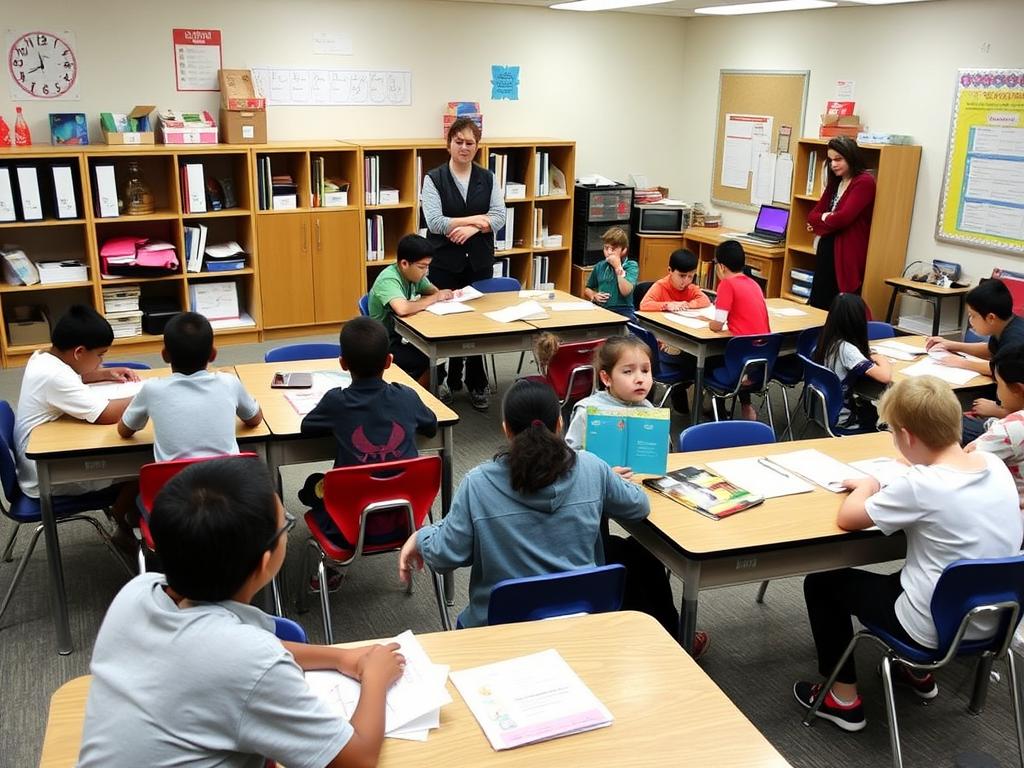
These teacher skills ensure that differentiation becomes a tool for achieving high expectations, not an excuse for lowering them.
Using Flexible Grouping Strategically
How you group students communicates powerful messages about your expectations. Developing teacher skills around flexible grouping helps maintain high expectations while meeting diverse needs.
Effective approaches include:
- Varying groups based on data rather than fixed perceptions
- Creating temporary skill-based groups that change frequently
- Using mixed-ability groups for complex problem-solving
- Allowing student choice in grouping when appropriate
- Ensuring all students access challenging content
When grouping is fluid rather than fixed, students understand that you see their abilities as dynamic rather than static—a key aspect of communicating high expectations.
Providing Targeted Supports
Maintaining high expectations doesn’t mean withholding support. In fact, providing targeted supports is a crucial teacher skill for ensuring all students can meet challenging standards.
Effective supports might include:
- Pre-teaching key vocabulary or concepts
- Providing additional examples or models
- Offering strategy guides or reference tools
- Creating structured note-taking templates
- Scheduling additional check-ins during independent work
The key teacher skill here is ensuring that supports enable access to grade-level content rather than replacing it with less challenging alternatives. When implemented effectively, these supports help all students rise to high expectations.
Developing the teacher skills to differentiate appropriately while maintaining high expectations is challenging but essential work. It requires ongoing assessment, thoughtful planning, and a deep commitment to the belief that all students can learn at high levels with the right support.
For more strategies on differentiating while maintaining high expectations, explore our professional development resources designed specifically for K-12 educators.
Overcoming Challenges in Setting High Expectations
Even with strong teacher skills and the best intentions, educators face real challenges in creating and maintaining a culture of high expectations. Acknowledging these challenges—and developing strategies to address them—is essential for sustainable success.
When Students Resist Challenge
Students who have experienced repeated failure or who have internalized low expectations may initially resist when you raise the bar. This resistance isn’t surprising—it’s a self-protective response. Developing teacher skills to address this resistance compassionately is crucial.
Effective approaches include:
- Building strong relationships before pushing for academic risk-taking
- Celebrating small successes to build confidence
- Providing models of similar students who have succeeded
- Creating safe opportunities for “failure” with low stakes
- Explicitly teaching that struggle is part of learning, not evidence of inability
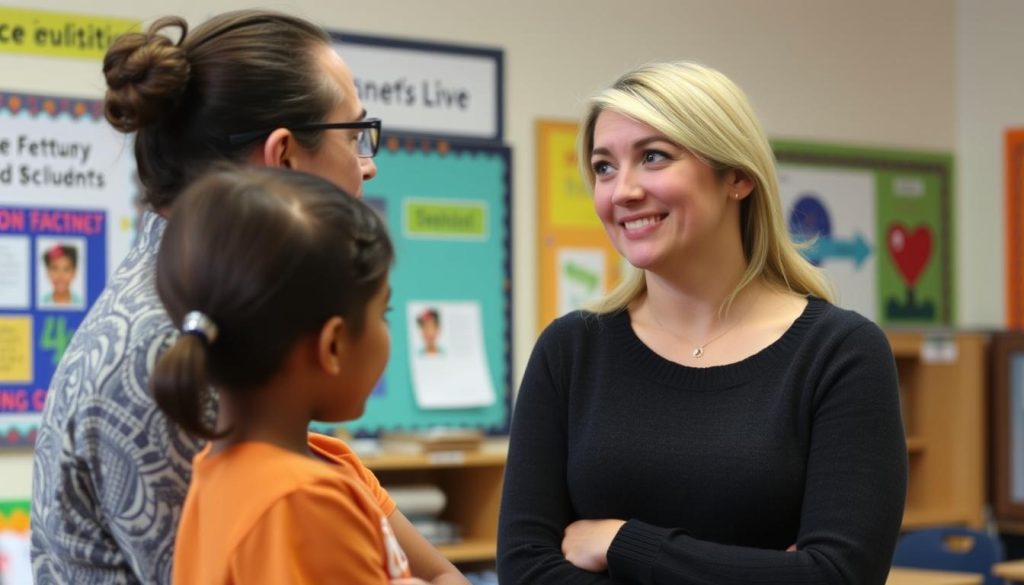
Remember that resistance often masks fear. The teacher skills involved in addressing resistance include patience, empathy, and persistent belief in students’ capabilities.
Balancing Challenge and Support
Finding the right balance between challenge and support is an ongoing challenge that requires refined teacher skills. Too much challenge without adequate support leads to frustration; too much support without adequate challenge leads to boredom and dependency.
The goal is not to make learning easy—it’s to make the struggle productive and worthwhile.
Strategies for finding this balance include:
- Regularly collecting formative assessment data
- Conferring with students about their perceived level of challenge
- Adjusting supports based on observed needs
- Gradually releasing responsibility as students gain confidence
- Collaborating with colleagues to calibrate expectations
These teacher skills help create a classroom where the level of challenge stretches students without overwhelming them.
Maintaining Consistency Over Time
Perhaps the greatest challenge in setting high expectations is maintaining them consistently throughout the school year. When faced with time constraints, testing pressure, or simple fatigue, it’s tempting to lower expectations temporarily.
Developing teacher skills for sustainable high expectations includes:
- Building systems that reinforce your expectations even when you’re tired
- Creating peer accountability with colleagues
- Documenting student growth to remind yourself of progress
- Engaging in regular reflection on your practices
- Investing in your own professional growth and well-being
Maintaining high expectations is a marathon, not a sprint. The teacher skills you develop around sustainability will help ensure that your high expectations remain consistent throughout the year.
By acknowledging these challenges and developing specific strategies to address them, you build the resilience needed to maintain a high-expectations classroom over time. For additional support in developing these teacher skills, explore professional development opportunities designed specifically for educators committed to high expectations for all students.
Conclusion: The Ongoing Journey of Setting High Expectations
Creating a classroom culture of high expectations is not a destination but a journey—one that requires continuous refinement of teacher skills, ongoing reflection, and unwavering belief in student potential. The strategies outlined in this article provide a roadmap, but the real work happens in daily interactions with your students.
Remember that setting high expectations is fundamentally about belief—belief that all students can learn at high levels with appropriate support, belief that struggle is a necessary part of growth, and belief that your teacher skills can make a profound difference in student outcomes.
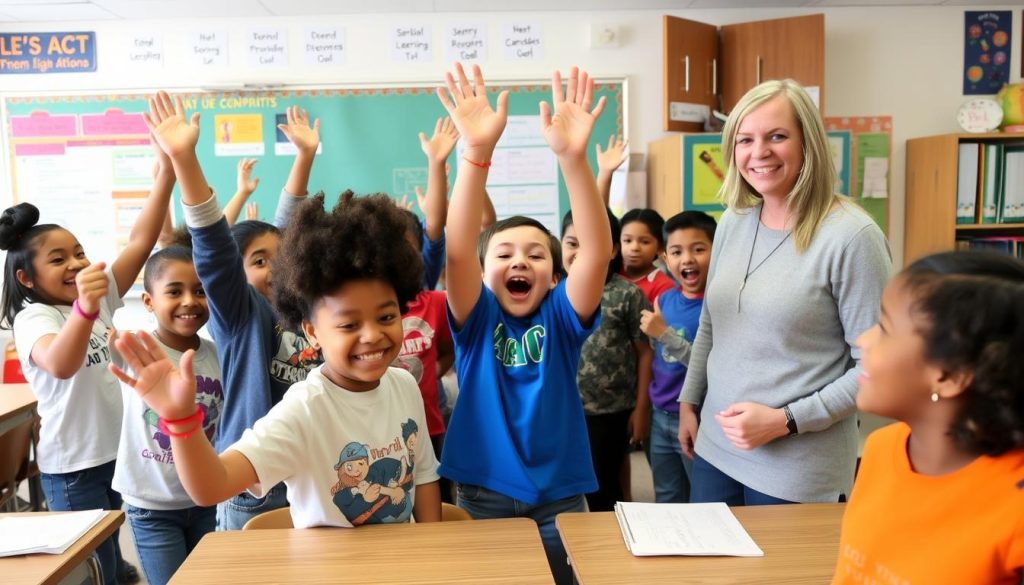
As you implement these strategies, you’ll likely face challenges and setbacks. That’s normal and expected. What matters is your commitment to learning and growing alongside your students. The teacher skills you develop in this process will serve you—and your students—throughout your career.
Continue Your Professional Growth
Ready to deepen your teacher skills in creating a high-expectations classroom? Explore our comprehensive professional development resources designed specifically for K-12 educators.
Setting high expectations is both an art and a science. It requires technical teacher skills like designing rigorous tasks and providing specific feedback, but it also demands the human elements of empathy, relationship-building, and genuine care. When these elements come together, the result is a classroom where students don’t just meet high expectations—they exceed them.
What steps will you take tomorrow to strengthen the culture of high expectations in your classroom? Your journey starts with a single action, supported by the belief that all students deserve—and can achieve—excellence.