

In this comprehensive guide, we’ll explore practical, classroom-tested approaches to engaging gifted learners while managing the diverse needs of all your students. Whether you’re new to gifted education or looking to enhance your existing teacher skills, these strategies will help you create a more dynamic, inclusive learning environment where exceptional abilities are recognized and nurtured.
Understanding the Foundation: The Core Importance of Gifted Education Strategies
Gifted students thrive when given opportunities for collaborative problem-solving that extends beyond grade-level expectations.
Before implementing gifted education strategies, it’s essential to understand what giftedness actually means. The National Association for Gifted Children notes that gifted individuals demonstrate outstanding levels of aptitude or competence in one or more domains. However, giftedness manifests differently across students, making identification and support complex yet crucial teacher skills.
Gifted students may be:
- High achievers who consistently perform above grade level
- Twice-exceptional learners who are both gifted and have learning disabilities
- Creatively gifted with exceptional divergent thinking abilities
- Underachievers whose potential exceeds their classroom performance
- Students from underrepresented populations whose gifts may be expressed differently
The importance of gifted education strategies becomes evident when we consider the consequences of neglecting these learners. Research from educational psychology studies shows that without appropriate challenges, gifted students may experience boredom, frustration, and disengagement. Some may even develop behavioral issues or underachieve to fit in with peers.
Developing teacher skills to support gifted learners isn’t just beneficial for high-ability students—it elevates your entire teaching practice. The strategies we’ll explore help create a classroom environment where all students can work at their optimal challenge level, fostering growth mindsets and independence.
From Theory to Practice: Implementing the Importance of Gifted Education Strategies
1. Curriculum Compacting
Curriculum compacting is a foundational gifted education strategy that eliminates repetition of mastered material. This approach requires teacher skills in pre-assessment and curriculum modification.

Pre-assessment is a critical component of curriculum compacting, allowing teachers to identify what students already know.
Implementation steps:
- Pre-assess students to identify mastered content
- Document the content and skills students have already mastered
- Develop alternative, more challenging activities for the compacted time
One effective approach is the “Most Difficult First” strategy. Allow students to attempt the most challenging problems in an assignment first. Those who demonstrate mastery can skip the remaining practice work and move on to enrichment activities. This strategy respects students’ time while ensuring they remain appropriately challenged.
Developing these teacher skills not only benefits gifted students but improves your ability to differentiate for all learners. Professional development in gifted education can help you master these techniques efficiently.
2. Tiered Assignments
Tiered assignments allow you to teach the same concept at different levels of complexity, depth, and abstraction. This strategy requires teacher skills in designing multiple entry points to learning.
Entry Level
Basic understanding of the concept with concrete examples and structured guidance.
Advanced Level
Complex application with abstract concepts, independent work, and creative problem-solving.
When creating tiered assignments, consider:
- The core concept all students need to understand
- Different levels of complexity appropriate for your classroom
- Various ways students can demonstrate understanding
- How to present options without labeling students
Many educators find success by planning for the highest level first, then adding scaffolding for other levels. This “teaching up” approach ensures that gifted students receive appropriate challenges while providing necessary support for all learners.
Enhance Your Differentiation Skills
Looking for ready-to-use tiered assignment templates? Explore our comprehensive resources designed specifically for supporting gifted learners in your classroom.
Differentiation in Action: Demonstrating the Importance of Gifted Education Strategies
3. Independent Projects and Learning Contracts
Independent projects allow gifted students to explore topics of interest in depth while developing research and self-management skills. These projects require teacher skills in facilitation and project management rather than direct instruction.

Independent projects allow gifted students to pursue topics of interest while developing crucial research skills.
Learning contracts formalize this process by establishing:
- Clear learning objectives aligned with standards
- Student choice in topic and presentation format
- Timeline with checkpoints for feedback
- Assessment criteria known in advance
- Reflection component to enhance metacognition
When implementing independent projects, schedule regular check-ins to provide guidance without taking over. This balance develops both student autonomy and your teacher skills in mentorship.
4. Flexible Grouping Strategies
Flexible grouping is a cornerstone of effective gifted education strategies. Research consistently shows that gifted students benefit from spending at least part of their day working with intellectual peers.
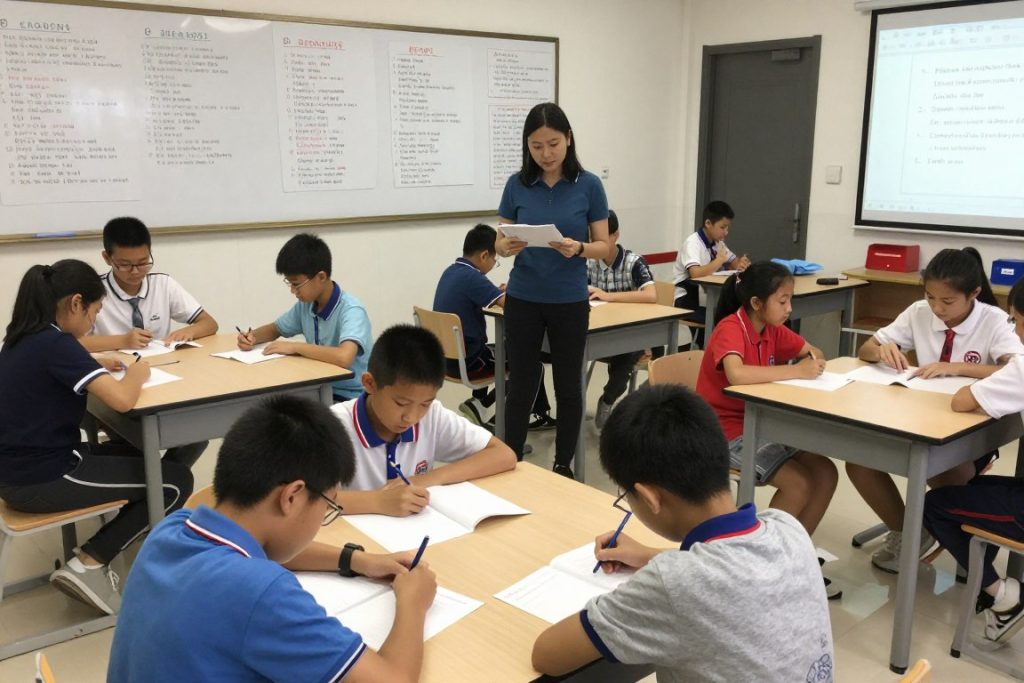
Flexible grouping allows teachers to create temporary learning communities based on specific needs and abilities.
Effective grouping options include:
Cluster Grouping
Placing 4-6 gifted students together in a mixed-ability classroom
Interest-Based Groups
Forming temporary groups based on shared passions or curiosities
Skill-Based Groups
Creating fluid groups based on specific academic needs
The key to successful grouping is flexibility. Groups should form and reform based on ongoing assessment data, preventing the tracking that can occur with permanent ability grouping. This approach requires teacher skills in classroom management and formative assessment.
Remember that gifted students also benefit from working with diverse peers. Balance homogeneous grouping with heterogeneous experiences that develop collaboration and leadership skills.
Overcoming Challenges: Why the Importance of Gifted Education Strategies is Non-Negotiable
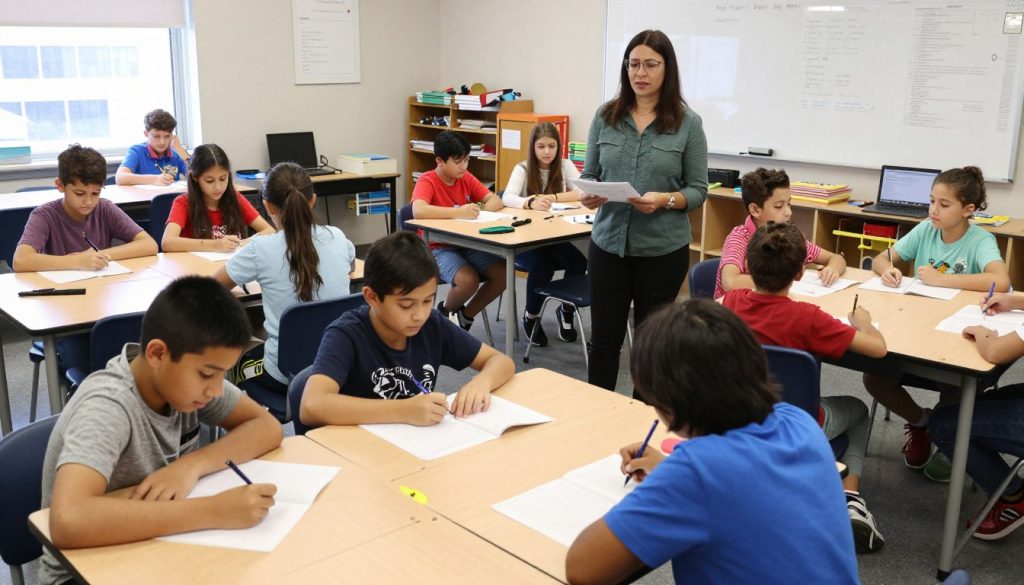
Effective teachers develop systems to manage the complexity of differentiated instruction.
Implementing gifted education strategies comes with challenges, but the benefits far outweigh the difficulties. Common obstacles include:
Time Constraints
With numerous demands on instructional time, creating differentiated materials can feel overwhelming. Start small by differentiating one subject or unit, then gradually expand. Collaborate with colleagues to share the workload and build a resource bank over time.
Developing efficient teacher skills in planning and organization is essential. Consider using a planning template that incorporates differentiation from the start rather than as an afterthought.
Resource Limitations
Limited access to advanced materials or technology can hinder implementation. Look for free or low-cost resources online, including open educational resources (OERs) and digital libraries. Partner with local libraries, universities, or businesses for additional support.
Remember that many gifted education strategies require minimal additional resources—just a shift in how existing materials are used. Your teacher skills in creative problem-solving are valuable here.
Identification Concerns
Traditional identification methods often miss gifted students from underrepresented populations. Expand your definition of giftedness and use multiple criteria for identification, including:
- Teacher observations and nominations
- Parent input about behaviors at home
- Performance tasks that reveal thinking processes
- Student portfolios showing growth over time
- Non-verbal ability assessments
Developing teacher skills in recognizing diverse manifestations of giftedness is crucial for equitable identification. Professional development opportunities can enhance your ability to spot potential in all students.
“The importance of gifted education strategies lies not just in challenging high-ability students, but in creating a classroom where every learner has the opportunity to work at their optimal level of challenge.”
Assessment and Growth: Measuring the Impact of Gifted Education Strategies
Effective assessment is fundamental to successful gifted education. Traditional assessments often fail to capture the depth and complexity of gifted students’ thinking, requiring teacher skills in designing more sophisticated evaluation methods.

Portfolio assessment allows gifted students to demonstrate growth through authentic work samples.
Pre-Assessment Techniques
Begin units by determining what students already know to avoid redundant instruction. Effective pre-assessment methods include:
- Concept maps showing prior knowledge
- Interest surveys revealing passions and experiences
- End-of-unit tests given at the beginning
- Quick writes or journal prompts
- KWL charts (Know, Want to know, Learned)
These approaches help you tailor instruction to actual needs rather than assumptions, an essential teacher skill for differentiation.
Authentic Assessment Options
Move beyond traditional tests with assessments that allow gifted students to demonstrate complex understanding:
Performance Tasks
Real-world applications requiring synthesis of knowledge
Product Development
Creating solutions to authentic problems
Portfolio Assessment
Curated collections showing growth over time
When designing assessments, incorporate elements of depth and complexity. Ask students to examine patterns, explore multiple perspectives, or investigate changes over time. These approaches develop critical thinking while providing more accurate measures of gifted students’ capabilities.
Remember that assessment should inform instruction. Use the data gathered to adjust your approach and provide targeted support where needed. This continuous feedback loop is a hallmark of effective teacher skills in gifted education.
Deepen Your Assessment Expertise
Looking for advanced assessment strategies for your gifted learners? Our professional development courses offer practical techniques you can implement immediately.
Your Professional Journey: Honing Teacher Skills for Gifted Education
Supporting gifted learners is an ongoing journey that requires continuous development of specialized teacher skills. As you implement gifted education strategies, you’ll find your entire teaching practice transformed.
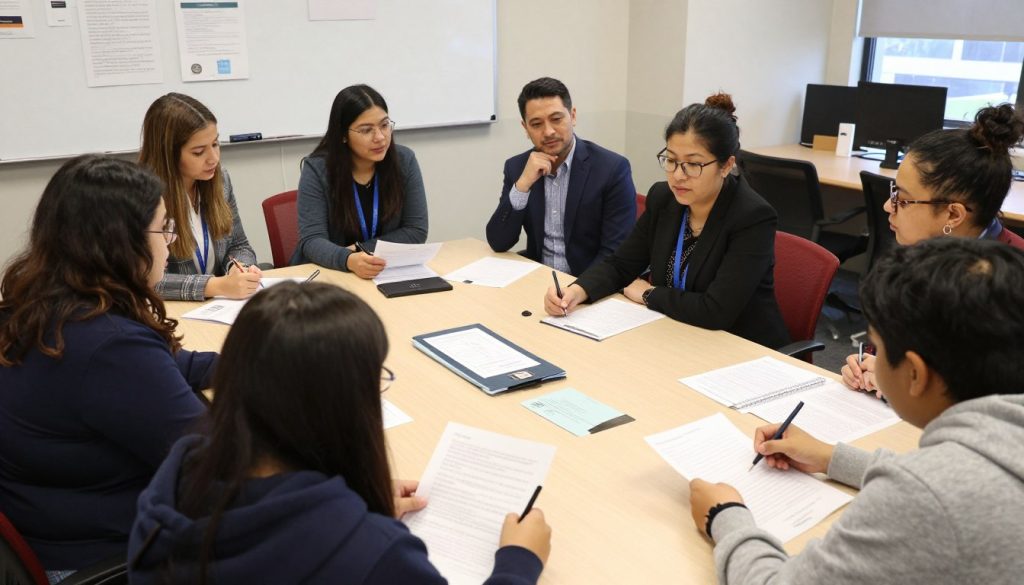
Collaborative professional development enhances teacher skills in gifted education.
Essential Teacher Skills for Gifted Education
Content Knowledge
Deepen your understanding of subject matter to respond to advanced questions and guide independent research. Gifted students often explore topics beyond grade-level curriculum, requiring teachers to be continuous learners themselves.
Facilitation Skills
Shift from direct instruction to guiding student inquiry. Learn to ask thought-provoking questions, facilitate meaningful discussions, and provide just-in-time support without taking over student learning.
Assessment Expertise
Develop proficiency in designing and interpreting sophisticated assessments that capture the depth of gifted students’ thinking. Learn to use assessment data to inform instruction and document growth.
Emotional Intelligence
Understand the social-emotional needs of gifted learners, including perfectionism, asynchronous development, and sensitivity. Create a classroom environment that supports both academic and emotional growth.
Continuous professional development is essential for refining these teacher skills. Seek out opportunities through:
- Specialized courses in gifted education
- Professional learning communities focused on differentiation
- Conferences and workshops with gifted education experts
- Mentorship relationships with experienced teachers
- Action research in your own classroom
The importance of gifted education strategies becomes increasingly evident as you develop these specialized teacher skills. You’ll find yourself better equipped to meet the needs of all learners, not just those identified as gifted.
Remember that implementing these strategies is a process, not an event. Start with small changes, reflect on their effectiveness, and gradually expand your approach. Celebrate successes and view challenges as opportunities for growth in your professional journey.
Ready to take your gifted education practice to the next level? Our comprehensive course on Gifted & Talented Learners provides practical strategies, ready-to-use resources, and expert guidance to enhance your teacher skills in supporting exceptional students.
Conclusion: Embracing the Importance of Gifted Education Strategies
The importance of gifted education strategies extends far beyond challenging high-ability students. When implemented effectively, these approaches create classrooms where all students can thrive at their optimal level of challenge. By developing specialized teacher skills in differentiation, assessment, and facilitation, you transform your entire teaching practice.
Remember that supporting gifted learners isn’t about doing more—it’s about doing differently. The strategies we’ve explored—curriculum compacting, tiered assignments, independent projects, flexible grouping, and authentic assessment—require thoughtful implementation but yield significant benefits for student engagement and achievement.
As you continue your professional journey, seek out opportunities to deepen your understanding and refine your approach. Connect with colleagues who share your commitment to meeting the needs of all learners, including those with exceptional abilities. Together, we can create educational environments where every student’s potential is recognized and nurtured.
Continue Your Professional Growth
Enhance your teacher skills with specialized training in gifted education. Our comprehensive courses provide practical strategies you can implement immediately in your classroom.