

Understanding Giftedness: The Foundation for Teaching Gifted Students
Before diving into specific strategies, it’s important to understand what giftedness actually means. According to the National Association for Gifted Children, gifted individuals are those who demonstrate outstanding levels of aptitude or competence in one or more domains. These domains include mathematics, music, language, or other areas that require specific intellectual ability.
Gifted students often display characteristics such as:
- Advanced vocabulary and language skills
- Exceptional memory and quick mastery of new concepts
- Intense curiosity and persistent questioning
- Ability to understand abstract concepts at an early age
- Strong sense of justice and emotional sensitivity
- Preference for independent work
It’s crucial to remember that giftedness varies widely. A student might be gifted in mathematics but struggle with writing, or vice versa. Some gifted students also have learning disabilities, a condition known as twice-exceptional or “2e.” Developing your teacher skills to identify these nuances is essential for providing appropriate support.
Enhance Your Understanding of Gifted Students
Looking to deepen your knowledge about gifted and talented learners? Our comprehensive guide provides research-based insights and practical strategies.
Core Differentiation Strategies for Teaching Gifted Students
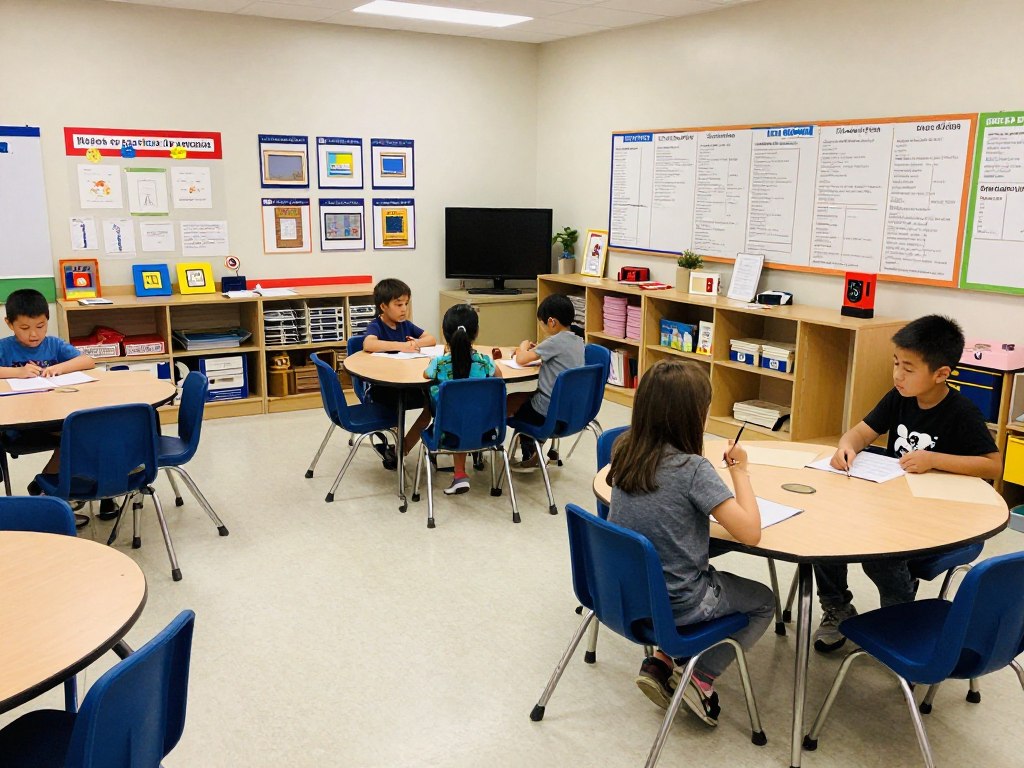
Differentiation is at the heart of teaching gifted students effectively. These learners need opportunities to engage with material at their level of readiness, explore topics of interest, and demonstrate learning in ways that challenge their abilities. The following strategies can help you differentiate instruction for your gifted learners.
1. Curriculum Compacting
Curriculum compacting involves assessing students’ knowledge before beginning a unit and allowing those who demonstrate mastery to skip the material they already know. This strategy respects gifted students’ time and prevents boredom.
“Gifted students don’t need to do 25 problems in math when they can do the five most difficult first to demonstrate mastery.”
To implement curriculum compacting, start by giving pre-assessments before each unit. Students who score above 80% can work on extension activities instead of reviewing content they’ve already mastered. This teacher skill requires preparation but saves time in the long run by reducing behavior issues that stem from boredom.
2. Tiered Assignments
Tiered assignments allow students to work on the same concept but at different levels of complexity. For example, while some students are working on basic multiplication facts, gifted students might be solving multi-step word problems that apply those same multiplication skills.
Creating tiered assignments is a valuable teacher skill that involves:
- Identifying the core concept all students need to learn
- Designing tasks at varying levels of difficulty
- Ensuring all tasks are engaging and meaningful
- Providing appropriate scaffolding for each level
3. Flexible Grouping
Flexible grouping allows gifted students to work with intellectual peers on challenging tasks. Research from the National Association for Gifted Children shows that enabling gifted students to work together boosts their academic achievement.
Effective grouping strategies include:
Cluster Grouping
Placing 5-8 gifted students together in a mixed-ability classroom with a teacher trained in gifted education.
Interest-Based Groups
Forming temporary groups based on shared interests for specific projects or investigations.
Skill-Based Groups
Grouping students by ability for specific skills instruction, with fluid movement between groups.
Cross-Grade Grouping
Allowing students to join higher-grade classes for subjects in which they excel.
Remember that while grouping gifted students together is beneficial, they should also have opportunities to work with diverse peers. Developing this balance is an important teacher skill that supports both academic and social growth.
Enrichment Strategies for Teaching Gifted Students

While differentiation adjusts the pace and level of instruction, enrichment adds depth and complexity to learning. These strategies help gifted students develop critical thinking, creativity, and research skills.
1. Project-Based Learning
Project-based learning (PBL) gives gifted students the opportunity to explore topics in depth and apply knowledge in authentic contexts. When implementing PBL, consider:
- Designing open-ended projects with multiple solution paths
- Incorporating real-world problems that require interdisciplinary thinking
- Allowing students to choose aspects of their project focus
- Building in opportunities for reflection and revision
Developing your teacher skills in facilitating rather than directing is essential for successful PBL with gifted students. Guide their inquiry process while allowing them to take ownership of their learning.
2. Independent Study
Independent study allows gifted students to pursue topics of personal interest while developing research and self-management skills. To implement effective independent study:
Independent Study Implementation Tips:
- Create clear guidelines and expectations
- Schedule regular check-ins to monitor progress
- Teach research skills explicitly
- Provide a structure for documenting learning
- Include a culminating product or presentation
Independent study requires strong teacher skills in mentoring and providing feedback that pushes students’ thinking without taking over their learning process.
3. Problem-Based Learning
Problem-based learning presents students with complex, ill-structured problems that require critical thinking and creative problem-solving. This approach is particularly effective for teaching gifted students because it:
- Encourages divergent thinking
- Develops perseverance and resilience
- Integrates multiple subject areas
- Mirrors real-world problem-solving processes
The teacher skills needed for problem-based learning include designing meaningful problems, asking thought-provoking questions, and guiding students without providing easy answers.
Elevate Your Teaching Practice
Access professional development opportunities designed to enhance your teacher skills for working with gifted and talented students.
Advanced Questioning Techniques for Teaching Gifted Students

The questions we ask shape the thinking our students do. For gifted learners, higher-order questions that stimulate analysis, evaluation, and creation are essential. Developing advanced questioning techniques is a critical teacher skill for challenging gifted minds.
Bloom’s Taxonomy in Practice
While all students benefit from questions at various levels of Bloom’s Taxonomy, gifted students particularly need questions at the higher levels. Here’s how to incorporate these questions in your teaching:
| Bloom’s Level | Question Stems | Example for Science |
| Analysis | How would you categorize…? What evidence supports…? How does… compare to…? | How would you categorize these organisms based on their adaptations to the environment? |
| Evaluation | What criteria would you use to assess…? How would you prioritize…? What is most important and why? | What criteria would you use to evaluate the effectiveness of different renewable energy sources? |
| Creation | How might you design…? What alternative solutions could…? How would you combine…? | How might you design an experiment to test the effect of light wavelength on plant growth? |
Socratic Questioning
Socratic questioning encourages deep thinking through systematic inquiry. This approach is particularly effective for teaching gifted students because it:
- Promotes intellectual rigor
- Develops logical reasoning
- Encourages examination of assumptions
- Builds conceptual understanding
The teacher skills required for effective Socratic questioning include active listening, thoughtful follow-up, and the ability to guide discussion without dominating it.
Wait Time
While it might seem counterintuitive, gifted students often benefit from extended wait time after questions. This gives them space to:
- Consider multiple perspectives
- Develop complex responses
- Make connections across domains
- Formulate original ideas
Practicing appropriate wait time is a subtle but important teacher skill that communicates your expectation for thoughtful responses rather than quick answers.
Common Pitfalls to Avoid When Teaching Gifted Students
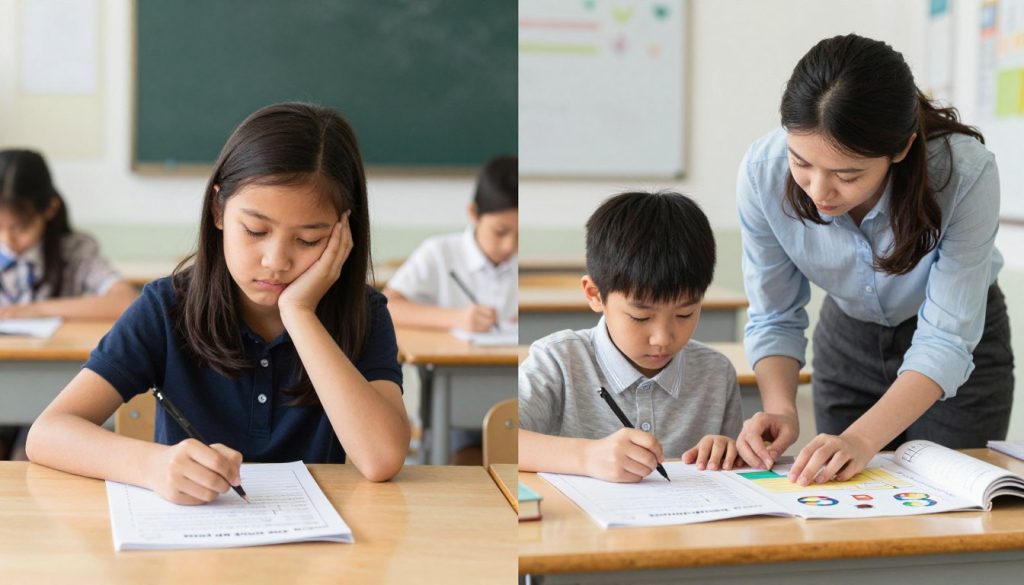
Even well-intentioned teachers can fall into traps that undermine their effectiveness in teaching gifted students. Awareness of these common pitfalls is an important teacher skill that can help you avoid them.
Effective Approaches
- Providing genuinely advanced content
- Allowing independent work on challenging projects
- Offering choice in how to demonstrate learning
- Creating opportunities for intellectual peer interaction
- Focusing on growth rather than achievement
Ineffective Approaches
- Assigning more work of the same difficulty
- Using gifted students as classroom tutors
- Expecting perfection in all subject areas
- Focusing exclusively on academic needs
- Withholding advanced content until prerequisites are completed
The “More Work” Trap
One of the most common mistakes in teaching gifted students is assigning more work of the same difficulty when they finish early. This approach:
- Punishes efficiency and quick mastery
- Creates resentment and disengagement
- Fails to provide intellectual challenge
- Teaches students to work slowly or hide their abilities
Instead, develop your teacher skills in designing extension activities that take concepts to deeper levels or allow students to apply learning in new contexts.
The Tutoring Misconception
While peer teaching can benefit all students when used appropriately, routinely assigning gifted students as tutors is problematic because:
- It prioritizes other students’ learning over the gifted student’s needs
- Gifted students may not have the skills to explain concepts they grasp intuitively
- It can create social tensions and resentment
- It doesn’t provide the gifted student with new learning
Developing alternative teacher skills for managing a differentiated classroom will serve all your students better than relying on gifted students as assistant teachers.
The “Wait Until Everyone Catches Up” Approach
Holding gifted students back until the rest of the class is ready to move on:
- Violates their right to learn something new every day
- Creates boredom that may lead to behavior problems
- Teaches them that school is about waiting rather than learning
- Fails to develop their potential
Instead, focus on developing teacher skills that allow you to manage multiple learning paths simultaneously in your classroom.
Practical Implementation: Getting Started with Teaching Gifted Students
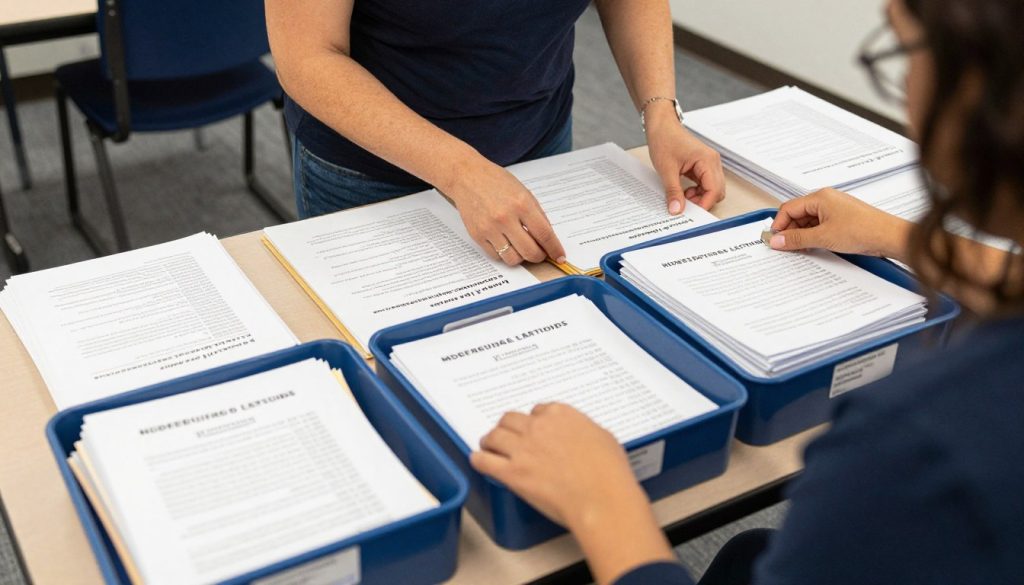
Implementing effective strategies for teaching gifted students doesn’t require a complete classroom overhaul. Start with these manageable steps to build your teacher skills and create a more responsive learning environment.
Start Small: Three Strategies to Try Tomorrow
Most Difficult First
Identify the five most challenging problems in your next assignment. Allow students who can successfully complete these problems to skip the rest and work on extension activities instead.
Choice Board
Create a simple 3×3 grid of activities related to your current unit. Allow students who finish early to select activities that interest them from the choice board.
Question of the Day
Post a complex, open-ended question related to your curriculum. Invite students to respond in a dedicated journal or discussion board throughout the day.
Building Your Resource Library
Developing a collection of resources is an essential teacher skill for supporting gifted learners. Consider including:
- Advanced reading materials on curriculum topics
- Logic puzzles and brain teasers
- Open-ended project prompts
- Digital resources for independent exploration
- Materials for creative expression
Start by gathering resources for one subject area, then gradually expand as your comfort with differentiation grows.
Communicating with Parents
Parents of gifted students can be valuable allies in supporting their children’s learning. Effective communication includes:
- Sharing your approach to differentiation early in the year
- Providing specific examples of how you’re challenging their child
- Asking for insights about their child’s interests and needs
- Collaborating on finding resources for extension activities
Developing strong parent communication is a teacher skill that can significantly enhance your effectiveness in teaching gifted students.
Ready to Transform Your Teaching?
Explore our comprehensive professional development opportunities designed specifically for teachers working with gifted and talented students.
Conclusion: The Ongoing Journey of Teaching Gifted Students
Teaching gifted students is both a challenge and a privilege. By implementing the strategies discussed in this article, you can create a classroom environment where gifted learners are engaged, challenged, and supported in their unique journey.
Remember that developing your teacher skills for working with gifted students is an ongoing process. Start with small changes, reflect on their effectiveness, and gradually expand your repertoire of strategies. Your willingness to adapt and grow will make a profound difference in the lives of your gifted students.
Most importantly, celebrate the joy of working with these exceptional minds. Their curiosity, creativity, and unique perspectives can enrich your classroom and remind you of the wonder of learning. By meeting their needs, you’re not just helping them achieve academically—you’re nurturing the innovative thinkers, problem-solvers, and leaders of tomorrow.
Continue Your Professional Growth
Access our complete library of resources for teaching gifted students and earn professional development credits while enhancing your classroom practice.



Supporting the Social-Emotional Needs of Gifted Students
Teaching gifted students isn’t just about academic challenge—it’s also about supporting their unique social-emotional needs. Gifted children often experience the world differently, with heightened sensitivities and asynchronous development (where their intellectual, emotional, and physical development progress at different rates).
Common Social-Emotional Characteristics
Perfectionism
Many gifted students set impossibly high standards for themselves and experience intense frustration when they fall short.
Heightened Sensitivity
Gifted students often experience emotions more intensely and may be particularly sensitive to criticism, injustice, or others’ feelings.
Social Challenges
Finding intellectual peers can be difficult, leading some gifted students to feel isolated or misunderstood.
Existential Concerns
Gifted students may grapple with complex ethical and philosophical questions at an early age.
Strategies for Social-Emotional Support
Developing teacher skills to address these needs is essential for teaching gifted students effectively. Consider these approaches:
“If a student—gifted or not—doesn’t feel safe and accepted by their teacher or classmates, it will be difficult for them to trust what you’re doing or take risks and learn and grow.”
Remember that your relationship with gifted students is foundational. Taking time to understand their unique perspectives and needs is perhaps the most important teacher skill you can develop.
Deepen Your Understanding of Gifted Students’ Needs
Our comprehensive guide to supporting the social-emotional development of gifted learners provides practical strategies you can implement immediately.
Access Social-Emotional Support Resources