

What Makes Reading Comprehension So Complex?
Reading comprehension is far more than simply decoding words on a page. It’s an intricate process that requires students to simultaneously extract and construct meaning through interaction with written language. When we teach reading comprehension, we’re actually teaching multiple cognitive processes working in concert.
The challenge begins with understanding that reading comprehension involves several interconnected skills:
- Decoding words accurately and fluently
- Understanding vocabulary in context
- Connecting ideas within and between sentences
- Applying background knowledge to new information
- Making inferences about unstated information
- Monitoring comprehension and applying fix-up strategies
- Identifying main ideas and supporting details
- Recognizing text structures and author’s purpose
Developing these teacher skills requires ongoing professional development and practice. Many educators find that specialized training in literacy instruction significantly improves their ability to address these complex components effectively.
Research from the National Reading Panel has consistently shown that explicit instruction in comprehension strategies improves students’ understanding of text. However, knowing which strategies to teach, when to teach them, and how to scaffold instruction appropriately remains challenging for many educators.
The Challenge of Teaching Reading Comprehension to Diverse Learners

One of the greatest challenges in teaching reading comprehension is addressing the diverse needs of our students. In a typical classroom, we might have:
Reading Ability Differences
- Students reading several years below grade level
- Students reading at grade level
- Advanced readers needing enrichment
- English language learners with varying proficiency
- Students with learning disabilities affecting reading
Background Knowledge Variations
- Different cultural and socioeconomic backgrounds
- Varying exposure to books and reading at home
- Diverse interests and experiences
- Different levels of vocabulary development
- Varying degrees of prior knowledge on topics
These differences mean that a one-size-fits-all approach to teaching reading comprehension simply doesn’t work. Effective teacher skills in this area include the ability to differentiate instruction while still maintaining high expectations for all students.
Enhance Your Differentiation Skills
Looking for practical ways to address diverse reading needs in your classroom? Explore our specialized professional development course on differentiated reading comprehension instruction.
The challenge of differentiation is compounded by limited instructional time and resources. Many teachers report feeling overwhelmed by the need to provide individualized support while still covering required curriculum content.
The Knowledge-Building Challenge in Reading Comprehension
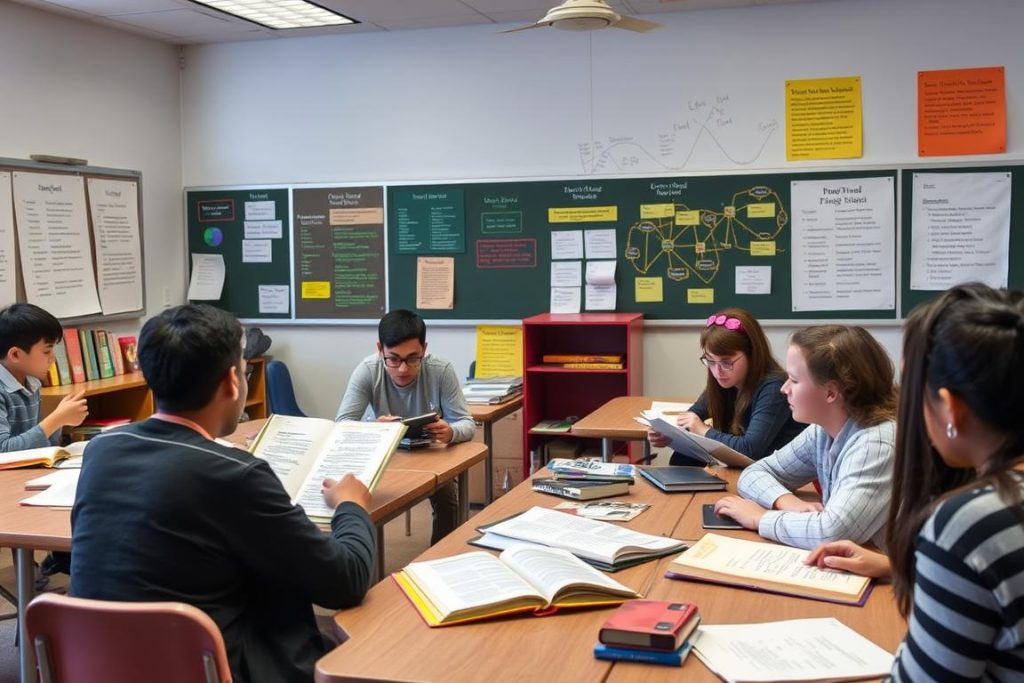
A significant challenge in teaching reading comprehension is the role of background knowledge. Research consistently shows that prior knowledge is one of the strongest predictors of reading comprehension success. As one researcher put it, “Knowledge begets comprehension begets more knowledge.”
This creates a particular challenge for teachers: how do we build sufficient knowledge across content areas to support reading comprehension while also teaching the comprehension strategies themselves?
The Knowledge Paradox
“The more you know about a topic, the easier it is to read and learn more about it. The less you know, the harder it is to gain new knowledge through reading.”
This paradox means that students with limited background knowledge face a double challenge. They struggle with comprehension because they lack relevant knowledge, and they struggle to build new knowledge because their comprehension is limited.
Developing teacher skills to address this challenge requires intentional planning that builds both knowledge and comprehension strategies simultaneously. This might include:
- Activating and building prior knowledge before reading
- Teaching vocabulary explicitly within knowledge domains
- Using text sets that build knowledge systematically
- Creating cross-curricular connections to reinforce concepts
- Providing multiple exposures to key concepts through varied texts
Many teachers find that professional development focused on knowledge-building approaches helps them address this challenge more effectively.
Reading Comprehension Strategies: Teaching the Invisible Process
Perhaps one of the most fundamental challenges in teaching reading comprehension is that it’s largely an invisible process. When proficient readers make inferences, monitor their understanding, or connect ideas across a text, these processes happen internally and automatically.
This invisibility creates a significant hurdle for teachers: how do we teach students to use processes we can’t see and that happen automatically for skilled readers?
Making Thinking Visible
Effective teacher skills in reading comprehension instruction include the ability to make these invisible processes visible to students. This typically involves:
- Modeling through think-alouds to demonstrate comprehension processes
- Using graphic organizers to visualize relationships between ideas
- Teaching annotation strategies to track thinking on the page
- Providing explicit instruction in specific comprehension strategies
- Creating opportunities for students to verbalize their thinking
Research has identified several key comprehension strategies that should be taught explicitly:
Before Reading
- Activating prior knowledge
- Previewing text features
- Setting purpose for reading
- Making predictions
During Reading
- Questioning the text
- Visualizing content
- Making inferences
- Monitoring comprehension
After Reading
- Summarizing key points
- Evaluating author’s purpose
- Connecting to other texts
- Reflecting on learning
The challenge lies not just in teaching these strategies individually, but in helping students learn when and how to apply them flexibly while reading. This requires sophisticated teacher skills that develop through experience and targeted professional development.
Master Reading Comprehension Instruction
Looking for practical ways to teach comprehension strategies more effectively? Our comprehensive professional development program provides research-based approaches you can implement immediately.
The Text Complexity Challenge in Reading Comprehension
Today’s academic standards require students to read and comprehend increasingly complex texts. This creates a significant challenge for teachers: how do we support students in accessing complex texts while still building their independent reading skills?
The challenge of text complexity encompasses several dimensions:
| Dimension | Challenge for Teachers | Teacher Skills Needed |
| Quantitative Complexity | Selecting texts with appropriate readability levels while meeting grade-level standards | Ability to analyze text complexity and match to student reading levels |
| Qualitative Complexity | Identifying challenging aspects of text structure, language, and knowledge demands | Knowledge of text features and how to scaffold understanding |
| Reader and Task Considerations | Accounting for student motivation, knowledge, and purpose for reading | Understanding of student factors that affect comprehension |
| Digital Text Complexity | Supporting comprehension of multimodal and non-linear digital texts | Digital literacy instruction techniques |
Developing these teacher skills requires ongoing professional learning and collaboration with colleagues. Many educators find that structured professional development in text complexity analysis significantly improves their ability to select and scaffold appropriate texts.
The Scaffolding Dilemma
Teachers often face a difficult balance: providing enough support for students to access complex texts without providing so much support that students don’t develop independent reading skills. This scaffolding dilemma requires nuanced teacher skills that develop through experience and reflection.
“The goal is to provide just enough support for students to access complex text independently, then gradually remove that support as students develop proficiency.”
Assessment Challenges in Reading Comprehension

Assessing reading comprehension presents unique challenges for teachers. Unlike more concrete skills like decoding or fluency, comprehension happens largely in the mind of the reader and can be difficult to measure accurately.
Common Assessment Challenges
- Distinguishing between word recognition issues and true comprehension problems
- Creating assessments that measure deeper understanding beyond recall
- Developing formative assessments that inform daily instruction
- Balancing standardized measures with authentic reading tasks
- Assessing the application of strategies across different texts
Effective teacher skills in this area include the ability to use multiple assessment approaches to gain a complete picture of students’ comprehension abilities:
Formal Assessments
- Standardized reading tests
- Benchmark assessments
- Curriculum-based measures
Informal Assessments
- Reading conferences
- Think-alouds
- Reading response journals
Performance Assessments
- Project-based assessments
- Discussion-based assessments
- Multi-text synthesis tasks
Many teachers find that professional development focused on reading assessment helps them develop more effective approaches to measuring and supporting comprehension growth.
Teacher Preparation and Professional Development for Reading Comprehension
Perhaps the most fundamental challenge in teaching reading comprehension is that many teachers have not received sufficient preparation in this complex area. Research consistently shows gaps in teacher preparation programs related to reading comprehension instruction.
A survey by the National Council on Teacher Quality found that only 37% of teacher preparation programs provided adequate instruction in all five essential components of reading, including comprehension.
This preparation gap means that many teachers must develop their teacher skills in reading comprehension instruction through on-the-job experience and professional development. The challenge is finding high-quality professional learning opportunities that translate into improved classroom practice.
Effective Professional Development for Reading Comprehension
Research suggests that the most effective professional development for building teacher skills in reading comprehension instruction includes:
- Content focused specifically on reading comprehension research and practice
- Active learning opportunities that model effective instructional approaches
- Coherence with school curriculum and instructional goals
- Sustained duration with multiple sessions over time
- Collective participation with opportunities for collaboration
- Coaching and feedback on implementation
Many teachers report that targeted professional development in reading comprehension significantly improves their confidence and effectiveness in this critical area.
Transform Your Reading Comprehension Instruction
Ready to take your teaching to the next level? Our comprehensive professional development program provides research-based strategies you can implement immediately in your classroom.
Practical Strategies for Overcoming Reading Comprehension Challenges
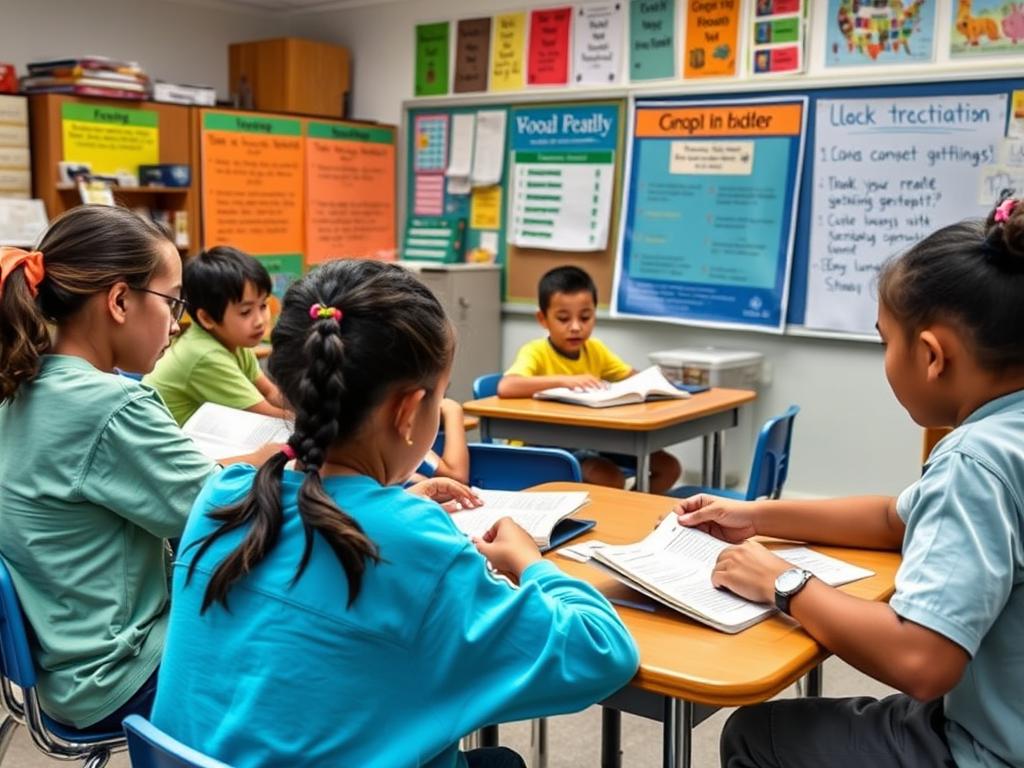
Despite the challenges, many teachers have developed effective approaches to teaching reading comprehension. Here are some research-based strategies that can help address the challenges discussed in this article:
For Knowledge Building
- Use text sets on related topics to build knowledge systematically
- Incorporate vocabulary instruction within knowledge domains
- Connect reading to content area learning
- Use multimedia resources to build background knowledge
For Strategy Instruction
- Use the gradual release model: I do, we do, you do
- Incorporate regular think-alouds to model comprehension processes
- Teach text structure explicitly
- Use graphic organizers to visualize relationships
For Diverse Learners
- Implement reciprocal teaching in small groups
- Use audiobooks alongside printed text
- Provide text at multiple complexity levels
- Incorporate collaborative reading approaches
Developing these teacher skills requires ongoing practice and reflection. Many educators find that structured professional learning communities provide valuable support for implementing these strategies effectively.
The Role of Technology
Technology can be a powerful tool for addressing reading comprehension challenges when used strategically. Effective approaches include:
- Digital annotation tools that make thinking visible
- Text-to-speech and speech-to-text tools for accessibility
- Interactive e-books with embedded comprehension supports
- Platforms that provide texts at multiple reading levels
- Digital discussion tools that extend conversations about text
As with any instructional approach, the effectiveness of technology depends on how it’s implemented. Teacher skills in selecting and integrating appropriate digital tools are essential for success.
Moving Forward: Embracing the Challenge of Teaching Reading Comprehension
Teaching reading comprehension is undoubtedly challenging, but it’s also one of the most rewarding aspects of our work as educators. When we help students develop the ability to understand, analyze, and learn from text, we’re providing them with a skill that will serve them throughout their lives.
The challenges we’ve explored in this article—from the complexity of the reading process to the diversity of our students’ needs—are real. But they’re not insurmountable. By continuing to develop our teacher skills through professional learning, collaboration with colleagues, and reflective practice, we can become more effective at teaching this critical skill.
Remember that you don’t have to face these challenges alone. There are resources available to support your professional growth in this area, including specialized professional development programs designed specifically for K12 teachers.
Ready to Enhance Your Reading Comprehension Instruction?
Take the next step in your professional journey with our comprehensive resources designed specifically for K12 teachers.
By embracing these challenges and continuously refining our practice, we can make a significant difference in our students’ reading comprehension development—and in their futures.


