

Active participation is a key indicator of strong student engagement in the classroom
What Is Student Engagement and Why Does It Matter?
Student engagement refers to the degree of attention, curiosity, interest, and passion that students show when learning or being taught. It extends beyond simple participation to include intellectual, emotional, behavioral, physical, and social components. When students are truly engaged, they’re not just completing assignments—they’re invested in their own learning journey.
According to educational neuroscience expert Dr. David Sousa, engaged students demonstrate greater motivation to participate, enjoy achieving learning goals, persist through challenges, and feel intrinsically motivated to gain deeper understanding. These qualities don’t just make teaching more rewarding—they translate directly to improved academic outcomes.
Research consistently shows that higher levels of student engagement correlate with improved grades, better test scores, increased attendance, and lower dropout rates. Beyond academics, engaged students also develop stronger social-emotional skills, greater self-regulation, and more positive attitudes toward learning that benefit them throughout their lives.
For teachers, developing the teacher skills to foster engagement isn’t optional—it’s essential for creating effective learning environments where all students can thrive. The good news is that engagement isn’t fixed or predetermined; it can be cultivated through intentional teaching practices and classroom strategies.
Understanding the Different Types of Student Engagement
To effectively work on increasing student engagement, teachers must first understand that engagement operates across multiple dimensions. Each type requires different teacher skills and approaches:
Behavioral Engagement
This most visible form of engagement involves participation, attendance, following rules, and completing assignments. Students who are behaviorally engaged show up, follow directions, and do the work. While this is the easiest type to observe, it doesn’t necessarily indicate deeper learning.
Signs include: Hand-raising, on-task behavior, assignment completion, and active participation in class activities.
Emotional Engagement
This refers to students’ affective reactions in the classroom—their interest, enjoyment, sense of belonging, and valuing of education. Emotionally engaged students feel connected to their teachers, peers, and the learning material itself.
Signs include: Enthusiasm, positive attitudes toward learning, classroom connections, and expressions of interest and curiosity.
Cognitive Engagement
Perhaps the most powerful form of engagement, this involves investment in learning, self-regulation, and strategic thinking. Cognitively engaged students go beyond memorization to seek understanding, make connections, and think critically.
Signs include: Asking deep questions, making connections across subjects, persisting through challenges, and seeking additional resources.
The most effective classrooms foster all three types of engagement simultaneously. When students are behaviorally compliant, emotionally connected, and cognitively invested, true deep learning occurs. Developing teacher skills to address each dimension creates a comprehensive approach to increasing student engagement.
Common Barriers to Increasing Student Engagement
Before exploring strategies for boosting engagement, it’s important to understand the obstacles that may be preventing students from fully engaging in your classroom:
Barriers to Student Engagement
- Lack of relevance – When students don’t see how content connects to their lives or interests
- Passive learning environments – Excessive lecture or worksheet-based instruction
- One-size-fits-all approaches – Not accounting for diverse learning needs and styles
- External distractions – Technology, personal issues, or classroom disruptions
- Fixed mindset – Students believing they “can’t do” certain subjects
- Lack of autonomy – Few opportunities for choice or self-direction
- Unaddressed learning gaps – Content that’s too difficult creates frustration
- Social-emotional barriers – Anxiety, stress, or feeling unsafe in the classroom
Recognizing these barriers is the first step in addressing them. Effective teacher skills include being able to identify when and why students are disengaging, then adapting instruction accordingly. Many of the strategies we’ll explore directly counter these common obstacles to engagement.
The Tangible Benefits of Increasing Student Engagement
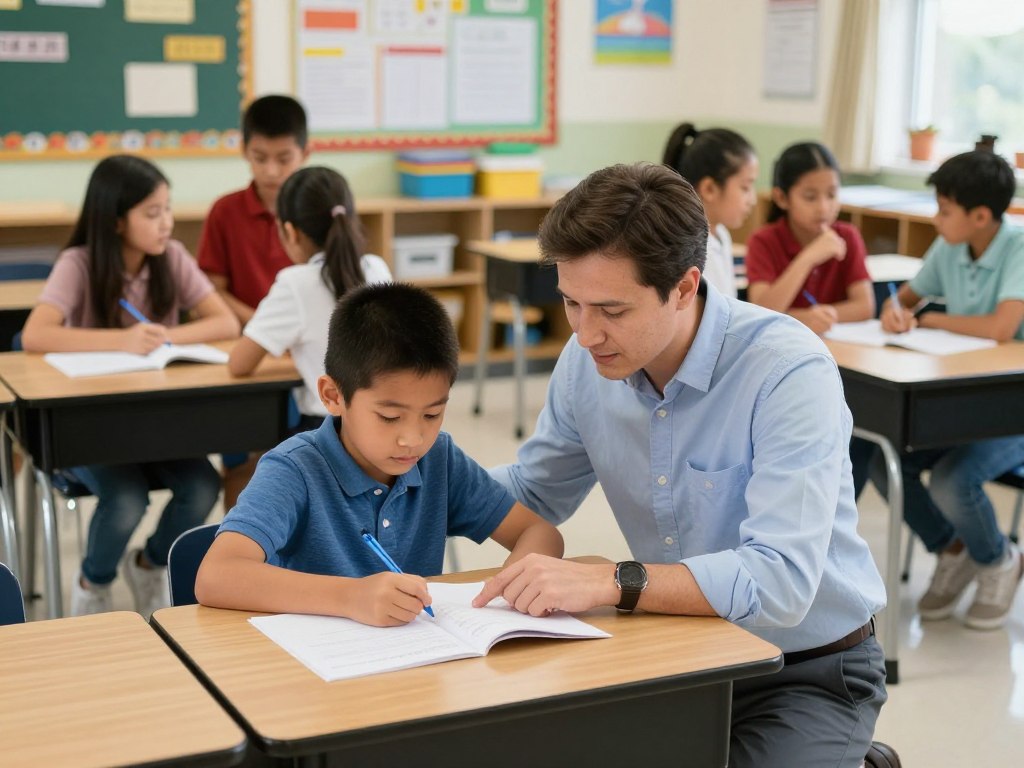
Engaged classrooms foster collaboration, critical thinking, and personalized learning experiences
When teachers successfully implement strategies for increasing student engagement, the positive effects ripple throughout the classroom and beyond:
Academic Benefits
- Improved academic achievement – Research demonstrates that engaged students show higher test scores and grades
- Better retention of information – Active engagement strengthens neural pathways for long-term memory
- Deeper conceptual understanding – Beyond memorization to application and analysis
- Increased completion of assignments – Engaged students are more likely to finish work
- Higher-quality work – Students put more effort into tasks they find engaging
Behavioral and Social-Emotional Benefits
- Improved classroom behavior – Fewer disruptions and discipline issues
- Better attendance – Students want to come to class when they’re engaged
- Increased persistence – Willingness to tackle challenging tasks
- Enhanced collaboration skills – Engagement often involves productive teamwork
- Greater self-efficacy – Students develop confidence in their abilities
For teachers, the benefits extend to professional satisfaction as well. Classrooms with high engagement levels are more enjoyable to teach, create fewer management challenges, and provide more opportunities to witness those “lightbulb moments” that make teaching rewarding. Developing teacher skills for increasing student engagement is truly an investment that pays dividends for everyone involved.
Enhance Your Teacher Skills for Increasing Student Engagement
Looking to transform your classroom with proven engagement strategies? Professional development can help you master the teacher skills needed to create a more dynamic, interactive learning environment. Discover research-based approaches that work for your specific grade level and subject area.
Effective Strategies for Increasing Student Engagement
Now that we understand the importance and benefits of student engagement, let’s explore practical strategies you can implement in your classroom. These approaches help develop essential teacher skills while creating more engaging learning experiences for students:
1. Create Authentic, Relevant Learning Experiences
Students engage more deeply when they see how learning connects to their lives, interests, and futures. Developing teacher skills to make these connections explicit helps students answer the perennial question: “Why do we need to learn this?”
- Connect content to real-world applications and current events
- Incorporate students’ cultural backgrounds and personal interests
- Design project-based learning experiences that solve authentic problems
- Invite guest speakers from the community to demonstrate real-world applications
- Use examples and scenarios that reflect students’ daily experiences
2. Implement Interactive Teaching Methods
Passive learning environments where students primarily listen to lectures or complete worksheets independently tend to decrease engagement. Interactive teaching methods that require active participation help maintain attention and deepen learning.
- Use think-pair-share activities to increase participation
- Incorporate digital tools like interactive polls and quizzes
- Design stations or centers where students rotate through different activities
- Implement cooperative learning structures that require all students to contribute
- Use manipulatives and hands-on materials whenever possible

Hands-on learning activities significantly increase student engagement across subject areas
3. Provide Choice and Autonomy
When students have opportunities to make meaningful choices about their learning, engagement naturally increases. Developing teacher skills to incorporate choice while maintaining curricular focus is essential.
- Offer menu boards with different options for demonstrating learning
- Allow students to choose topics for research or writing within curricular parameters
- Implement “genius hour” or passion projects where students pursue personal interests
- Create flexible seating arrangements where appropriate
- Let students choose between different learning modalities (reading, watching, listening)
4. Foster a Positive Classroom Community
Students who feel safe, valued, and connected are more likely to engage fully in learning. Building teacher skills related to classroom culture creates the foundation for engagement.
- Establish clear routines and expectations collaboratively with students
- Incorporate regular community-building activities and class meetings
- Learn and use students’ names and interests consistently
- Celebrate diverse contributions and perspectives
- Model and explicitly teach respectful dialogue and active listening
5. Utilize Formative Assessment and Feedback
Regular, specific feedback helps students understand their progress and next steps. Developing teacher skills for effective formative assessment creates engagement through clarity and purpose.
- Use exit tickets to gauge understanding and plan next lessons
- Implement peer feedback protocols with clear criteria
- Provide specific, growth-oriented feedback rather than just grades
- Use digital tools that provide immediate feedback on practice activities
- Create opportunities for students to self-assess and reflect on their learning
These strategies represent just the beginning of a comprehensive approach to increasing student engagement. The most effective teachers continuously expand their teacher skills by trying new approaches, reflecting on results, and adapting to meet their specific students’ needs.
For a deeper exploration of engagement strategies tailored to your grade level and subject area, professional development courses on increasing student engagement can provide valuable resources and support.
Leveraging Technology for Increasing Student Engagement
When used thoughtfully, technology can be a powerful tool for increasing student engagement. However, it’s important to remember that technology should enhance good teaching, not replace it. Developing teacher skills for effective technology integration focuses on purpose rather than novelty.
Effective Technology Integration
- Interactive presentation tools like Nearpod or Pear Deck that allow for real-time student participation
- Digital creation platforms where students can demonstrate learning through videos, podcasts, or digital art
- Gamified learning applications that make practice more engaging through competition and rewards
- Virtual field trips that expand learning beyond classroom walls
- Collaborative tools like shared documents and digital bulletin boards
Best Practices for Tech Integration
- Focus on learning objectives first, then select appropriate technology
- Ensure technology enhances rather than distracts from content
- Consider equity and access issues when assigning tech-based work
- Teach digital citizenship alongside technology use
- Balance screen time with other forms of engagement
Remember that technology is just one tool in your engagement toolkit. The most effective classrooms blend technology with hands-on experiences, discussion, movement, and other engagement strategies. Developing balanced teacher skills for technology integration helps create dynamic learning environments without over-reliance on screens.
Differentiation: The Key to Engaging All Learners
One of the biggest challenges in increasing student engagement is addressing the diverse needs, interests, and readiness levels in your classroom. Differentiation—modifying content, process, product, or learning environment based on student needs—is essential for ensuring all students can engage meaningfully.
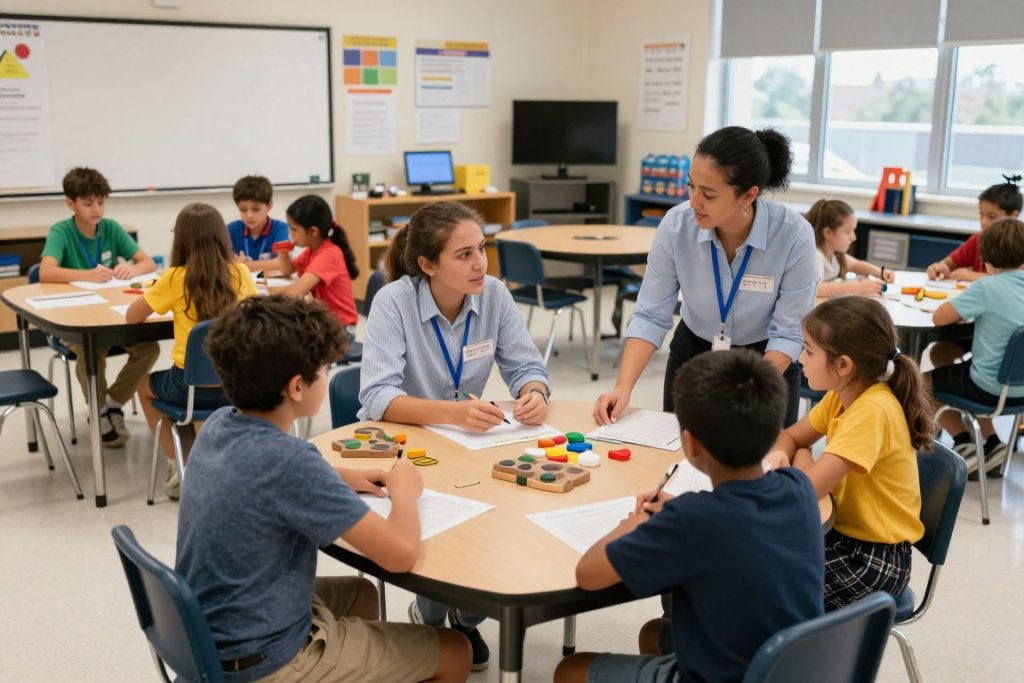
Differentiated instruction allows teachers to meet diverse learning needs and increase engagement for all students
Differentiation Strategies That Boost Engagement
- Tiered assignments that provide appropriate challenge for different readiness levels
- Flexible grouping based on readiness, interest, or learning preferences
- Multiple means of representation (visual, auditory, kinesthetic) for content
- Choice boards that allow students to select activities aligned with their interests
- Varied pacing that allows students to move through content at appropriate speeds
- Scaffolded support that gradually releases responsibility as students develop skills
Developing teacher skills for effective differentiation takes time and practice. Start small by differentiating one aspect of a lesson, then gradually expand your approach. Remember that the goal isn’t to create entirely different lessons for each student, but rather to provide multiple pathways to the same learning goals.
For more specific strategies on differentiation for increasing student engagement, consider exploring professional development resources focused on differentiated instruction.
Empowering Students: The Role of Voice and Choice in Increasing Student Engagement
When students feel they have a voice in their education and meaningful choices about their learning, engagement naturally increases. Developing teacher skills to incorporate student voice and choice creates classrooms where students feel ownership and agency.
Strategies for Incorporating Student Voice
- Conduct regular class meetings where students can share ideas and concerns
- Create student advisory committees to provide input on classroom decisions
- Use surveys and exit tickets to gather feedback on lessons and activities
- Implement protocols for respectful academic discussion and debate
- Provide opportunities for students to teach or present to their peers
Meaningful Choices That Enhance Engagement
- Allow students to choose topics within curricular parameters
- Offer options for how students demonstrate their learning
- Provide choice in reading materials at appropriate levels
- Let students select partners or groups when appropriate
- Create opportunities for students to set personal learning goals
The key to effective voice and choice is authenticity—students quickly recognize when their input isn’t truly valued or when choices are superficial. Developing teacher skills to incorporate meaningful voice and choice takes practice, but the engagement benefits are substantial.
Rethinking Assessment: Strategies for Increasing Student Engagement Through Meaningful Evaluation
Traditional assessment approaches often focus solely on measuring learning, but assessment can also be a powerful tool for increasing student engagement. When students understand assessment as a learning opportunity rather than just a judgment, their motivation and investment increase.
Assessment Practices That Enhance Engagement
- Authentic assessments that connect to real-world applications
- Project-based assessments that allow for creativity and problem-solving
- Student-led conferences where students present their learning to parents
- Digital portfolios that document growth over time
- Self-assessment opportunities that develop metacognitive skills
Feedback Approaches That Drive Engagement
- Specific, actionable feedback focused on improvement
- Peer feedback protocols with clear criteria
- Opportunities to revise work based on feedback
- Feedback conversations rather than just written comments
- Celebration of growth and progress, not just achievement
Developing teacher skills for engagement-focused assessment requires shifting from a purely evaluative mindset to seeing assessment as part of the learning process itself. When students view assessment as a way to grow rather than just a way to be judged, their engagement with the assessment process—and learning as a whole—increases significantly.
Measuring and Monitoring Student Engagement
To effectively work on increasing student engagement, teachers need ways to measure and monitor engagement levels in their classrooms. Developing teacher skills for engagement assessment helps identify what’s working and where adjustments are needed.
Observable Indicators of Engagement
| Engagement Type | Observable Indicators | Warning Signs of Disengagement |
| Behavioral Engagement | Active participation, on-task behavior, hand-raising, assignment completion, attendance | Off-task behavior, incomplete work, tardiness or absences, passive posture |
| Emotional Engagement | Enthusiasm, positive interactions with peers, expressions of interest, connections with teacher | Boredom, frustration, withdrawal from class community, negative attitudes |
| Cognitive Engagement | Asking thoughtful questions, making connections, seeking challenges, persistence through difficulties | Surface-level responses, giving up easily, lack of curiosity, minimal effort |
Tools for Measuring Engagement
- Observation protocols with specific engagement indicators to track
- Student self-assessment surveys about their engagement levels
- Exit tickets with reflection questions about the learning experience
- Engagement data tracking for patterns across activities or subjects
- Video recording of lessons for later analysis of engagement patterns
Regular monitoring of engagement helps teachers refine their approaches and develop more effective teacher skills for creating engaging learning environments. Remember that engagement may look different for different students—what matters is noticing patterns and responding appropriately to meet diverse needs.
Case Studies: Successful Examples of Increasing Student Engagement
Sometimes the best way to develop teacher skills for engagement is to learn from successful examples. These brief case studies highlight how teachers have effectively implemented strategies for increasing student engagement in different contexts:
Elementary Reading Engagement
A third-grade teacher noticed declining engagement during reading instruction. She implemented a reader’s workshop model with mini-lessons followed by student choice in reading materials at appropriate levels. Students tracked their reading progress and met regularly in small groups to discuss books. The teacher conducted brief conferences with individual students to provide targeted support.
Results: Reading assessment scores improved by 22%, and students reported significantly higher enjoyment of reading. Parents noted increased voluntary reading at home.
Middle School Science Engagement
A sixth-grade science teacher transformed his unit on ecosystems by having students adopt a local habitat to study throughout the semester. Students collected data, consulted with local experts, and ultimately created proposals for habitat conservation that they presented to community partners. The teacher provided structured scaffolding while allowing significant student autonomy in research directions.
Results: Attendance improved, disciplinary issues decreased, and end-of-unit assessments showed deeper conceptual understanding compared to previous years.
High School Math Engagement
A geometry teacher addressed engagement challenges by implementing a flipped classroom approach with collaborative problem-solving during class time. Students watched brief instructional videos at home, then worked in teams on complex, real-world applications during class. The teacher used digital tools to check understanding and provide immediate feedback.
Results: Student participation increased dramatically, particularly among previously disengaged students. Course passage rates improved from 76% to 91% over one academic year.
These examples demonstrate that increasing student engagement often requires rethinking traditional approaches to teaching and learning. The teacher skills demonstrated in these case studies—creativity, responsiveness to student needs, willingness to try new approaches, and focus on authentic learning—are valuable for any educator seeking to boost engagement.
Take Your Student Engagement Strategies to the Next Level
Ready to transform your classroom with proven engagement techniques? Our professional development course on increasing student engagement provides comprehensive strategies, ready-to-use resources, and ongoing support to help you develop the teacher skills needed for a more dynamic, interactive classroom.
Conclusion: The Ongoing Journey of Increasing Student Engagement

Creating engaging classrooms is an ongoing journey that transforms both teaching and learning experiences
Increasing student engagement isn’t a one-time fix or a single strategy—it’s an ongoing process of developing teacher skills, trying new approaches, reflecting on results, and continuously adapting to meet student needs. The most engaging classrooms are those where teachers themselves remain engaged in their own professional growth and learning.
As you implement the strategies discussed in this article, remember that small changes can make significant differences. You don’t need to transform your entire teaching approach overnight. Start with one or two strategies that seem most relevant to your specific classroom context, observe the results, and build from there.
The journey toward increasing student engagement is both challenging and rewarding. When you see previously disengaged students becoming active participants in their learning, asking thoughtful questions, persisting through challenges, and demonstrating genuine curiosity—you’ll know your efforts are making a difference.
Continue developing your teacher skills through professional learning communities, ongoing professional development, and reflective practice. Share your successes and challenges with colleagues, and remain open to new ideas and approaches. By prioritizing student engagement, you’re not just improving academic outcomes—you’re helping to create lifelong learners who approach education with enthusiasm and purpose.
For additional resources, strategies, and support on your journey toward increasing student engagement, explore the specialized courses and materials available at Credits for Teachers. Together, we can create classrooms where every student is actively engaged in meaningful learning.


