
In today’s educational landscape, where distractions abound and attention spans seem shorter than ever, mastering effective teacher skills for engagement has become essential. This article explores practical, research-backed strategies that transform passive observers into active participants in their educational journey. Whether you teach elementary, middle, or high school students, these approaches will help you create a classroom where meaningful engagement becomes the norm rather than the exception.
Why Increasing Student Engagement Strategies Matter
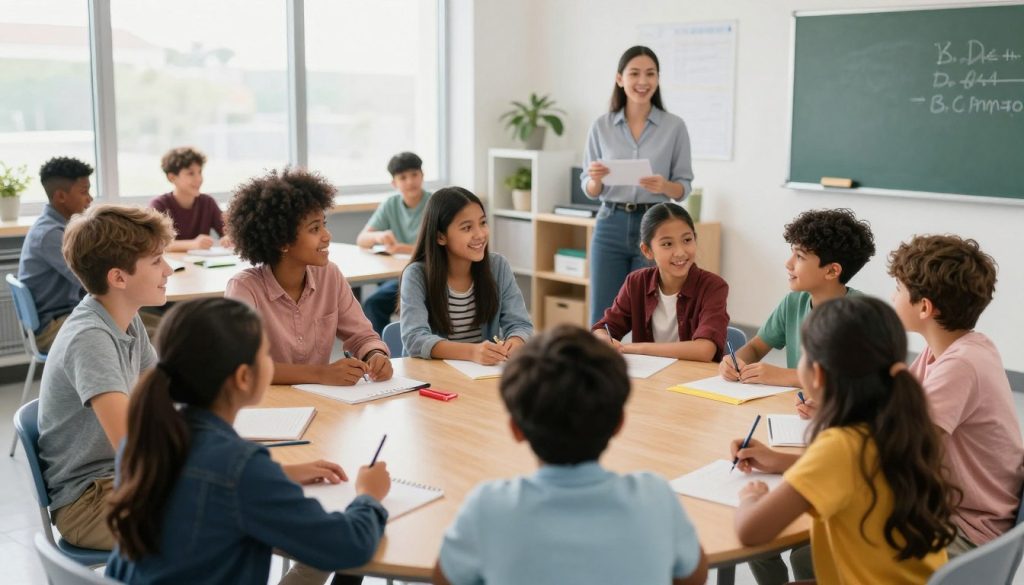
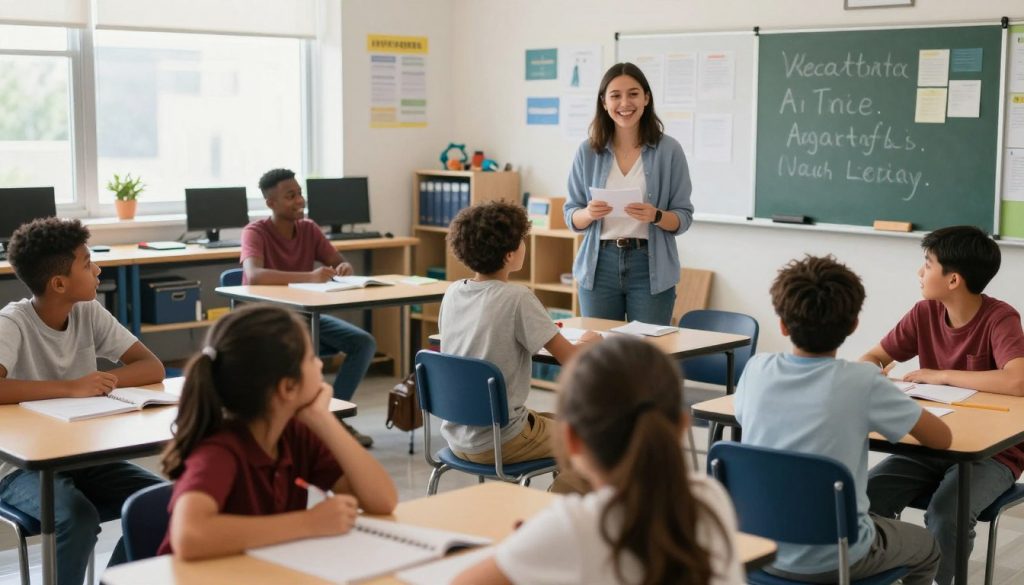
Active engagement transforms the learning experience for students of all ages
Before diving into specific strategies, it’s important to understand why engagement matters so profoundly. When students are truly engaged, they don’t just hear information—they process it, question it, connect it to prior knowledge, and apply it in new contexts. This deeper level of interaction leads to significantly improved learning outcomes and retention.
Research consistently shows that engaged students demonstrate higher academic achievement, improved attendance, and fewer behavioral issues. Beyond these measurable outcomes, engagement fosters curiosity, critical thinking, and a sense of ownership over learning—qualities that serve students well beyond their school years.
Developing teacher skills that promote engagement isn’t just about making learning fun (though that can be a welcome side effect). It’s about creating conditions where students feel intellectually stimulated, emotionally connected to the material, and motivated to participate actively in the learning process.
The Engagement Gap
Unfortunately, studies indicate that student engagement tends to decline as children progress through school. By middle school, many students report feeling disconnected from their learning experiences, and this trend often continues into high school. This engagement gap represents a significant challenge for educators at all levels.
The good news? Intentional implementation of increasing student engagement strategies can reverse this trend. When teachers develop and apply specific teacher skills focused on engagement, they can create learning environments where students remain curious, motivated, and intellectually invested throughout their educational journey.
Increasing Student Engagement Strategies Through Collaborative Learning
Collaborative learning stands as one of the most powerful approaches for increasing student engagement. When students work together toward shared goals, they develop not only academic understanding but also essential social and communication skills.
Think-Pair-Share
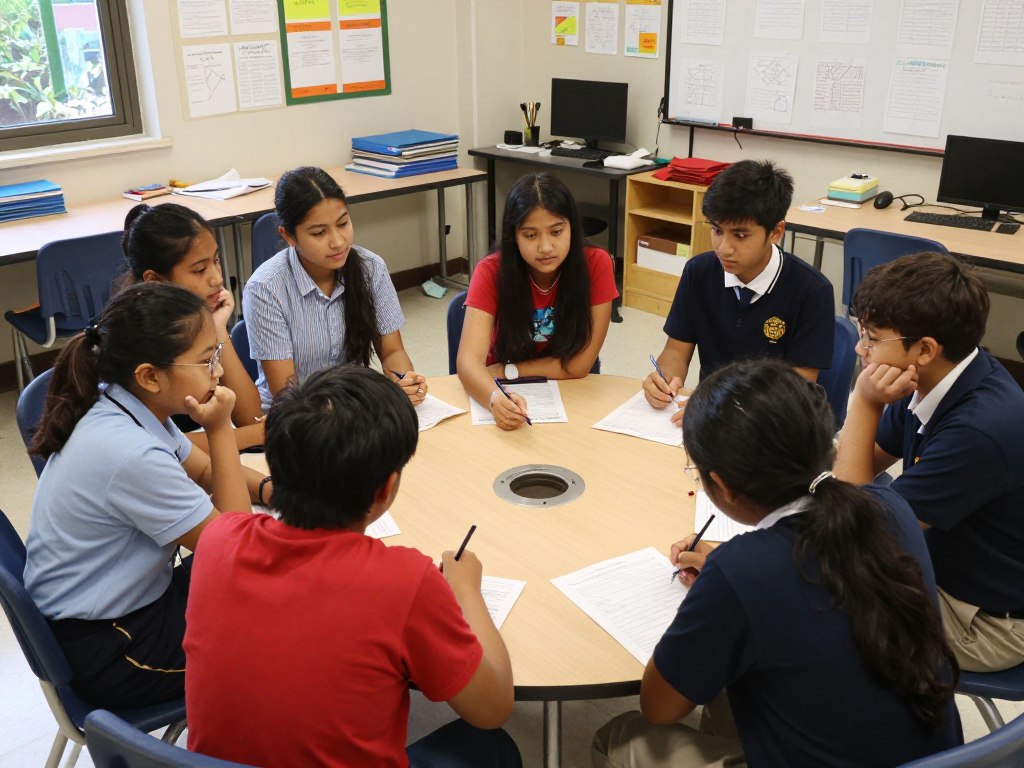
This simple yet effective strategy gives students time to process information individually before discussing it with peers. Here’s how to implement it:
- Pose a thought-provoking question or problem related to your lesson
- Give students 1-2 minutes of silent thinking time to formulate their ideas
- Have students pair up to discuss their thoughts for 3-5 minutes
- Call on pairs to share insights with the whole class
This approach engages all students, not just those who typically raise their hands. It also builds teacher skills in facilitating meaningful discussions rather than dominating classroom talk.
Elementary application: After reading a story, ask students to think about what the main character might do differently if given another chance, then discuss with a partner.
Middle school application: In science, have students think about how a specific adaptation helps an organism survive, pair to compare ideas, then share with the class.
High school application: In history, ask students to consider how a historical event connects to current issues, discuss with a partner, then contribute to a whole-class discussion.
Jigsaw Method
The jigsaw method transforms students into both learners and teachers, significantly boosting engagement through responsibility and peer instruction:
- Divide content into 4-6 segments
- Form “expert groups” where students master one segment
- Reorganize into “home groups” with one expert from each segment
- Have experts teach their segment to their home group
This strategy requires teachers to develop specific teacher skills in planning, grouping, and facilitation. The payoff is worth it—students engage deeply with content they know they’ll need to teach others.
For a comprehensive guide to implementing collaborative learning strategies in your classroom, explore our professional development course on increasing student engagement.
Inquiry-Based Increasing Student Engagement Strategies
Inquiry-based learning places student questions at the center of the educational experience. By encouraging curiosity and investigation, this approach naturally increases engagement while developing critical thinking skills.

Question Formulation Technique (QFT)
Developed by the Right Question Institute, this structured process teaches students to generate, improve, and prioritize their own questions:
- Present a focus or “Question Focus” (QFocus) related to your content
- Have students generate as many questions as possible without stopping to discuss or answer them
- Guide students in improving their questions by transforming closed questions (yes/no) into open ones and vice versa
- Ask students to prioritize their three most important questions
- Use these questions to drive learning activities
This technique builds teacher skills in facilitating student-driven inquiry rather than simply delivering information. It shifts ownership of learning to students while maintaining curricular focus.
Elementary application: Present a picture of a habitat and have students generate questions about the animals that might live there.
Middle school application: Show a graph of population changes and have students develop questions about causes and effects.
High school application: Present a primary source document and have students create questions that would guide a historical investigation.
Problem-Based Learning
Problem-based learning engages students with authentic, complex problems that require them to apply knowledge across disciplines:
- Present a real-world problem without a predetermined solution
- Provide resources and guidance as students work in groups to investigate
- Allow students to determine what information they need and how to find it
- Have students present solutions with evidence and reasoning
Implementing this approach requires teacher skills in designing meaningful problems, scaffolding the inquiry process, and assessing diverse outcomes. The reward is seeing students deeply engaged in applying knowledge to situations that matter.
Enhance Your Inquiry-Based Teaching Skills
Looking for more structured guidance on implementing inquiry-based learning in your classroom? Our professional development courses provide step-by-step support and ready-to-use resources.
Technology-Enhanced Increasing Student Engagement Strategies
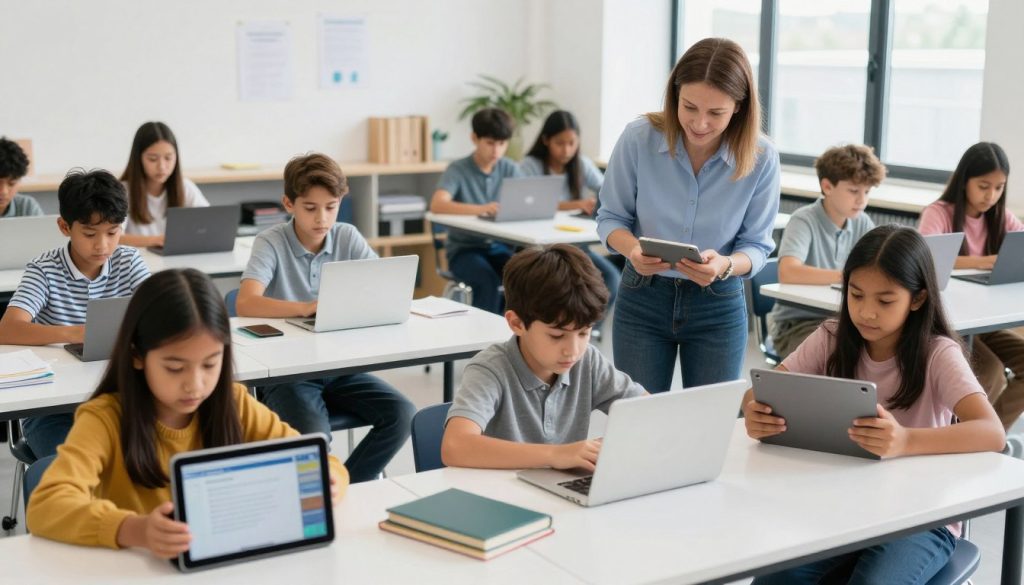
When used thoughtfully, technology can be a powerful tool for increasing student engagement. Digital tools can provide immediate feedback, enable collaboration, and create interactive learning experiences that wouldn’t otherwise be possible.
Interactive Response Systems
Digital response systems allow all students to participate simultaneously, providing teachers with immediate insight into student understanding:
- Use tools like Kahoot, Mentimeter, or Nearpod to create interactive questions
- Embed questions throughout lessons to check understanding
- Use anonymous responses to encourage participation from reluctant students
- Analyze response patterns to identify misconceptions and adjust instruction
These systems help teachers develop essential teacher skills in formative assessment and responsive teaching. When students know their input matters and will shape the lesson, engagement naturally increases.
Elementary application: Use picture-based polls to gauge understanding of concepts like greater than/less than.
Middle school application: Create quick quizzes with explanations that students complete on devices before moving to the next activity.
High school application: Use digital discussion boards where students respond to complex questions and comment on peers’ responses.
Digital Creation Tools
When students create digital content rather than just consuming it, engagement deepens significantly:
- Have students create digital stories, animations, or videos to demonstrate understanding
- Use collaborative tools like Google Docs or Padlet for group projects
- Encourage students to design infographics or digital posters to synthesize learning
- Create opportunities for students to share digital creations with authentic audiences
Implementing these approaches requires teacher skills in digital literacy and project management. The effort pays off when students invest deeply in creating meaningful products that demonstrate their learning.
Research indicates that when technology enables creation rather than passive consumption, student engagement and learning outcomes improve significantly.
Differentiated Increasing Student Engagement Strategies
One-size-fits-all instruction rarely engages all students effectively. Differentiation—tailoring teaching approaches to meet diverse learning needs—is essential for meaningful engagement across your classroom.

Choice Boards
Choice boards provide structured options that allow students to select how they’ll learn or demonstrate understanding:
- Create a grid of 6-9 activities that address the same learning objectives through different approaches
- Include options that appeal to different learning preferences (visual, auditory, kinesthetic)
- Vary the complexity of options to accommodate different readiness levels
- Allow students to select which activities they’ll complete
Developing effective choice boards requires teacher skills in designing varied but equally rigorous learning experiences. The autonomy these boards provide naturally increases student engagement and ownership.
Elementary application: For a unit on habitats, offer choices like creating a diorama, writing a journal from an animal’s perspective, or recording a video “tour” of the habitat.
Middle school application: For a math concept, provide options to solve problems, create a tutorial video, or develop real-world applications.
High school application: For a literature study, offer choices to analyze themes through essay writing, artistic interpretation, or multimedia presentation.
Tiered Activities
Tiered activities address the same essential concepts but at different levels of complexity:
- Design activities at different levels of challenge based on student readiness
- Ensure all tiers focus on the same essential understanding or skill
- Assign students to appropriate tiers based on pre-assessment
- Allow movement between tiers as students progress
This approach requires teacher skills in pre-assessment and designing activities with appropriate scaffolding. When students work at their optimal challenge level—not too easy, not too difficult—engagement flourishes.
For more strategies on differentiating instruction to increase engagement, our professional development courses offer practical, classroom-tested approaches.
Increasing Student Engagement Strategies Through Relevance and Connection
When students see clear connections between classroom learning and their lives, interests, or future goals, engagement naturally increases. Creating relevance is one of the most powerful teacher skills for fostering meaningful participation.
Real-World Applications
Explicitly connecting academic content to authentic contexts makes learning meaningful:
- Begin units by addressing the “why” behind the learning
- Incorporate current events and issues relevant to students’ lives
- Invite community members to share how they use specific knowledge and skills
- Design projects that address real community needs or challenges
Developing teacher skills in identifying and highlighting authentic applications requires ongoing learning about both your content area and your students’ worlds. The effort pays off in heightened engagement and retention.
Elementary application: When teaching measurement, have students design and build structures that solve a classroom problem.
Middle school application: Connect statistical concepts to analyzing data about issues students care about, like environmental concerns or social media usage.
High school application: Have students apply chemical principles to investigate water quality in their community.
Cultural Responsiveness
Culturally responsive teaching acknowledges and leverages students’ diverse backgrounds and experiences:
- Incorporate diverse perspectives, examples, and materials that reflect students’ cultural backgrounds
- Connect new learning to students’ prior knowledge and cultural frames of reference
- Create opportunities for students to share their cultural knowledge and experiences
- Recognize and validate different communication and learning styles
These approaches require teacher skills in cultural awareness, self-reflection, and inclusive curriculum design. When students see themselves and their communities represented in the curriculum, engagement deepens significantly.
Research demonstrates that culturally responsive teaching not only increases engagement but also improves academic outcomes for all students, particularly those from historically marginalized groups.
Feedback and Reflection: Essential Increasing Student Engagement Strategies
Meaningful engagement requires students to think about their thinking—to understand what they’re learning, how they’re learning it, and where they need to grow. Effective feedback and reflection strategies are crucial teacher skills for fostering this metacognitive engagement.
Specific, Timely Feedback
Quality feedback focuses on the learning process rather than just the end product:
- Provide specific comments that highlight strengths and suggest next steps
- Focus feedback on the task and process, not personal qualities
- Offer feedback during the learning process when students can still apply it
- Create opportunities for peer feedback using clear criteria
Developing teacher skills in providing effective feedback requires practice and intentionality. The impact on student engagement is significant—when students receive guidance that helps them improve, they’re more likely to invest in the learning process.
Elementary application: Use simple rubrics with pictorial elements to help young students understand feedback on their writing.
Middle school application: Implement a “two stars and a wish” protocol where peers identify two strengths and one area for improvement in each other’s work.
High school application: Use digital tools to provide targeted comments on specific aspects of student projects throughout the creation process.
Structured Reflection
Regular reflection helps students process their learning and develop metacognitive awareness:
- Build in brief reflection moments at key points during lessons
- Use prompts that focus on process: “What strategy worked best for you today?” or “What challenged you, and how did you respond?”
- Implement reflection journals or exit tickets to capture learning insights
- Model reflective thinking by sharing your own learning process
These approaches help teachers develop essential teacher skills in metacognitive instruction. When students regularly reflect on their learning, they become more self-aware, strategic, and engaged learners.
Master the Art of Feedback and Reflection
Looking for practical tools to implement effective feedback and reflection in your classroom? Our professional development resources provide ready-to-use templates and strategies.
Creating an Environment for Increasing Student Engagement Strategies
The physical and emotional environment of your classroom significantly impacts student engagement. Creating a space where students feel safe, valued, and supported is a foundational teacher skill for fostering meaningful participation.
Physical Space Design
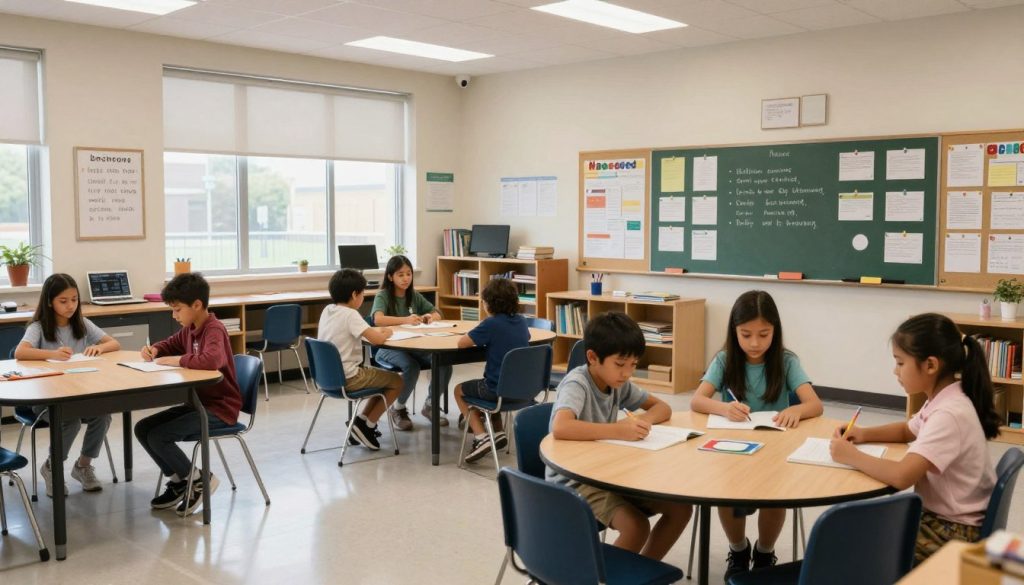
Thoughtfully arranged classrooms support different types of engagement:
- Create flexible seating arrangements that can be easily reconfigured for different activities
- Designate specific areas for collaborative work, independent study, and whole-group instruction
- Display student work prominently to celebrate learning and create ownership
- Ensure materials are accessible so students can take initiative in their learning
Developing teacher skills in environmental design means thinking intentionally about how space impacts learning. Even with limited resources, strategic arrangement can significantly enhance engagement.
Elementary application: Create cozy reading corners, hands-on exploration stations, and flexible group work areas.
Middle school application: Design spaces that support both collaboration and individual focus, with clear transitions between different modes.
High school application: Create a more collegiate atmosphere with seminar-style seating options and dedicated project work spaces.
Emotional Safety
Students engage more deeply when they feel emotionally safe to take risks and share ideas:
- Establish clear norms for respectful interaction and discussion
- Model and explicitly teach constructive ways to agree, disagree, and build on others’ ideas
- Respond to mistakes as learning opportunities rather than failures
- Create structures that ensure all voices are heard, not just the most confident or outspoken
These approaches require teacher skills in community building and conflict resolution. The investment in creating emotional safety pays dividends in increased willingness to participate, take intellectual risks, and engage authentically with learning.
For comprehensive guidance on creating classroom environments that foster engagement, explore our professional development resources designed specifically for K-12 teachers.
Assessment Strategies That Increase Student Engagement
How we assess learning profoundly impacts student engagement. When assessment feels meaningful and supportive rather than merely evaluative, students engage more deeply with content and develop greater ownership of their learning journey.
Authentic Assessment
Authentic assessments evaluate learning through real-world applications rather than isolated tests:
- Design assessments that mirror how knowledge and skills are used in the real world
- Create projects that require students to synthesize learning across multiple standards
- Incorporate authentic audiences for student work beyond just the teacher
- Develop clear criteria that focus on both process and product
Developing teacher skills in authentic assessment design requires moving beyond traditional testing approaches. The reward is seeing students deeply engaged in demonstrating their learning in meaningful contexts.
Elementary application: Instead of a vocabulary test, have students create illustrated dictionaries that they share with younger students.
Middle school application: Rather than a traditional lab report, have science students create explanatory videos about their investigations for community members.
High school application: Have history students develop museum exhibits that interpret historical events for specific audiences.
Student Self-Assessment
When students evaluate their own progress, they develop metacognitive skills and greater ownership:
- Provide clear learning targets and success criteria that students can use to self-assess
- Teach students to use rubrics to evaluate their own work before submission
- Implement regular reflection protocols where students identify strengths and areas for growth
- Conference with students about their self-assessments to deepen understanding
These approaches help teachers develop essential teacher skills in facilitating student ownership of learning. When students regularly assess their own progress, they become more strategic, self-directed learners.
Research shows that students who regularly engage in self-assessment develop stronger metacognitive skills and demonstrate greater academic growth over time.
Bringing It All Together: Implementing Increasing Student Engagement Strategies
Meaningful student engagement doesn’t happen by accident—it results from intentional planning, responsive teaching, and ongoing reflection. As you implement the strategies discussed in this article, remember that developing teacher skills for engagement is a journey, not a destination.
Start small by selecting one or two strategies that align with your current teaching context and student needs. As you become more comfortable, gradually incorporate additional approaches. Pay attention to what works for your specific students and be willing to adapt accordingly.
Remember that increasing student engagement strategies are most effective when they:
- Connect to students’ lives, interests, and aspirations
- Provide appropriate levels of challenge and support
- Offer meaningful choices and opportunities for voice
- Create conditions for both collaboration and individual reflection
- Focus on deep understanding rather than superficial compliance
By consistently implementing these approaches, you’ll not only enhance student learning but also transform your teaching experience. There’s nothing more rewarding than a classroom full of genuinely engaged learners who are developing the skills, mindsets, and knowledge they’ll need for future success.
Take Your Teaching to the Next Level
Ready to transform student engagement in your classroom? Our comprehensive professional development courses provide in-depth guidance, ready-to-use resources, and ongoing support as you implement these strategies.


