

In this comprehensive guide, we’ll explore practical, classroom-tested strategies for increasing student engagement that you can implement right away. Whether you’re struggling with participation during morning lessons or trying to energize your afternoon classes, these approaches will help transform passive listeners into active learners. Let’s dive into the techniques that can revitalize your classroom and strengthen your teacher skills along the way.
Why Increasing Student Engagement Matters
Engaged students demonstrate higher levels of participation and deeper learning
Before diving into strategies, let’s understand why increasing student engagement is so critical to successful learning outcomes. According to a study published in the Journal of Educational Research, engaged students show up to 40% higher academic achievement compared to their disengaged peers. But the benefits extend far beyond test scores.
Engagement directly impacts:
- Information retention and deeper understanding of concepts
- Development of critical thinking and problem-solving abilities
- Student motivation and attitude toward learning
- Classroom behavior and reduction in disciplinary issues
- Long-term academic success and graduation rates
When students are genuinely engaged, the classroom transforms from a place of passive consumption to an active learning environment. This shift requires specific teacher skills that go beyond traditional instruction methods. Developing these skills is essential for creating the conditions where engagement can flourish.
The three dimensions of student engagement—behavioral, emotional, and cognitive—work together to create truly meaningful learning experiences. Behavioral engagement refers to participation and on-task behavior; emotional engagement involves interest, enthusiasm, and a sense of belonging; and cognitive engagement encompasses investment in learning, self-regulation, and strategic thinking.
By focusing on increasing student engagement across all three dimensions, teachers can create powerful learning environments that meet the diverse needs of today’s students. Let’s explore the foundational principles that make this possible.
Foundational Principles for Increasing Student Engagement
Effective engagement strategies are built on research-backed principles that address how students learn best. Understanding these foundations will help you develop the teacher skills necessary to create an engaging classroom environment.
1. Relevance and Authenticity
Students engage more deeply when they see the connection between classroom content and their lives outside school. When learning feels relevant and authentic, intrinsic motivation increases dramatically. This means designing lessons that connect to real-world applications, student interests, and future aspirations.
2. Student Agency and Voice
Engagement soars when students have meaningful input into their learning process. Providing opportunities for choice, self-direction, and genuine contribution helps students develop ownership over their education. This principle requires teachers to shift from being the center of the classroom to facilitating student-driven learning.
3. Appropriate Challenge Level
Students disengage when work is too easy (causing boredom) or too difficult (causing frustration). The sweet spot for engagement is what psychologist Mihaly Csikszentmihalyi calls “flow” – where challenge and skill levels are balanced. Developing the teacher skills to differentiate instruction effectively is crucial for maintaining this balance.
4. Supportive Learning Community
Engagement thrives in environments where students feel safe, valued, and connected. Building strong teacher-student relationships and fostering positive peer interactions creates the psychological safety necessary for risk-taking and active participation.
5. Clear Expectations and Feedback
Students engage more readily when they understand what success looks like and receive timely, constructive feedback on their progress. Transparent learning goals and assessment criteria, coupled with regular formative feedback, support student self-regulation and motivation.
These principles form the foundation for the practical strategies we’ll explore next. By intentionally incorporating these elements into your teaching practice, you’ll be well on your way to increasing student engagement in meaningful ways.
Active Learning Strategies for Increasing Student Engagement
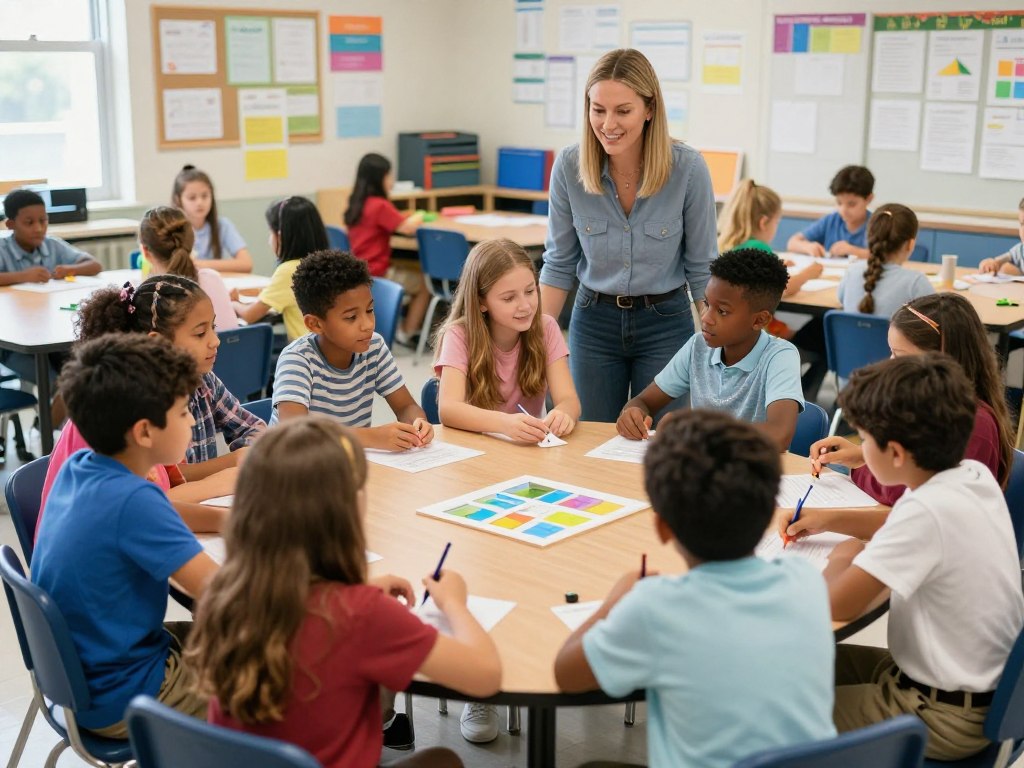
Active learning transforms students from passive recipients to engaged participants
Active learning shifts students from passive recipients of information to engaged participants in the learning process. These strategies require students to think, create, discuss, and problem-solve, making learning more memorable and meaningful. Here are practical approaches you can implement immediately:
Think-Pair-Share
This simple but effective strategy gives students time to process information individually before discussing with a partner and sharing with the larger group. It encourages participation from all students, not just those who typically raise their hands.
How to implement: Pose a thought-provoking question, give students 30-60 seconds to think independently, have them discuss with a partner for 1-2 minutes, then call on pairs to share insights with the class.
Gallery Walks
Transform your classroom into an interactive museum where students move around to view and respond to different stations. This gets students physically active while engaging with content from multiple perspectives.
How to implement: Create stations around the room with questions, problems, or artifacts. Have students rotate through stations in small groups, discussing and recording their thoughts on chart paper or digital platforms.
Four Corners
This strategy gets students moving while taking a position on a topic. It promotes critical thinking and respectful disagreement.
How to implement: Label the four corners of your room with different perspectives on an issue (Strongly Agree, Agree, Disagree, Strongly Disagree). Pose a statement and have students move to the corner that represents their viewpoint, then discuss with others who share their position.
Jigsaw Method
This cooperative learning approach makes each student responsible for teaching part of the material to their peers, increasing accountability and engagement.
How to implement: Divide content into sections and assign students to “expert groups” to master one section. Then reorganize into “home groups” where each member teaches their section to the others.
Exit Tickets
These quick formative assessments give students a chance to reflect on their learning while providing valuable feedback to teachers.
How to implement: In the last few minutes of class, have students respond to a prompt about the day’s learning. This could be a key takeaway, a remaining question, or an application of the content.
Implementing these active learning strategies requires specific teacher skills, including effective questioning techniques, flexible grouping, and the ability to facilitate productive discussions. As you develop these skills, you’ll find that increasing student engagement becomes more intuitive and embedded in your daily practice.
Enhance Your Teacher Skills with Professional Development
Looking for more active learning strategies to transform your classroom? Our professional development courses offer practical techniques for increasing student engagement that you can implement immediately.
Technology Integration for Increasing Student Engagement
When used thoughtfully, technology can be a powerful tool for increasing student engagement. The key is selecting digital tools that enhance learning rather than simply digitizing traditional tasks. Here are effective ways to leverage technology for deeper engagement:
Interactive Response Systems
Tools like Kahoot!, Mentimeter, and Pear Deck transform passive listening into active participation by allowing all students to respond simultaneously to questions and prompts.
Teacher skills spotlight: Crafting effective questions that promote higher-order thinking rather than simple recall is essential for making these tools truly engaging.
Digital Creation Tools
Applications that allow students to create content—such as videos, podcasts, digital stories, or infographics—tap into students’ creativity while demonstrating understanding.
Teacher skills spotlight: Providing clear guidelines while allowing creative freedom requires balancing structure and autonomy.
Virtual Field Trips and Simulations
Virtual reality and simulation tools can transport students to places and experiences otherwise inaccessible, making abstract concepts concrete and memorable.
Teacher skills spotlight: Effective facilitation includes preparing students for the experience, guiding their observations, and facilitating meaningful reflection afterward.
Collaborative Digital Platforms
Tools like Google Workspace, Microsoft Teams, and Padlet enable students to collaborate in real-time, both in and outside the classroom.
Teacher skills spotlight: Establishing clear norms for digital collaboration and monitoring group dynamics ensures productive teamwork.
Gamification Elements
Incorporating game-based elements—such as points, badges, leaderboards, and levels—can increase motivation and persistence, particularly for challenging content.
Teacher skills spotlight: Designing gamified experiences that maintain focus on learning objectives rather than just competition requires thoughtful planning.
When integrating technology, remember that the tool itself doesn’t create engagement—it’s how you use it to support learning goals. The most effective technology integration happens when teachers have developed the necessary teacher skills to select appropriate tools, implement them thoughtfully, and adapt based on student response.
“Technology will never replace great teachers, but technology in the hands of great teachers is transformational.”
Building Relationships: The Foundation of Increasing Student Engagement
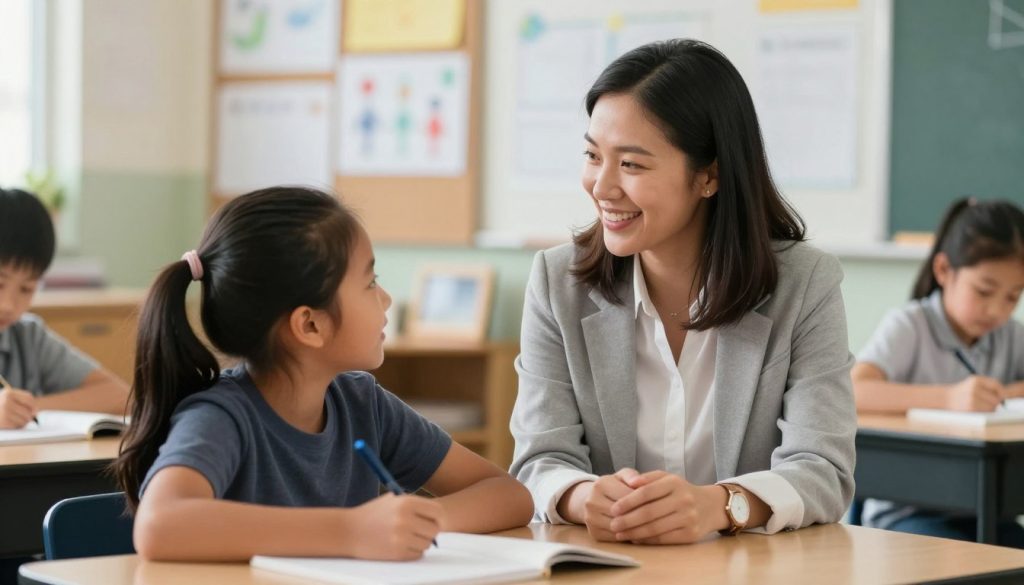
Strong teacher-student relationships are fundamental to engagement
Research consistently shows that positive teacher-student relationships are among the strongest predictors of student engagement. When students feel known, valued, and supported by their teachers, they’re more likely to participate actively and persist through challenges. Developing these relationships requires intentional effort and specific teacher skills.
Getting to Know Your Students
Understanding students as individuals—their interests, strengths, challenges, and backgrounds—allows you to make meaningful connections and personalize learning experiences.
- Conduct interest surveys at the beginning of the year and periodically throughout
- Create opportunities for students to share about themselves through writing, discussion, or creative projects
- Attend school events to see students in different contexts
- Greet students by name at the door and have brief personal conversations
Creating a Supportive Classroom Climate
The emotional atmosphere of your classroom significantly impacts student willingness to engage. A supportive climate includes:
- Establishing clear norms for respectful interaction
- Modeling and reinforcing positive communication
- Responding to mistakes as learning opportunities rather than failures
- Celebrating effort and growth, not just achievement
- Using humor appropriately to create a positive atmosphere
Demonstrating Authentic Care
Students can tell the difference between performative interest and genuine care. Authentic care involves:
- Following up on personal information students share
- Noticing and acknowledging changes in behavior or mood
- Being flexible and responsive to student needs
- Advocating for students when they need support
Building these relationships requires developing teacher skills in emotional intelligence, cultural responsiveness, and effective communication. These skills don’t just happen—they require deliberate practice and reflection. As you strengthen these relationships, you’ll likely see a corresponding increase in student engagement across all learning activities.
Remember that relationship-building isn’t a one-time activity but an ongoing process that requires consistent attention throughout the school year. The investment you make in these connections pays dividends in increased student engagement and more effective learning.
Empowering Student Choice and Voice for Increasing Student Engagement
When students have meaningful input into what and how they learn, engagement naturally increases. Providing opportunities for choice and voice helps students develop agency and ownership over their learning, leading to greater investment and persistence. Here’s how to effectively incorporate these elements into your classroom:
Offering Meaningful Choices
Not all choices are equally effective for increasing engagement. The most powerful choices are those that allow students to:
- Select topics or projects that align with their interests while meeting learning objectives
- Choose from different ways to demonstrate their learning (written, visual, oral, multimedia)
- Determine the order or pace of completing tasks
- Select from different learning resources or approaches
- Decide whether to work independently or collaboratively
Amplifying Student Voice
Beyond offering choices, truly engaging classrooms create regular opportunities for students to express their ideas, opinions, and feedback. Strategies include:
- Class meetings or councils where students discuss classroom issues and propose solutions
- Feedback surveys about lesson effectiveness and learning experiences
- Student-led conferences where students present their learning to parents/guardians
- Opportunities for students to teach or present to peers
- Student input on assessment criteria or rubric development
Scaffolding for Success
Many students need support to effectively exercise choice and voice, especially if they haven’t had much experience with autonomy. Essential teacher skills include:
- Providing appropriate structure and guidelines for choices
- Teaching decision-making strategies
- Helping students reflect on the effectiveness of their choices
- Modeling respectful expression of ideas and opinions
- Gradually increasing autonomy as students develop capacity
Implementing student choice and voice effectively requires a shift in traditional teacher-student power dynamics. This doesn’t mean abdicating your role as the instructional leader, but rather sharing appropriate control and decision-making with students. As you develop these teacher skills, you’ll find that increasing student engagement becomes more sustainable as students take greater responsibility for their learning.
Quick Tip: Start small with choice and voice. Even simple options like choosing between two homework assignments or voting on the order of activities can begin building students’ decision-making muscles.
Differentiation and Personalization: Keys to Increasing Student Engagement
One-size-fits-all instruction inevitably leads to disengagement for many students. Those who find the content too challenging become frustrated, while those who find it too easy become bored. Differentiation and personalization address this challenge by tailoring learning experiences to meet diverse student needs, interests, and readiness levels.
Understanding the Difference
While often used interchangeably, differentiation and personalization have distinct meanings:
- Differentiation: Teacher-directed modifications to content, process, product, or learning environment based on student needs
- Personalization: Learning experiences tailored to individual learners’ interests, strengths, needs, and pace, often with significant student input
Both approaches contribute to increasing student engagement by ensuring that learning is appropriately challenging and relevant.
Practical Differentiation Strategies
Implementing differentiation requires specific teacher skills in assessment, flexible grouping, and instructional variety. Effective approaches include:
- Tiered assignments: Creating multiple versions of tasks at different levels of complexity while maintaining the same essential learning goals
- Flexible grouping: Strategically organizing students based on readiness, interest, or learning preferences for specific activities
- Learning centers or stations: Creating different activity stations that address various learning needs or styles
- Varied resources: Providing texts, videos, or other materials at different complexity levels
- Adjustable pacing: Allowing students to move through content at different speeds based on their readiness
Moving Toward Personalization
True personalization gives students greater agency in their learning journey. Strategies include:
- Learning pathways: Creating flexible routes through content that allow students to follow their interests while meeting standards
- Goal-setting: Involving students in setting personal learning goals and tracking their progress
- Passion projects: Dedicating time for students to pursue topics of personal interest that connect to curriculum standards
- Student-teacher conferences: Regular one-on-one meetings to discuss progress and adjust learning plans
- Digital tools: Leveraging adaptive learning platforms that adjust content based on student performance
Implementing differentiation and personalization effectively requires developing teacher skills in formative assessment, curriculum design, and instructional flexibility. While it may seem overwhelming at first, start with small steps and gradually expand your approach as you become more comfortable with these practices.
Remember that the goal isn’t to create entirely different lessons for each student, but rather to provide thoughtful variations that address key differences in student needs while maintaining focus on essential learning outcomes.
Master Differentiation Strategies
Want to develop the teacher skills needed for effective differentiation? Our professional development course on increasing student engagement includes practical differentiation techniques you can implement immediately.
Assessment Strategies for Increasing Student Engagement

Effective assessment practices can significantly boost student engagement
Assessment is often viewed as separate from engagement, but how we evaluate learning has a profound impact on student motivation and participation. When assessment practices are aligned with engagement principles, they can actually enhance rather than interrupt the learning process.
Formative Assessment That Engages
Formative assessment—gathering evidence of learning during the instructional process—provides opportunities for increasing student engagement when implemented effectively:
- Low-stakes checks for understanding: Quick polls, exit tickets, or digital response tools that make thinking visible
- Self-assessment: Guiding students to evaluate their own work against clear criteria
- Peer feedback: Structured protocols for students to provide constructive feedback to classmates
- Metacognitive reflection: Prompts that help students think about their learning process
- Ongoing conferences: Brief check-ins with individual students to discuss progress and next steps
Reimagining Summative Assessment
Even end-of-unit or culminating assessments can be designed to enhance engagement:
- Authentic performance tasks: Assessments that mirror real-world applications of knowledge and skills
- Project-based assessments: Complex, extended projects that integrate multiple standards
- Student-designed assessments: Involving students in creating ways to demonstrate their learning
- Portfolio assessment: Collections of work that show growth and achievement over time
- Exhibition or presentation: Public sharing of learning with authentic audiences
Feedback That Fuels Engagement
The quality and delivery of feedback significantly impacts student engagement. Effective feedback is:
- Timely: Provided when students can still act on it
- Specific: Focused on particular aspects of the work rather than general comments
- Actionable: Gives clear guidance on how to improve
- Balanced: Acknowledges strengths while identifying areas for growth
- Growth-oriented: Emphasizes the learning process rather than fixed abilities
Implementing these assessment practices requires developing teacher skills in designing quality assessments, providing effective feedback, and facilitating student self-assessment. These skills are essential for creating an assessment system that supports rather than undermines student engagement.
By thoughtfully integrating assessment into the learning process, you can transform evaluation from something students dread to an engaging opportunity for growth and demonstration of learning.
Overcoming Common Challenges in Increasing Student Engagement
Even with the best strategies, teachers often encounter obstacles when trying to increase student engagement. Developing specific teacher skills to address these challenges is essential for sustained success.
Challenge: Reaching Reluctant Learners
Some students have developed patterns of disengagement that can be difficult to break.
Solutions:
- Build relationships before pushing for academic engagement
- Find and leverage students’ interests and strengths
- Provide early success experiences to build confidence
- Use gradual release—start with high support and slowly increase expectations
- Create opportunities for positive peer interactions
Teacher skills needed: Relationship building, interest-based curriculum design, scaffolding
Challenge: Limited Resources or Technology
Not all engagement strategies require extensive resources or technology.
Solutions:
- Focus on discussion-based and collaborative strategies
- Use simple, low-cost materials creatively
- Leverage community resources and partnerships
- Implement station rotations to maximize limited technology
- Create student-generated learning materials
Teacher skills needed: Resourcefulness, community outreach, creative lesson design
Challenge: Time Constraints
Curriculum demands and testing pressures can make engagement strategies seem like “extras” you don’t have time for.
Solutions:
- Integrate engagement strategies into existing lessons rather than adding separate activities
- Start small—implement one new strategy at a time
- Use efficient routines that students learn once and repeat
- Focus on quality over quantity—fewer, deeper learning experiences
- Collaborate with colleagues to share planning and resources
Teacher skills needed: Curriculum integration, efficient planning, prioritization
Challenge: Diverse Needs and Abilities
Classrooms with wide ranges of readiness, interests, and learning needs present engagement challenges.
Solutions:
- Implement flexible grouping strategies
- Design multi-level tasks with common big ideas but varied complexity
- Create choice boards or menus that address different learning preferences
- Use peer teaching and collaborative structures
- Provide both challenge and support options within activities
Teacher skills needed: Differentiation, universal design for learning, flexible grouping
Addressing these challenges effectively requires ongoing professional growth and development of specific teacher skills. Remember that increasing student engagement is a journey, not a destination—even experienced teachers continuously refine their approaches based on student response and changing classroom dynamics.
Reflection Question: Which of these challenges most affects your classroom? What specific teacher skills could you develop to address it more effectively?
Measuring and Monitoring Student Engagement
How do you know if your strategies for increasing student engagement are actually working? Developing teacher skills in observing, measuring, and responding to engagement indicators helps you make informed adjustments to your approach.
Observable Indicators of Engagement
While engagement is partially internal, there are visible signs that can help you gauge its presence:
Behavioral Engagement:
- Active participation in discussions and activities
- On-task behavior and focus
- Completion of assignments with quality effort
- Voluntary contributions and questions
- Persistence when facing challenges
Emotional Engagement:
- Expressions of interest and enthusiasm
- Positive interactions with peers and teachers
- Body language indicating attention and interest
- Expressions of pride in accomplishments
- Willingness to take risks and try new approaches
Cognitive Engagement:
- Questions that show deep thinking
- Connections made between concepts
- Elaborated responses that go beyond basics
- Self-correction and revision of work
- Transfer of learning to new contexts
Agentic Engagement:
- Proactively seeking feedback or help
- Suggesting modifications to activities
- Setting personal learning goals
- Advocating for their learning needs
- Contributing to classroom improvement
Tools for Measuring Engagement
Systematic approaches to monitoring engagement can provide valuable data:
- Engagement inventories: Structured observation protocols where you track specific engagement behaviors during class
- Student self-assessment: Surveys or reflection prompts where students rate their own engagement
- Exit tickets: Brief end-of-class responses that gauge understanding and engagement
- Digital analytics: Data from learning platforms about time on task, completion rates, and interaction patterns
- Work samples analysis: Examining student work for evidence of effort, thought, and investment
Using Engagement Data to Improve Instruction
Collecting data is only valuable if you use it to inform your practice. Essential teacher skills include:
- Identifying patterns in engagement across different activities, times of day, or student groups
- Analyzing which elements of high-engagement lessons could be replicated
- Soliciting student input on what helps them engage more deeply
- Making targeted adjustments based on engagement data
- Tracking changes in engagement over time to assess improvement
By developing these measurement and analysis skills, you can move beyond intuition to make data-informed decisions about increasing student engagement. This systematic approach helps ensure that your efforts are having the intended impact and allows you to make strategic adjustments when needed.
Remember that engagement isn’t an all-or-nothing state—it exists on a continuum and can vary throughout a lesson or across different types of activities. The goal is to identify trends and patterns that help you maximize engagement over time.
Developing Essential Teacher Skills for Increasing Student Engagement
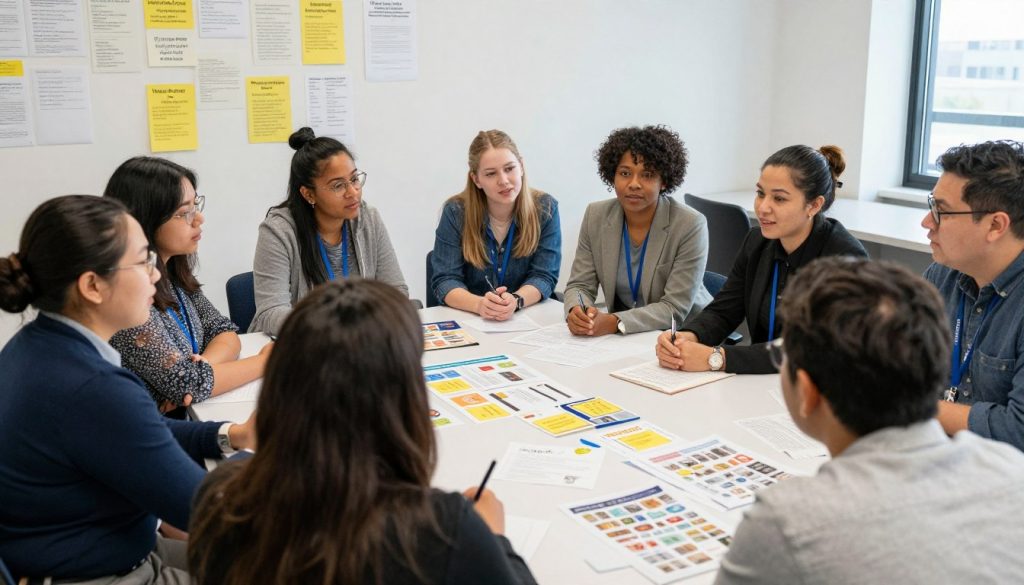
Ongoing professional development is crucial for refining engagement strategies
Increasing student engagement isn’t just about implementing strategies—it’s about developing specific teacher skills that enable you to create engaging learning environments consistently. These skills can be cultivated through intentional practice, reflection, and professional learning.
Core Teacher Skills for Engagement
Research indicates that several key teacher skills are particularly important for increasing student engagement:
- Effective questioning: The ability to craft and sequence questions that stimulate thinking and discussion
- Responsive facilitation: Guiding student-centered learning while adjusting based on student needs
- Relationship building: Establishing connections with students that foster trust and motivation
- Instructional design: Creating learning experiences that balance challenge, relevance, and support
- Formative assessment: Gathering and using evidence of student learning to guide instruction
- Cultural responsiveness: Connecting with and leveraging the diverse backgrounds and experiences of students
- Technology integration: Using digital tools purposefully to enhance rather than replace quality instruction
Pathways for Skill Development
There are multiple approaches to developing these essential teacher skills:
- Professional learning communities: Collaborating with colleagues to study and implement engagement strategies
- Instructional coaching: Working with a coach who provides feedback and support for skill development
- Formal professional development: Participating in courses or workshops focused on engagement
- Action research: Systematically testing and refining approaches in your own classroom
- Peer observation: Observing and being observed by colleagues with a focus on engagement
- Professional reading: Studying research and practical resources on engagement
Reflection Practices
Deliberate reflection accelerates skill development. Effective reflection includes:
- Analyzing what worked and didn’t work in specific lessons
- Seeking patterns across successful and challenging teaching experiences
- Connecting classroom observations to research and best practices
- Setting specific goals for skill development
- Tracking progress over time
Developing these teacher skills isn’t a one-time event but an ongoing journey of professional growth. By intentionally focusing on skill development, you create a foundation for sustained success in increasing student engagement across different content areas, grade levels, and student populations.
Accelerate Your Professional Growth
Ready to take your teacher skills to the next level? Our comprehensive course on increasing student engagement provides research-based strategies, practical tools, and personalized coaching to help you transform your classroom.
Creating Your Implementation Plan for Increasing Student Engagement
With so many strategies and approaches to consider, creating a systematic implementation plan helps ensure that your efforts to increase student engagement are sustainable and effective. This plan should align with your teaching context, student needs, and professional goals.
Step 1: Assess Current Engagement
Begin by honestly evaluating current engagement levels in your classroom:
- Observe and document indicators of engagement and disengagement
- Gather student feedback about what helps them engage
- Identify patterns—when engagement is highest and lowest
- Determine which aspects of engagement (behavioral, emotional, cognitive) need the most attention
Step 2: Set Specific Goals
Based on your assessment, establish clear, measurable goals:
- Focus on 1-3 aspects of engagement at a time
- Make goals specific and observable
- Set both short-term and long-term targets
- Consider different student groups who may need different approaches
Step 3: Select Targeted Strategies
Choose engagement strategies that align with your goals and context:
- Start with high-leverage strategies that address your priority areas
- Consider which teacher skills you need to develop to implement effectively
- Plan for differentiation to meet diverse student needs
- Balance quick wins with deeper, structural changes
Step 4: Create an Implementation Timeline
Develop a realistic schedule for introducing new approaches:
- Phase in changes gradually rather than all at once
- Allow time for you and your students to adjust to new routines
- Plan for more intensive support during initial implementation
- Schedule regular check-points to assess progress
Step 5: Monitor and Adjust
Establish systems for ongoing evaluation and refinement:
- Collect data on engagement indicators regularly
- Seek student feedback about what’s working
- Reflect on your developing teacher skills
- Make evidence-based adjustments to your approach
- Celebrate successes and progress along the way
Remember that increasing student engagement is a continuous improvement process, not a one-time fix. By approaching it systematically and focusing on developing your teacher skills alongside implementing strategies, you’ll create lasting positive change in your classroom.
Implementation Tip: Create an engagement strategy bank—a collection of approaches that work well with your students. Add to this resource over time as you discover effective techniques, making it easier to plan engaging lessons consistently.
Conclusion: Your Journey to Increasing Student Engagement
Increasing student engagement is both an art and a science—it requires a blend of research-based strategies, well-developed teacher skills, and your unique understanding of your students and context. The strategies we’ve explored provide a foundation, but the most powerful engagement happens when you adapt and personalize these approaches to meet the specific needs of your classroom.
Remember that engagement isn’t just about keeping students busy or entertained—it’s about creating the conditions where deep, meaningful learning can flourish. When students are truly engaged, they don’t just complete tasks; they invest in their learning, take intellectual risks, and develop the habits of mind that will serve them throughout their lives.
As you continue your journey of increasing student engagement, be patient with yourself and your students. Change takes time, and there will be both successes and setbacks along the way. What matters most is your commitment to creating a classroom where all students have opportunities to engage deeply with content, with each other, and with their own learning process.
By continuously developing your teacher skills and refining your approach based on student response, you’ll create a dynamic learning environment where engagement becomes the norm rather than the exception. Your efforts make a profound difference in your students’ educational experience and their development as lifelong learners.
Take the Next Step in Your Professional Growth
Ready to transform your classroom with proven engagement strategies? Our comprehensive professional development program provides the tools, resources, and support you need to master the art and science of increasing student engagement.


