
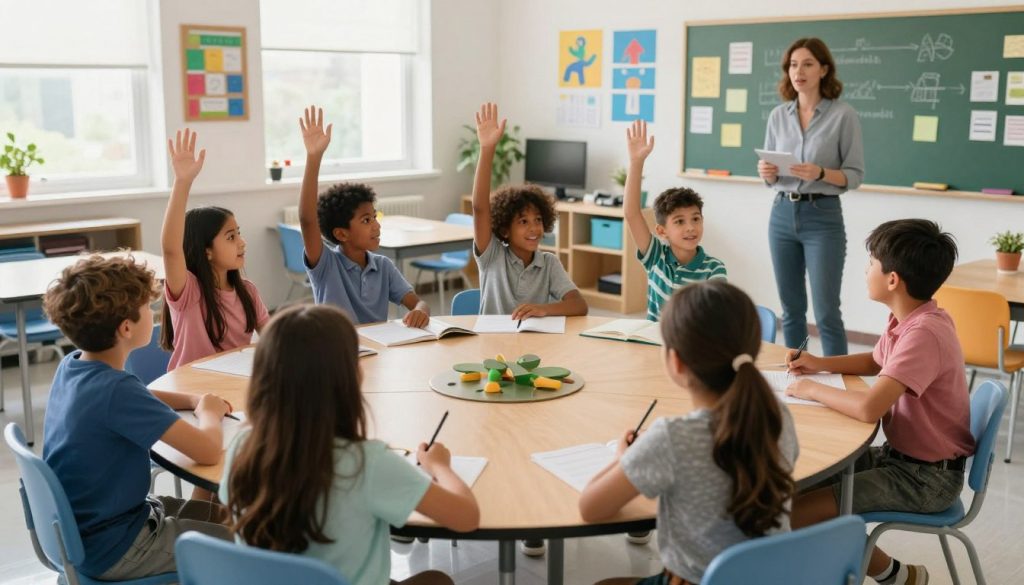
In today’s educational landscape, developing teacher skills that foster authentic engagement has never been more crucial. This article explores practical, research-backed strategies that you can implement immediately to transform passive observers into active participants in their learning journey. Whether you’re struggling with post-pandemic disengagement or simply looking to refresh your approach, these strategies will help you create a classroom where students are genuinely invested in their education.
Why Student Engagement Matters More Than Ever
Active engagement leads to deeper learning and better retention of information
Student engagement is far more than just a buzzword in education—it’s a critical factor in learning outcomes. Research consistently shows that engaged students learn more deeply, retain information longer, and develop stronger critical thinking skills. According to a study published in The Journal of Educational Research, higher levels of student engagement correlate directly with improved academic performance across all grade levels.
The post-pandemic classroom presents unique challenges. Many students returned to school with decreased motivation, weaker social connections, and gaps in their learning. Developing teacher skills that address these challenges requires intentional strategies focused on rebuilding engagement. When students are actively engaged, they’re more likely to:
- Take ownership of their learning process
- Persist through challenging material
- Develop stronger peer relationships
- Experience greater academic confidence
- Apply knowledge to real-world situations
Engagement isn’t just about academic outcomes, either. Engaged students report higher levels of satisfaction with school, better emotional well-being, and stronger sense of belonging. As teachers, our ability to foster engagement directly impacts not just what students learn, but how they feel about learning itself—a skill that extends far beyond our classrooms.
Increasing Student Engagement Examples for Elementary Classrooms
Elementary classrooms provide unique opportunities to build foundational engagement patterns that can last throughout a student’s academic journey. The following increasing student engagement examples are specifically designed for younger learners, though many can be adapted for older students as well.
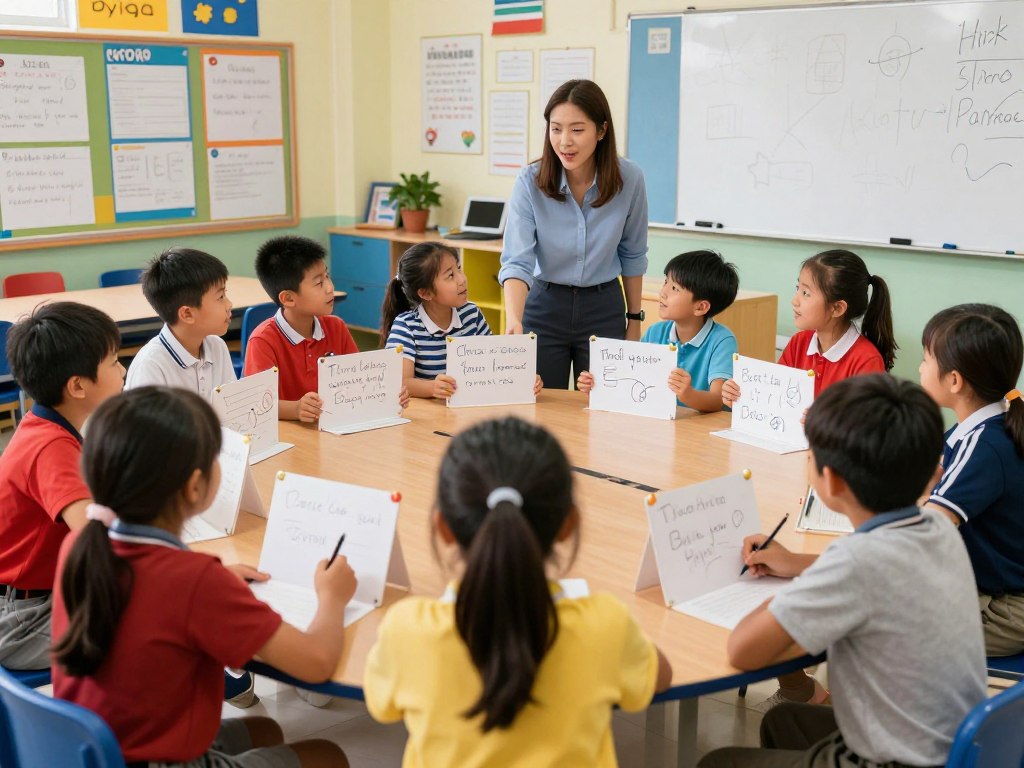
Think-Pair-Share with a Twist
The traditional think-pair-share strategy is a staple in teacher skills development, but adding creative elements can make it even more engaging for elementary students:
- Pose a thought-provoking question related to the lesson
- Have students think independently and jot down ideas on sticky notes
- Pair students to discuss their thoughts
- Instead of traditional sharing, have pairs create a quick drawing, skit, or song that represents their combined ideas
- Allow pairs to share their creative representations with the class
This approach engages multiple learning modalities and gives students creative ownership over their learning, making the sharing process more exciting and memorable.
Movement-Based Learning Stations
Young learners need movement, and incorporating it into learning activities is a powerful engagement strategy:
Station Rotation Model: Create 4-6 learning stations around the classroom, each focusing on a different aspect of the lesson. Students rotate through stations in small groups, spending 7-10 minutes at each. Include a mix of activities:
- Hands-on manipulatives
- Reading corner with topic-related books
- Collaborative problem-solving
- Artistic expression of concepts
- Technology-enhanced learning
Implementation Tips:
- Use a timer and clear transition signal
- Provide visual instructions at each station
- Assign roles within each group (materials manager, timekeeper, etc.)
- Include self-assessment components at each station
- End with a quick whole-class debrief to connect learning across stations
This strategy not only addresses the physical needs of young learners but also provides varied approaches to content, ensuring all learning styles are engaged. The teacher skills required include effective classroom management, clear instruction design, and the ability to facilitate multiple activities simultaneously.
Storytelling and Role-Play
Narrative-based learning taps into children’s natural love of stories and imagination:
- Content-Based Storytelling: Frame lessons within a compelling narrative that continues throughout a unit. Students become characters in the story, facing challenges that require applying lesson concepts to solve.
- Historical Role-Play: For social studies, have students take on the roles of historical figures or ordinary people from the time period, making decisions and solving problems from their perspective.
- Science Scenarios: Create scenarios where students are “scientists” solving real-world problems using the scientific concepts they’re learning.
This approach transforms passive learning into an immersive experience where students are emotionally invested in the outcome. The teacher skills involved include creativity, narrative development, and the ability to connect curriculum standards to engaging scenarios.
Looking for more elementary engagement strategies?
Discover our comprehensive guide to building student engagement in elementary classrooms, with dozens of ready-to-use activities and assessment tools.
Increasing Student Engagement Examples for Middle and High School
Adolescent learners present unique engagement challenges and opportunities. Their developing identities, peer relationships, and capacity for abstract thinking all influence how they engage with learning. These increasing student engagement examples leverage adolescents’ natural strengths while addressing their specific needs.
Debate and Structured Academic Controversy
Adolescents are naturally drawn to expressing opinions and testing ideas. Structured debate formats provide a framework for this energy:
Four Corners Debate:
- Present a controversial statement related to the content
- Designate the four corners of the room as: Strongly Agree, Agree, Disagree, Strongly Disagree
- Students move to the corner that represents their opinion
- Each corner group discusses their reasoning and selects key points
- Groups present their positions, followed by respectful cross-examination
- Allow students to change positions if their thinking evolves
Structured Academic Controversy:
- Divide class into groups of four, then into pairs within each group
- Assign each pair a pro or con position on an issue
- Pairs research their assigned position
- Pairs present their position to the other pair in their group
- Teams switch positions and argue the opposite view
- Groups abandon assigned positions and develop a consensus statement
These formats develop critical thinking while teaching respectful discourse—essential teacher skills for creating a classroom culture where ideas can be examined from multiple perspectives.
Project-Based Learning with Authentic Audiences
Adolescents are highly motivated by real-world relevance and authentic feedback:
- Community Problem-Solving: Students identify issues in their school or community, research solutions, and present proposals to relevant stakeholders (school board, local businesses, community organizations).
- Expert Connections: Partner with professionals in fields related to your curriculum. Students prepare questions, conduct interviews, and create projects that are reviewed by these experts.
- Public Showcases: Host exhibitions where students present their work to parents, community members, and peers from other classes, receiving feedback and answering questions.
The authenticity of these experiences addresses the adolescent need for purpose and relevance. The teacher skills required include community networking, project management, and the ability to scaffold complex, multi-stage projects.
Digital Creation and Collaboration
Leveraging technology for creation rather than just consumption taps into adolescents’ digital fluency:
- Digital Storytelling: Students create multimedia presentations that combine narration, images, music, and video to explore curriculum concepts.
- Collaborative Wikis: Classes build knowledge repositories on curriculum topics, with students serving as editors, fact-checkers, and content creators.
- Podcast Production: Students research, script, record, and edit podcasts exploring curriculum topics, potentially sharing them with authentic audiences.
These approaches position students as creators rather than consumers of content, fostering deeper engagement with material. The teacher skills involved include digital literacy, providing appropriate technical guidance, and designing clear evaluation criteria for digital products.
Teacher Tip: When implementing digital projects, focus first on the learning objectives rather than the technology. The digital tools should serve the learning, not the other way around. Provide clear rubrics that emphasize content mastery alongside technical execution.
Technology-Based Increasing Student Engagement Examples
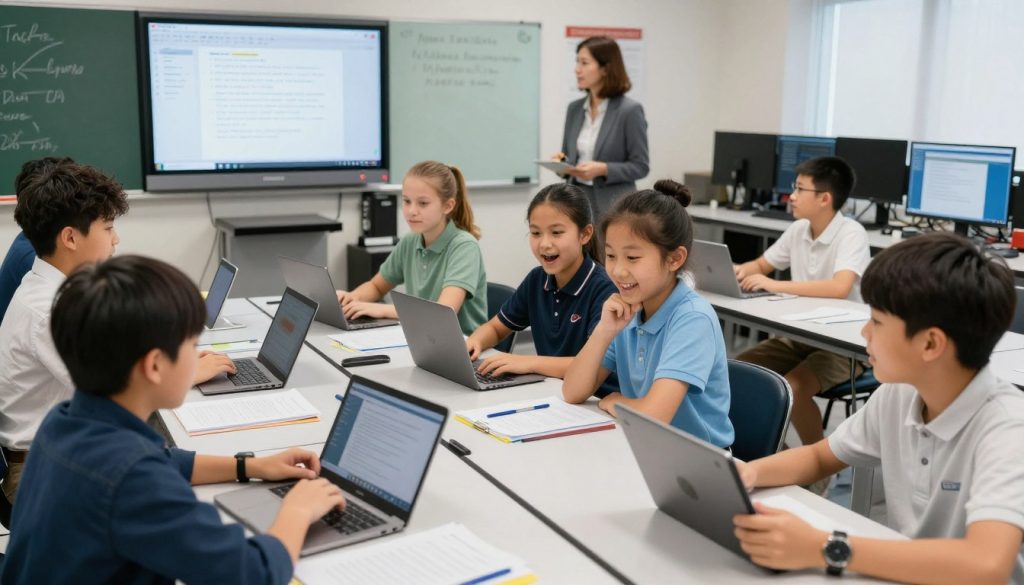
Technology, when used intentionally, can be a powerful tool for increasing student engagement. The key is selecting digital tools that enhance learning rather than simply digitizing traditional activities. These increasing student engagement examples leverage technology to create experiences that would be difficult or impossible without digital tools.
Interactive Simulations and Virtual Experiences
Digital simulations allow students to explore concepts that might be abstract, dangerous, or impossible to experience directly:
- Science Simulations: Use platforms like PhET Interactive Simulations to allow students to manipulate variables and observe outcomes in physics, chemistry, and biology.
- Historical Virtual Field Trips: Explore historical sites and museums virtually, allowing students to “visit” locations relevant to curriculum.
- Geographic Exploration: Use Google Earth to explore landforms, climate regions, and human geography concepts with a level of detail impossible with static maps.
The teacher skills needed include the ability to select appropriate simulations, design structured exploration activities, and connect virtual experiences to curriculum objectives.
Formative Assessment Tools
Digital tools can transform assessment from a measurement event to an engagement opportunity:
Real-Time Response Systems:
- Use tools like Kahoot, Quizizz, or Mentimeter for quick checks for understanding
- Incorporate game elements like leaderboards and point systems
- Use results to immediately adjust instruction
- Allow students to create questions for peers
Digital Exit Tickets:
- Use Google Forms or similar tools for end-of-class reflection
- Include both content questions and metacognitive prompts
- Review responses before the next class
- Share patterns and insights with students
These tools provide immediate feedback to both teachers and students, creating a responsive learning environment. The teacher skills involved include data analysis, responsive instruction, and the ability to create effective digital assessment items.
Collaborative Digital Workspaces
Digital platforms can expand collaboration beyond the physical classroom:
- Shared Documents: Use Google Docs or similar platforms for collaborative writing, peer editing, and group projects.
- Digital Bulletin Boards: Platforms like Padlet allow students to share ideas, resources, and questions in a visual, interactive format.
- Collaborative Mind Mapping: Tools like Miro or Mindmeister enable groups to visually organize concepts and connections.
These digital spaces make thinking visible and allow for asynchronous collaboration. The teacher skills required include digital classroom management, designing effective collaborative tasks, and establishing clear norms for digital interaction.
“Technology will never replace great teachers, but technology in the hands of great teachers is transformational.”
Discussion-Based Increasing Student Engagement Examples
Meaningful discussion is one of the most powerful tools for deepening student engagement. When students articulate their thinking, respond to peers, and grapple with complex ideas together, they develop both content knowledge and essential communication skills. These increasing student engagement examples move beyond basic question-and-answer formats to create rich dialogic classrooms.
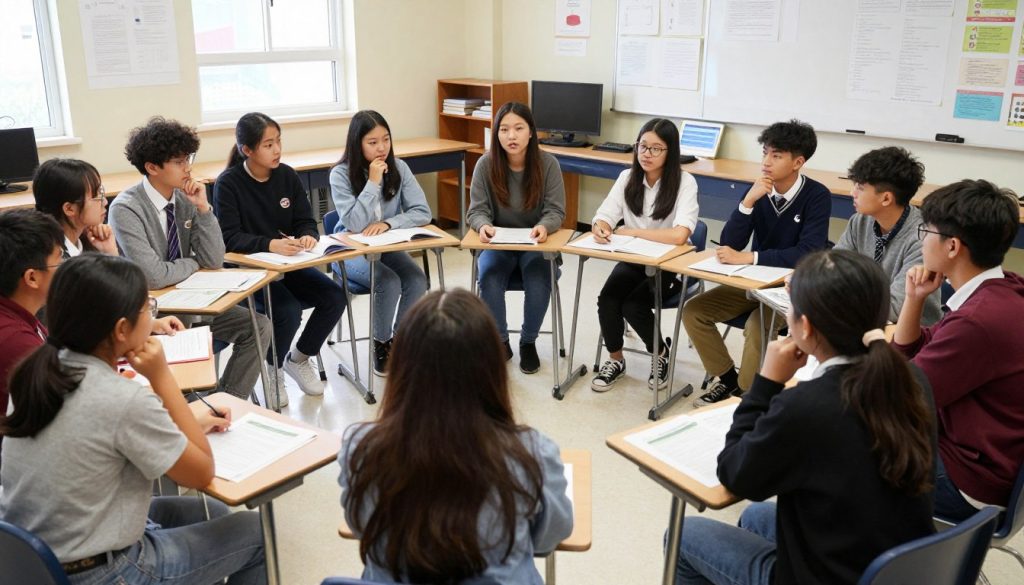
Socratic Seminar Variations
The Socratic seminar is a powerful discussion format that can be adapted for various grade levels:
Basic Structure:
- Students prepare by reading/analyzing a common text
- Arrange seats in a circle or concentric circles
- Pose an open-ended, text-based question
- Students discuss, citing textual evidence
- Teacher serves as facilitator, not participant
Variations:
- Fishbowl: Inner circle discusses while outer circle observes and takes notes
- Spider Web Discussion: Track conversation patterns with yarn or on a diagram
- Silent Socratic: Discussion happens through written notes passed between students
- Digital Socratic: Use discussion boards for asynchronous Socratic dialogue
Facilitating effective Socratic seminars requires specific teacher skills, including crafting thought-provoking questions, establishing discussion norms, and knowing when to intervene versus when to let student thinking unfold naturally.
Structured Small Group Discussions
Small group formats create opportunities for all students to participate actively:
- Jigsaw Discussions: Students become “experts” on one aspect of a topic in home groups, then reconfigure into mixed groups where each student teaches their area of expertise.
- Carousel Brainstorming: Small groups rotate through stations with different questions or prompts, building on the ideas of previous groups.
- Conversation Stations: Create multiple discussion centers with different prompts related to the same topic. Students visit each station in small groups.
These formats ensure all students have a voice and responsibility in the discussion process. The teacher skills involved include group formation strategy, designing interconnected prompts, and monitoring multiple simultaneous discussions.
Discussion Protocols for Deeper Thinking
Structured protocols provide scaffolding for rich discussions:
Save the Last Word:
- Students select important passages from a text
- In small groups, one student shares a passage without comment
- Each group member responds to the passage
- The original student shares their thoughts last
- Process repeats with each student sharing a passage
Chalk Talk:
- Write several questions/prompts on chart paper around the room
- Students silently move around, writing responses and questions
- Students can draw connections between ideas or respond to others
- After sufficient time, discuss patterns and insights as a class
These protocols structure participation while allowing for deep thinking. The teacher skills required include protocol selection based on learning objectives, clear explanation of process, and effective debriefing to consolidate learning.
Discussion Starter Tip: Instead of asking “Does anyone have any questions?” try “What questions came up for you during this reading/activity?” The first assumes questions are the exception; the second normalizes questioning as part of the learning process.
Inquiry-Based Increasing Student Engagement Examples

Inquiry-based learning places student questions at the center of the educational experience. When students pursue answers to their own questions, engagement naturally follows. These increasing student engagement examples structure inquiry experiences while maintaining student agency and curiosity.
Question-Driven Units
Structuring units around essential questions creates a framework for inquiry:
- Teacher-Designed Essential Questions: Frame units with open-ended, thought-provoking questions that have no single “right” answer but require content knowledge to explore thoughtfully.
- Student Question Generation: After introducing a topic, have students generate their own questions. Categorize these as factual, conceptual, and debatable, then use them to guide learning activities.
- Question Refinement: Teach students to develop better questions through modeling and feedback. Help them transform simple factual questions into more complex conceptual ones.
This approach requires teacher skills in question design, facilitating student questioning, and balancing curriculum requirements with student-directed inquiry.
Structured Inquiry Cycles
Providing a clear process helps students navigate the inquiry experience:
5E Model:
- Engage: Spark curiosity with a phenomenon or problem
- Explore: Investigate through hands-on activities
- Explain: Develop explanations based on evidence
- Elaborate: Apply concepts to new situations
- Evaluate: Assess understanding and process
Wonder-Investigate-Learn:
- Wonder: Generate and record questions
- Investigate: Research using various sources
- Learn: Synthesize findings and identify new questions
This simplified cycle works well for younger students or shorter inquiry experiences.
These structures provide scaffolding while maintaining the essence of inquiry. The teacher skills involved include designing engaging entry points, guiding investigation without over-directing, and facilitating effective reflection.
Problem-Based Learning Scenarios
Framing inquiry around authentic problems creates purpose and relevance:
- Real-World Challenges: Present students with actual problems facing their community or the broader world that connect to curriculum standards.
- Role-Based Scenarios: Students take on professional roles (scientists, historians, urban planners) to address a problem from that perspective.
- Client-Based Projects: Partner with local organizations that have actual needs students can address through their learning.
This approach connects academic content to authentic contexts. The teacher skills required include scenario design, managing external partnerships, and helping students transfer academic knowledge to practical applications.
Enhance Your Inquiry-Based Teaching Skills
Looking for more structured approaches to inquiry-based learning? Our professional development resources provide frameworks, assessment tools, and ready-to-use inquiry units across subject areas.
Assessment as an Increasing Student Engagement Example
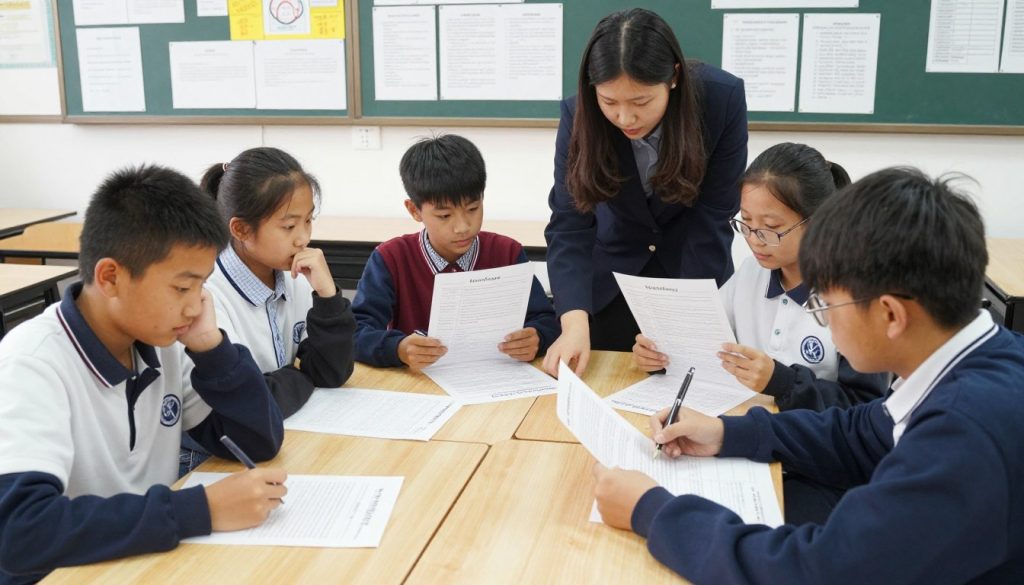
Assessment is often viewed as separate from engagement—something that happens after learning rather than as part of the learning process itself. However, when designed thoughtfully, assessment can be one of the most powerful increasing student engagement examples in your teaching toolkit. These approaches transform assessment from a measurement event to an engagement opportunity.
Formative Assessment Strategies
Frequent, low-stakes assessment provides feedback that engages students in monitoring their own learning:
Quick Checks:
- Exit tickets with reflection prompts
- Traffic light self-assessment (green=understand, yellow=partially understand, red=confused)
- One-minute papers summarizing key concepts
- Digital polls or quizzes with immediate feedback
Visual Representations:
- Concept maps showing relationships between ideas
- Sketch notes illustrating understanding
- Before/after drawings showing growth in understanding
- Visual analogies connecting concepts to familiar ideas
These approaches make thinking visible and provide actionable feedback. The teacher skills involved include designing effective prompts, analyzing responses quickly, and using results to adjust instruction.
Student-Led Assessment
Involving students in the assessment process increases ownership and metacognition:
- Co-Created Rubrics: Students help develop criteria for quality work, deepening their understanding of learning goals.
- Peer Feedback Protocols: Structured processes for students to give specific, constructive feedback to peers.
- Portfolio Conferences: Students select work samples that demonstrate their growth and discuss them with teachers, parents, or peers.
- Student-Led Parent Conferences: Students prepare and lead conferences about their progress, with teachers serving as facilitators.
These approaches position students as active participants in assessment rather than passive recipients. The teacher skills required include facilitating effective peer feedback, teaching students to self-assess accurately, and designing meaningful reflection protocols.
Performance-Based Assessment
Authentic demonstrations of learning engage students more deeply than traditional tests:
- Exhibition Projects: Students create products or performances that demonstrate their learning for authentic audiences.
- Design Challenges: Students apply knowledge to design solutions to real-world problems.
- Documentaries or Multimedia Presentations: Students research, script, and produce media that explains concepts to specific audiences.
- Teaching Demonstrations: Students teach concepts to younger students or peers, demonstrating their own mastery.
These assessments require application and transfer of knowledge rather than simple recall. The teacher skills involved include designing authentic tasks, creating clear evaluation criteria, and managing complex project timelines.
Assessment Tip: When implementing new assessment approaches, start small. Choose one unit or content area to pilot a new strategy, refine based on results, then gradually expand to other areas of your teaching.
Relationship-Building as a Foundation for Engagement
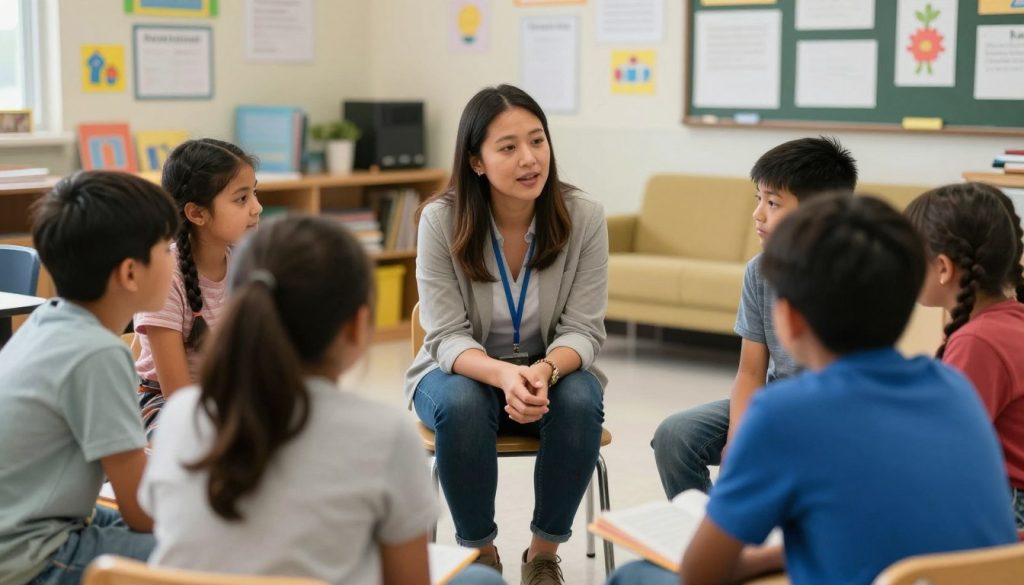
Before implementing any increasing student engagement examples, it’s essential to establish a foundation of strong relationships. Research consistently shows that students are more engaged when they feel known, valued, and supported by their teachers and peers. Developing teacher skills in relationship-building is therefore a prerequisite for other engagement strategies.
Creating a Classroom Community
Intentional community-building creates the psychological safety needed for engagement:
- Community Circles: Regular gatherings where students share thoughts on prompts ranging from light (weekend plans) to deeper (challenges they’re facing).
- Class Agreements: Collaboratively develop norms for how class members will treat each other and approach learning together.
- Celebration Rituals: Establish regular ways to recognize efforts, improvements, and achievements of all students.
- Collaborative Space Design: Involve students in creating a physical environment that supports learning and community.
These practices establish the classroom as a place where students feel they belong. The teacher skills involved include facilitation, active listening, and creating structures that value all voices.
Individual Connection Strategies
Building relationships with each student creates the foundation for personalized engagement:
Regular Check-Ins:
- Greeting each student by name daily
- Brief individual conferences on a rotating schedule
- Interest inventories to learn about students’ lives
- Personal notes recognizing specific contributions
Student Voice Opportunities:
- Student choice in assignments and projects
- Regular feedback on class activities and instruction
- Leadership roles in classroom routines
- Input on curriculum connections and examples
These approaches demonstrate that you see and value each student as an individual. The teacher skills required include active listening, cultural responsiveness, and balancing individual attention within group settings.
Peer Relationship Development
Student-to-student relationships are equally important for classroom engagement:
- Structured Partner Activities: Regular opportunities to work with different classmates through intentional pairing strategies.
- Collaborative Skill Building: Explicit teaching and practice of skills like active listening, constructive feedback, and respectful disagreement.
- Cross-Grade Buddies: Pairing older and younger students for mentoring and collaborative projects.
- Appreciation Practices: Regular opportunities for students to recognize each other’s contributions and strengths.
These strategies create a network of supportive relationships throughout the classroom. The teacher skills involved include group formation strategy, conflict resolution, and modeling healthy relationship behaviors.
“No significant learning occurs without a significant relationship.”
Sustaining Engagement Throughout the School Year
Implementing increasing student engagement examples isn’t a one-time event—it’s an ongoing process that requires intentional maintenance and refreshment throughout the school year. As the novelty of initial strategies wears off and the pressures of the academic calendar mount, sustaining engagement becomes a critical teacher skill.
Rhythms and Routines
Establishing predictable structures that incorporate engagement creates sustainability:
- Weekly Rhythms: Create a pattern of activities that students can anticipate—Mindful Mondays, Workshop Wednesdays, Reflection Fridays.
- Engagement Routines: Build specific engagement strategies into regular classroom procedures, such as starting each class with a provocative question or ending with a synthesis activity.
- Rotating Roles: Establish classroom jobs or responsibilities that rotate regularly, giving all students leadership opportunities.
- Ritual Refreshment: Periodically revisit and revise classroom routines with student input to prevent staleness.
These structures create a balance of predictability and novelty. The teacher skills involved include systems thinking, routine design, and flexibility to adjust based on student needs.
Progressive Challenge
Gradually increasing complexity maintains the optimal challenge level for engagement:
Scaffolded Independence:
- Gradually release responsibility to students
- Begin with highly structured activities
- Progressively remove scaffolding as skills develop
- Eventually allow student-directed application
Complexity Progression:
- Start with discrete skills or concepts
- Move to connections between ideas
- Progress to application in new contexts
- Culminate with creation and evaluation
This approach maintains the optimal zone between boredom and frustration. The teacher skills required include task analysis, formative assessment, and responsive adjustment of challenge levels.
Reflection and Celebration
Regular opportunities to recognize growth sustain motivation:
- Learning Portfolios: Students collect evidence of their growth over time and periodically reflect on their progress.
- Milestone Celebrations: Mark significant points in the learning journey with special activities or recognition.
- Process Reflection: Regularly discuss not just what was learned but how it was learned and what strategies were most effective.
- Community Showcases: Create opportunities for students to share their learning with broader audiences—other classes, parents, community members.
These practices help students recognize their own growth and find meaning in their learning journey. The teacher skills involved include designing meaningful reflection prompts, creating authentic celebration opportunities, and helping students articulate their learning process.
Engagement Maintenance Tip: Pay attention to your own engagement as a teacher. Students are quick to notice when our enthusiasm wanes. Find aspects of your teaching that energize you, connect with colleagues for fresh ideas, and take care of your own well-being to sustain the energy needed for an engaging classroom.
Building a Culture of Engagement: The Journey Forward
As we’ve explored throughout this article, increasing student engagement isn’t about implementing a single strategy or technique—it’s about creating a classroom culture where engagement is the norm rather than the exception. The increasing student engagement examples shared here provide starting points, but the real work lies in adapting these approaches to your specific students, subject area, and teaching context.
Remember that developing teacher skills for engagement is an ongoing journey. Start with one or two strategies that resonate with you and your students, implement them consistently, gather feedback, and refine your approach. As these become part of your teaching repertoire, gradually incorporate additional strategies to create a multifaceted engagement ecosystem in your classroom.
Most importantly, recognize that engagement is fundamentally about relationships—between students and content, students and their peers, and students and you, their teacher. When students feel valued, challenged appropriately, and connected to a learning community, engagement naturally follows.
The work of building and sustaining engagement is challenging but immensely rewarding. Each moment of genuine student engagement—the light in a student’s eyes when they grasp a difficult concept, the animated discussions that extend beyond class time, the projects students pour themselves into—reminds us why we chose this profession in the first place: to ignite a love of learning that extends far beyond our classrooms.
Ready to Transform Student Engagement in Your Classroom?
Discover our comprehensive professional development resources specifically designed to help K-12 teachers implement effective engagement strategies across all subject areas and grade levels.
Frequently Asked Questions About Student Engagement
How do I engage students who seem completely disinterested in learning?
Start by building a relationship with these students. Learn about their interests outside of school and look for connections to curriculum. Consider whether there might be underlying issues affecting engagement—learning difficulties, personal challenges, or negative past experiences with the subject. Provide opportunities for success through scaffolded tasks that build confidence. Sometimes, the most disengaged students become the most enthusiastic when they find a personal connection to the material or feel genuinely seen by their teacher.
How can I balance engagement activities with curriculum requirements and testing pressures?
Rather than seeing engagement as separate from curriculum coverage, look for ways to teach required content through engaging approaches. Analyze your standards to identify the most essential concepts, then design deeply engaging experiences around these priority standards. Remember that engaged students learn more efficiently, so time invested in engagement often pays off in faster mastery of content. Finally, use formative assessment strategies that both engage students and provide data on their progress toward standards.
What if my engagement strategies work for some students but not others?
This is a common challenge that requires developing teacher skills in differentiation. Aim for a variety of engagement approaches that appeal to different learning preferences, interests, and needs. Collect feedback from students about what helps them engage, and involve them in designing learning experiences. Consider flexible grouping strategies that allow you to work more closely with students who need additional support while others work independently or collaboratively.
How do I maintain my own energy and enthusiasm for teaching when implementing new engagement strategies?
Start small with changes that energize rather than exhaust you. Find a colleague or professional learning community to share ideas and challenges with. Document successes, even small ones, to remind yourself of progress. Most importantly, be kind to yourself—implementing new teaching approaches is challenging work that takes time to master. Your willingness to grow your teacher skills and try new approaches already puts you ahead of many educators.


